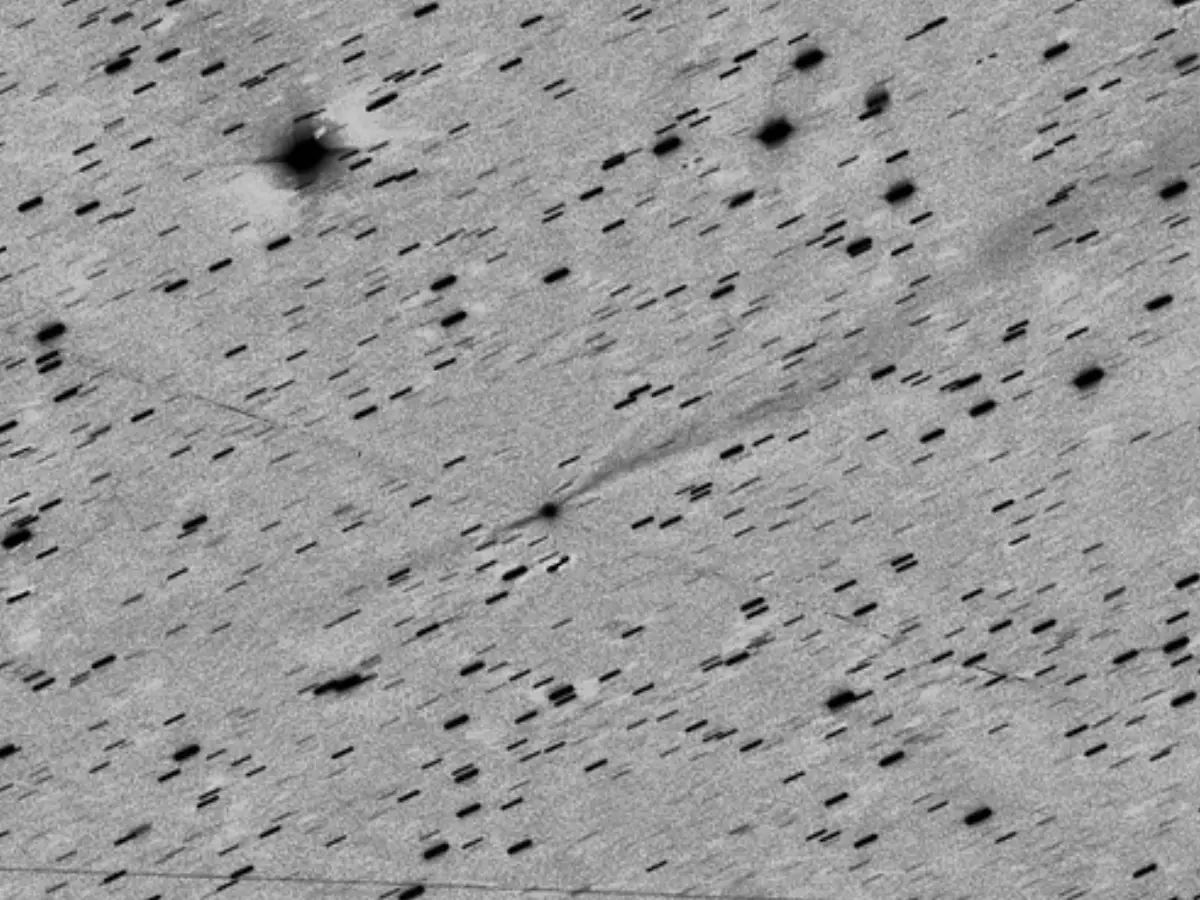
The interstellar object 3I/ATLAS is generating fresh controversy within the scientific community. According to Avi Loeb, a Harvard astrophysicist, tiny fragments or “mini-objects” could have already broken away from the larger object and travelled over a million km through space.
3I/ATLAS is the third known interstellar object detected passing through our solar system. Like ‘Oumuamua and Comet Borisov, it is very rare and interesting to astronomers because it is an object that originated outside our solar system. Scientists assume 3I/ATLAS was originally part of a larger object that broke apart as it moved closer to the Sun.
Avi Loeb is known for his unique astronomy theories and he believes that mini-fragments may have broken off from 3I/ATLAS much sooner than was traditionally thought possible. He expressed that these pieces may have:
1. Broken off during earlier heating of the object
2. Got pushed out by solar radiation
3. Travelled up to a million km distance from the star
4. Become too small or faint to detect easily
Loeb proposes that astronomy should consider looking for mini objects as they may add important information about interstellar objects to the current understanding.
Loeb explains:
Interstellar objects are often loosely connected (thus can fragment easily)
They accelerate faster than the major object due to solar radiation pressure on their small mass.
They are too small for the telescope to track.
If that’s the case, these pieces could already be far beyond the zone astronomers can observe.
Although Loeb’s idea is receiving some interest, there are astronomers who disagree. Some think: We need more data before we can commit to anything about fragmentation. Telescopes haven’t observed mini-objects yet, and that the estimates for the mini-object potential acceleration might be overestimates. In any case, the possibility is open, and astronomers are monitoring it carefully.
This article includes scientific theories and early research findings. Details may evolve as new data becomes available. Readers are advised to follow official astronomy updates for verified information.
ALSO READ: Interstellar Comet 3I/ATLAS: NASA Shares Latest Observations Captured Across the Solar System
Vani Verma is a content writer with over 2 years of experience in lifestyle, entertainment, health and digital media. She has a knack for creating engaging and research-driven content that resonates with readers, blending creativity with clarity. Passionate about media trends, culture, and storytelling, she strives to craft content that informs, inspires, and connects.
Mojtaba Khamenei, backed by the IRGC, emerges as Iran’s likely next Supreme Leader after his…
Who Is Reza Pahlavi? Here Is What US President Donald Trump Says About Him As Next Leader Of Iran
Reza Pahlavi, exiled Crown Prince, advocates a democratic Iran through nonviolent reform. Trump praises him…
US and Israel escalate strikes on Iran; Trump orders maritime insurance and naval escorts; oil…
