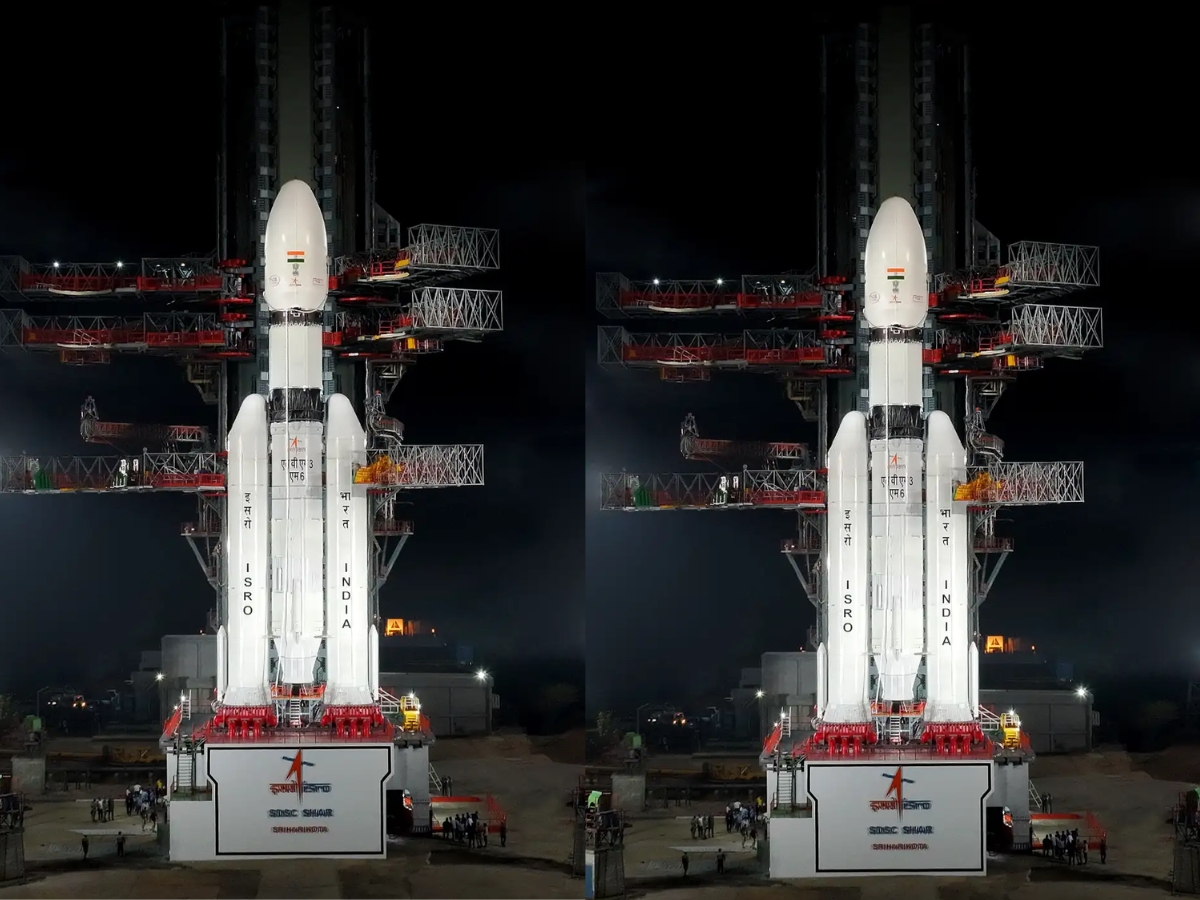
ISRO launches LVM3-M6 on Dec 24 with AST SpaceMobile’s BlueBird Block-2, the heaviest LEO payload, enabling direct smartphone connectivity. Photo: ISRO.
BlueBird Block-2: The Indian Space Research Organisation (ISRO) on December 24 launched its heavy-lift LVM3-M6 rocket, which will place a next-generation US communications satellite into low Earth orbit (LEO).
ISRO launched the satellite on the LVM3-M6 – a ‘Baahubali’ rocket– at 8.54 am on Wednesday from the second launch pad at the Satish Dhawan Space Centre, Sriharikota. The mission carries the BlueBird Block-2 spacecraft built by US-based AST SpaceMobile, marking the sixth operational flight of the LVM3 launch vehicle.
Weighing 6,100 kg, BlueBird Block-2 is the heaviest payload ever launched by LVM3 into low Earth orbit.
The earlier weight record was held by the CMS-03 communication satellite, which weighed approximately 4,400 kg and was placed into Geosynchronous Transfer Orbit (GTO) on November 2.
Under the current mission, the satellite will be injected into a 520-kilometre circular orbit with a 53-degree inclination. Satellite separation is expected about 15 minutes after liftoff, following injection into its designated orbit at an altitude of roughly 600 km.
The launch was conducted under a commercial agreement between NewSpace India Limited (NSIL) – ISRO’s commercial arm, and AST SpaceMobile.
This is the third dedicated commercial flight using the LVM3.
ISRO Chairman V Narayanan is present at the spaceport to oversee the mission. Earlier this week, he offered prayers at the Sri Venkateswara Swamy Temple in Tirumala ahead of the launch.
Also known as GSLV Mk III, the LVM3 stands 43.5 metres tall and is ISRO’s most powerful operational launch vehicle.
The three-stage rocket comprises:
Two S200 solid strap-on boosters
A liquid core stage (L110)
A cryogenic upper stage (C25)
With a lift-off mass of 640 tonnes, the LVM3 has been used for several flagship missions.
BlueBird Block-2 is part of AST SpaceMobile’s global LEO constellation, designed to deliver space-based cellular broadband directly to standard smartphones, without requiring specialised hardware or device modifications.
The satellite carries a massive 223-square-metre phased-array antenna, making it the largest commercial communications satellite deployed in LEO to date.
According to AST SpaceMobile, the constellation aims to enable:
4G and 5G voice and video calls
Text messaging
Data streaming
Broadband internet access
The services are intended to function anywhere in the world, including remote and underserved regions.
The launch can be viewed live from Sriharikota’s observation galleries on December 24 in the morning, subject to registration through official channels.
Live coverage will also be available on ISRO’s official website and social media platforms, including its YouTube channel.
Zubair Amin is a Senior Journalist at NewsX with over seven years of experience in reporting and editorial work. He has written for leading national and international publications, including Foreign Policy Magazine, Al Jazeera, The Economic Times, The Indian Express, The Wire, Article 14, Mongabay, News9, among others. His primary focus is on international affairs, with a strong interest in US politics and policy. He also writes on West Asia, Indian polity, and constitutional issues. Zubair tweets at zubaiyr.amin
India-US trade deal grants zero duty on 800–1600cc bikes, likely making Harley-Davidson motorcycles cheaper for…
Surajkund Mela Accident: Cop Dies, Several Injured As Tsunami Swing Collapses In Faridabad
Tsunami swing collapsed at Surajkund Mela, killing Inspector Jagdish Prasad during rescue and injuring several…
Bollywood superstar Salman Khan attended the RSS’s Mumbai Vyakhyanmala on Saturday as part of the…
