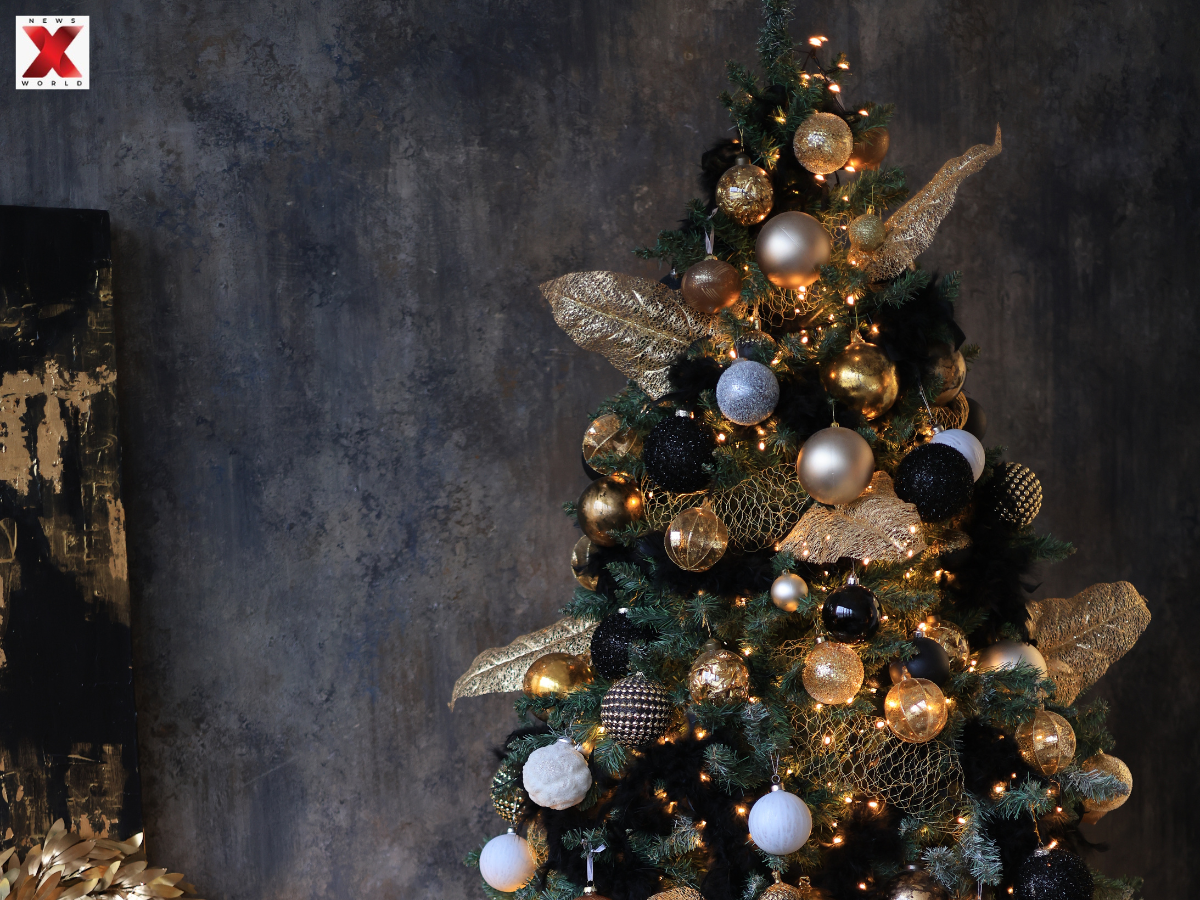
Christmas Tree (PHOTO: X)
Step into any home, public square, or shopping centre this time of year, and you’ll spot them, evergreen trees, right at the centre of holiday life.
For a lot of families, picking out that tree, whether it’s real, potted, or pulled from a box in the attic, kicks off the season. Then comes the decorating: lights, ornaments, gifts stacked underneath. It’s a ritual as familiar as the cold outside.
Funny thing is, the Christmas tree didn’t just appear overnight. It’s the product of centuries of shifting beliefs, business, and tradition. Religion played a part, of course, but so did commerce, conservation, and the changing tides of society.
Way before Christmas was even a thing, people looked to evergreens for hope during bleak winters. In ancient times, when the world felt darker and colder, plants that stayed green all year seemed almost magical, symbols of endurance and the promise that things would get better.
In ancient Egypt, people used date palm branches during winter festivals, celebrating rebirth and renewal.
In Rome, folks decorated with evergreen branches during Saturnalia, a wild festival near the winter solstice honouring Saturn, the god of agriculture. Homes and temples filled with greenery as people marked the end of the farming year and waited for the sun to return.
Head north, and you’ll find similar ideas popping up. Celtic druids saw evergreens as a sign of eternal life. Norse traditions linked them to Baldur, the god of light. Jewish tradition viewed evergreens as symbols of growth and vitality, while in Han Dynasty China, they stood for resilience in the face of tough times.
When Christianity spread across Europe, it didn’t wipe out these traditions. Instead, it blended with them. Bringing greenery indoors, hanging wreaths, and decorating doors survived the transition, slowly picking up new meanings tied to Christ’s birth and the hope of spiritual renewal.
Fast forward to the late Middle Ages in German-speaking Europe. That’s when evergreens started taking on a more official role in Christian celebrations. One early version was the “paradise tree.”
These trees showed up in homes and churches in December, especially for religious plays known as miracle plays. On December 24, the feast day of Adam and Eve, actors used these trees decorated with apples to tell Bible stories to people who couldn’t read. The apples stood in for the fruit from the Garden of Eden.
During the 14th and 15th centuries, some regions used nothing but these apple-covered branches for decoration. Eventually, families started bringing entire trees inside, first plain, then dressed up with fruit, nuts, and homemade ornaments.
There’s a written account from 1510 in Riga (now Latvia) where a merchants’ guild decorated a tree with fake roses, danced around it in the marketplace, and then burned it. Roses, by the way, were linked to the Virgin Mary and became a popular decoration.
By the 1500s, people in parts of Germany were buying evergreens for their homes, even passing laws about how tall the trees could be. Apples were still the go-to decoration, a nod to Adam and Eve.
Legal and Public Space Controversies
In the modern world, especially in the United States and Europe, the Christmas tree tends to be the subject of most separation of state and religion conflicts.
Public Displays: Issues of public trees always arise when cities install trees in the town square or in the public buildings. Critics cite that through such displays, the implication is supporting Christianity as the best religion, which is against the constitutional neutrality.
Rebranding of Holiday Tree: To prevent being sued, other municipalities have tried to rebrand them to be likened to Holiday Trees. This usually causes a backlash by people who perceive it as an assault on tradition or a sign of political correctness.
International Tensions: Some Orthodox rabbis in Israel have made war declarations on Christmas trees in hotels and other open places on the grounds that they are threatening the Jewishness of the state.
In the Soviet Union, the tree was banned originally as a symbol of state atheism, and then later secularised as the New Year Spruce (Novogodnyaya yolka) to divest it of any religious connotation.
Scandalous Christmas tree in Vatican, Italy
In the XXI century, there have been arguments about the sustainability of real and artificial trees and the aesthetics of the visual installations of a public.
Real vs. Artificial: The Great Christmas Tree Debate brings a contrast between real trees (which benefit the local farms and are biodegradable but demand cutting every year) and artificial ones (which are reusable yet are composed of non-biodegradable material PVC, and are mostly produced under less transparent circumstances in China).
Vatican “Green Giant” Protest: In late 2024 and 2025, the Vatican was hit by a petitioning campaign by residents of the North of Italy to protest against the felling of a 200-year-old, 100-foot spruce, which was to be used to build the square before St. Peter, calling their act a waste of time in the age of climate change.
Aesthetic Failures: Public trees are frequently a subject of ridicule if they are looking mangy or ugly. The official tree in Rome, popularly known as Spelacchio (meaning mangy or threadbare), was a viral sensation in 2017 and 2018 and a symbol of city decadence. Likewise, in 2012, in Brussels, a modernist light installation that was to be used instead of a traditional tree was received with a signature of thousands of protestors who found it incongruous.
Fire Safety: Safety regulations also present some controversies, as some cities such as New York and Philadelphia impose strict prohibitions on natural trees in some high-rise or shopping facilities because the trees are considered a possible source of fire once they have dried up.
ALSO READ: Big Blow To Indian Tech Professionals, US Judge Upholds Donald Trump’s $100,000 H-1B Visa Fee
Apple is likely to launch the iPad 12 and iPad Air 8 with upgraded chips…
Who Is Dhakshineswar Suresh? India’s New Davis Cup Hero Who Stunned The Netherlands In Bengaluru
Dhakshineswar Suresh became India’s new Davis Cup hero after he secured the match victory against…
Years after Jeffrey Epstein’s death, newly examined records have shed light on disturbing plans tied…
