
Related Post
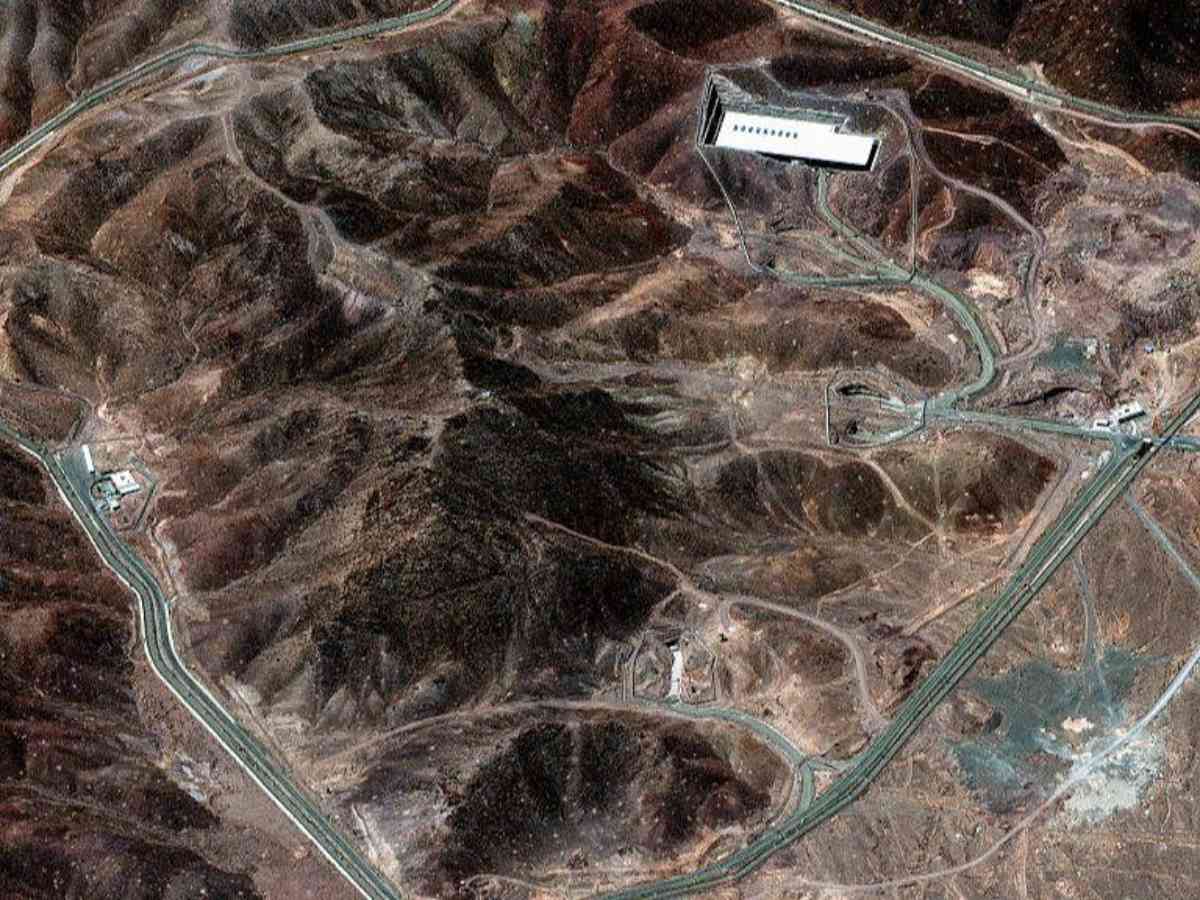
The Israel-Iran conflict escalated dramatically after US President Donald Trump ordered airstrikes on three major Iranian nuclear facilities — Fordow, Natanz, and Isfahan — as part of what the White House called “Operation Midnight Hammer.”
Trump, speaking to reporters, claimed the attack “totally obliterated” the sites. However, many nuclear experts and military analysts aren’t convinced just yet. They say there’s not enough evidence to back Trump’s claims, and some believe the real damage may be far less than what he’s suggesting.
The US military used B-2 stealth bombers for the overnight mission, dropping massive GBU-57 “bunker buster” bombs meant to destroy deeply buried facilities. But photos taken after the strikes paint a different picture.
At the Fordow site, satellite images from Maxar Technologies show a few small craters along the mountain ridge near tunnel entrances. A large building believed to control airflow to the underground facilities appears to be untouched.
Over at Natanz, another crater — about 5.5 meters wide — was seen just above the enrichment site. But this facility is buried deep below layers of concrete and steel, making it hard to tell how much actual damage occurred underground.
So far, the International Atomic Energy Agency (IAEA) says it hasn’t seen any signs of radiation leaks after the attack — something that might have been expected if nuclear materials had been exposed.
On Truth Social, Trump doubled down on his claims, saying the damage was massive but not visible on the surface. He wrote:
“Monumental Damage was done to all Nuclear sites in Iran, as shown by satellite images. Obliteration is an accurate term! The white structure shown is deeply imbedded into the rock, with even its roof well below ground level, and completely shielded from flame. The biggest damage took place far below ground level. Bullseye!!!”
But many aren’t buying it — at least not yet.
US officials have admitted they need more time to fully assess the outcome. Meanwhile, independent analysts are raising eyebrows. Some say the visible craters are too small to be from the GBU-57 bunker buster bombs, which are supposed to penetrate up to 200 feet underground before exploding. Instead, they suspect lighter bombs or cruise missiles might have been used in some cases.
For now, there’s no visual proof that Iran’s underground nuclear labs have been destroyed. Some believe the strike was more about sending a political message than actually wiping out Iran’s nuclear capabilities.
One of the biggest concerns following the strikes is the impact on nuclear monitoring. The IAEA, which regularly inspects Iran’s nuclear facilities to make sure they’re not being used to build weapons, is now left in the dark.
Even before the attack, Iran had started moving its stockpile of highly enriched uranium to unknown locations. The agency can no longer confirm how much bomb-grade material Iran currently has.
“We lost track of their bomb-grade uranium,” one IAEA official admitted.
Former inspectors worry that the strikes could push Iran to hide its nuclear work even further. “By bombing these facilities,” one former chief inspector said, “the US and Israel have disrupted the very tools we use to monitor Iran.”
Iran quickly condemned the US strikes, calling them a violation of its sovereignty. Lawmakers in Tehran began discussing whether to shut down the Strait of Hormuz — a narrow waterway that’s critical to the world’s oil supply, with about 20% of global oil passing through it.
Foreign Minister Seyed Abbas Aragchi warned that “a variety of options are available,” hinting that Iran could target US interests or its allies in the region.
Supreme Leader Ayatollah Ali Khamenei also issued a strong warning on Monday. In a post on X (translated from Urdu), he wrote:
“The punishment continues. The Zionist enemy has made a big mistake, committed a big crime; it must be punished and it is being punished; it is being punished right now.”
Back in Washington, Trump is getting mixed reactions. Some of his supporters are praising the attack as a bold move. But others — including national security experts — worry that this could make things worse in the Middle East.
Many believe the strikes were more of a political move aimed at pleasing hardliners in both Israel and the US. But if Iran’s nuclear sites weren’t seriously damaged, the whole operation might end up backfiring.
Satellite images still show Fordow and Natanz largely intact. That could give Iran all the more reason to take its program even deeper underground — and out of sight from the international community. That, experts say, could make it nearly impossible to bring Iran back to the negotiating table or restart any meaningful nuclear inspections.
Iran says the US and Israel struck targets near the Bushehr Nuclear Power Plant, raising…
Police are investigating whether five spent cartridges found at Ashok Kharat’s farmhouse were linked to…
Gujarat’s proposed Uniform Civil Code Bill makes it compulsory for all live-in couples to register…