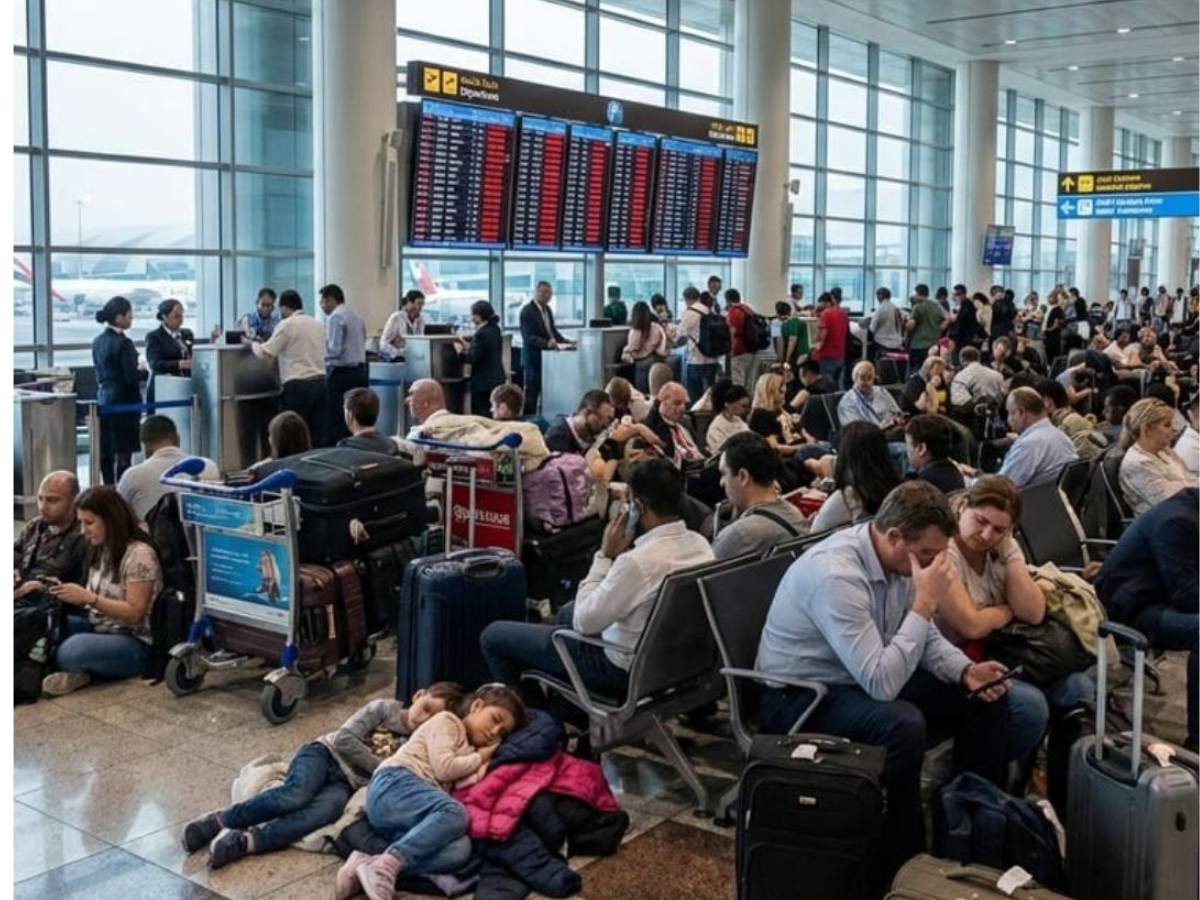
| Scheduled Time | Flight | Airline/Code | Destination | Terminal | Status |
| 3:00 | HU7920 | HU7920 | Beijing (PEK) | T3 | Cancelled |
| 14:00 | CA182 | CA182 | Beijing (PEK) | T3 | Cancelled |
| 23:20 | QF60 / LA5927 / AF9681 / AY4883 | Codeshare | Sydney | T3 | Delayed |
| 23:35 | UA848 | UA848 | Guam | T3 | Cancelled |
| 9:25 | LH715 / NH5851 | Codeshare | Munich | T3 | Cancelled |
| 0:55 | NH207 / AZ7505 | Codeshare | Milan (MXP) | – | Cancelled |
| 7:50 | JL47 / AY5072 / BA4623 / IB7197 | Codeshare | Helsinki | T3 | Cancelled |
| 0:30 | NH221 / LH4949 | Codeshare | Stockholm (ARN) | – | Cancelled |
| 22:35 | JL59 / QR4851 | Codeshare | Doha | T3 | Cancelled |
| Scheduled Time | Estimated Time | Flight No. | Destination |
| 13 Apr 2026 12:20 | 13 Apr 2026 12:55 | BR 067 | London / Heathrow Airport |
| 13 Apr 2026 12:25 | 13 Apr 2026 12:32 | VZ 110 | Chiang Mai / Chiang Mai International Airport |
| 13 Apr 2026 12:40 | 13 Apr 2026 12:55 | TG 634 | Taoyuan / Taiwan Taoyuan International Airport |
| 13 Apr 2026 12:45 | 13 Apr 2026 13:00 | CZ 8080 | Guangzhou / Baiyun International Airport |
| 13 Apr 2026 12:50 | 13 Apr 2026 13:15 | JD 420 | Hangzhou / Xiaoshan International Airport |
| 13 Apr 2026 13:00 | 13 Apr 2026 13:00 | ET 608 | Hanoi / Noi Bai International Airport |
| 13 Apr 2026 13:00 | 13 Apr 2026 13:03 | TG 660 | Tokyo / Tokyo International Airport |
| 13 Apr 2026 13:10 | 13 Apr 2026 12:58 | VZ 204 | Udon Thani / Udon Thani International Airport |
| 13 Apr 2026 13:10 | 13 Apr 2026 13:10 | JX 742 | Taoyuan / Taiwan Taoyuan International Airport |
| 13 Apr 2026 13:15 | 13 Apr 2026 13:15 | VZ 334 | Nakhon Si Thammarat Airport |
| 13 Apr 2026 13:20 | 13 Apr 2026 13:20 | CI 832 | Taoyuan / Taiwan Taoyuan International Airport |
| 13 Apr 2026 13:20 | 13 Apr 2026 13:20 | SU 273 | Moscow / Sheremetyevo International Airport |
| 13 Apr 2026 13:20 | 13 Apr 2026 13:40 | MU 6088 | Taiyuan / Wusu International Airport |
| 13 Apr 2026 13:25 | 13 Apr 2026 13:25 | VZ 2300 | Phuket / Phuket International Airport |
| 13 Apr 2026 13:25 | 13 Apr 2026 13:25 | PR 731 | Manila / Ninoy Aquino International Airport |
| 13 Apr 2026 13:30 | 13 Apr 2026 13:30 | TG 110 | Chiang Mai / Chiang Mai International Airport |
| 13 Apr 2026 13:30 | 13 Apr 2026 13:30 | VZ 132 | Chiang Rai / Mae Fah Luang Airport |
| 13 Apr 2026 13:35 | 13 Apr 2026 13:01 | TK 052 | Phnom Penh / Techo International |
| 13 Apr 2026 13:35 | 13 Apr 2026 13:35 | SQ 721 | Singapore / Changi Airport |
| 13 Apr 2026 13:35 | 13 Apr 2026 13:35 | MU 542 | Shanghai / Pudong International Airport |
| 13 Apr 2026 13:40 | 13 Apr 2026 13:40 | PG 145 | Koh Samui Airport |
| 13 Apr 2026 13:45 | 13 Apr 2026 13:45 | CZ 8100 | Guangzhou / Baiyun International Airport |
| 13 Apr 2026 13:50 | 13 Apr 2026 13:50 | VZ 106 | Chiang Mai / Chiang Mai International Airport |
| 13 Apr 2026 13:50 | 13 Apr 2026 13:50 | 6E 1052 | Mumbai / Chhatrapati Shivaji Maharaj Airport |
| 13 Apr 2026 13:50 | 13 Apr 2026 13:50 | TG 407 | Singapore / Changi Airport |
| Scheduled | Actual Time | Flight | Airline | Terminal | Status |
| 10:15 | 10:20 | EK 362, CZ 7870 (Guangzhou) | Emirates | T3 | Scheduled |
| 10:20 | 10:20 | IX 6041 (Mangalore) | Air India Express | T2 | Scheduled |
| 10:25 | 10:25 | EK 396, BT 5815, DE 5912 (Phuket) | Emirates | T3 | Scheduled |
| 10:30 | 10:30 | EK 719, QF 8719 (Nairobi) | Emirates | T3 | Scheduled |
| 10:35 | 10:35 | EK 586 (Dhaka) | Emirates | T3 | Scheduled |
| 10:35 | 10:35 | EK 703, MK 913, DE 5951 (Mauritius) | Emirates | T3 | Scheduled |
| 10:35 | 10:37 | FZ 841, EK 2486 (Riyadh) | Flydubai | T2 | Scheduled |
| 10:40 | 10:40 | EK 723, UA 6604, AC 7593, QF 8723 (Addis Ababa) | Emirates | T3 | Scheduled |
| 10:45 | 10:45 | EK 654, DE 5918 (Colombo) | Emirates | T3 | Scheduled |
| 10:45 | 10:45 | FZ 833 (Jazan) | Flydubai | T2 | Scheduled |
| 10:50 | 10:50 | EK 358, BT 5807, GA 8852, DE 5902 (Jakarta) | Emirates | T3 | Scheduled |
| 11:00 | 11:00 | FZ 041, EK 2398 (Muscat) | Flydubai | T2 | Scheduled |
| 11:30 | 11:30 | FZ 307, EK 2177 (Kabul) | Flydubai | T2 | Scheduled |
| 11:50 | 11:50 | FZ 1113, EK 2212 (Damascus) | Flydubai | T3 | Scheduled |
| 12:00 | 12:00 | EK 921 (Cairo) | Emirates | T3 | Scheduled |
| 12:00 | 12:00 | FZ 317, EK 2355 (Multan) | Flydubai | T2 | Scheduled |
| 11:50 | 12:05 | 6E 1462 (New Delhi) | IndiGo | T1 | Scheduled |
| 12:05 | 12:05 | FZ 335, EK 2112 (Karachi) | Flydubai | T2 | Scheduled |
| 12:30 | 12:30 | HY 334 (Tashkent) | Uzbekistan Airways | T1 | Scheduled |
| 12:30 | 12:35 | FZ 809 (Al-Ahsa) | Flydubai | T2 | Scheduled |
| 12:35 | 12:35 | FZ 863, EK 2278 (Dammam) | Flydubai | T2 | Scheduled |
| 12:40 | 12:40 | FZ 1595, EK 2155 (Kathmandu) | Flydubai | T3 | Scheduled |
| 12:40 | 12:40 | FZ 727, EK 2094 (Istanbul) | Flydubai | T2 | Scheduled |
| 12:45 | 12:45 | EK 330 (Manila) | Emirates | T3 | Scheduled |
| 12:45 | 12:45 | ME 427 (Beirut) | Middle East Airlines | T1 | Scheduled |
| 12:55 | 12:55 | EK 003, FI 6037, AV 6251, QF 8003 (London Heathrow) | Emirates | T3 | Scheduled |
| 12:55 | 12:55 | EK 121, QF 8121 (Istanbul) | Emirates | T3 | Scheduled |
| 13:00 | 13:00 | EK 502 (Mumbai) | Emirates | T3 | Scheduled |
| 13:00 | 13:00 | RB 516 (Damascus) | Syrian Air | T1 | Scheduled |
| 13:05 | 13:05 | EK 067 (London Stansted) | Emirates | T3 | Scheduled |
| 13:15 | 13:15 | EK 083, QF 8083 (Geneva) | Emirates | T3 | Scheduled |
| 13:20 | 13:20 | EK 019, QF 8019 (Manchester) | Emirates | T3 | Scheduled |
| 13:20 | 13:20 | EK 181, QF 8181 (Brussels) | Emirates | T3 | Scheduled |
| 13:20 | 13:20 | FZ 651, EK 2435 (Entebbe) | Flydubai | T2 | Scheduled |
| 13:30 | 13:30 | EK 075, QF 8075 (Paris) | Emirates | T3 | Scheduled |
| 13:30 | 13:30 | FZ 897, EK 2300 (Medina) | Flydubai | T2 | Scheduled |
| 13:45 | 13:45 | EK 143, AV 6257, QF 8143 (Madrid) | Emirates | T3 | Scheduled |
| 13:40 | 13:45 | EK 566 (Bangalore) | Emirates | T3 | Scheduled |
| 13:40 | 13:50 | EK 193, TP 6732 (Lisbon) | Emirates | T3 | Scheduled |
| 13:55 | 13:55 | FZ 523, EK 2286 (Dhaka) | Flydubai | T2 | Scheduled |
| 14:00 | 14:00 | EK 047, QF 8047 (Frankfurt) | Emirates | T3 | Scheduled |
| 14:00 | 14:00 | EK 163, QF 8163 (Dublin) | Emirates | T3 | Scheduled |
| 14:15 | 14:00 | EK 817 (Riyadh) | Emirates | T3 | Scheduled |
| 14:05 | 14:05 | EK 009, QF 8009 (London Gatwick) | Emirates | T3 | Scheduled |
| 14:15 | 14:10 | EK 131 (Moscow) | Emirates | T3 | Scheduled |
| 14:10 | 14:10 | EK 809, UA 6584, AC 7601 (Medina) | Emirates | T3 | Scheduled |
| 14:10 | 14:10 | FZ 829, EK 2068 (Jeddah) | Flydubai | T2 | Scheduled |
| 14:25 | 14:25 | EK 765, SA 7163, DE 5970 (Johannesburg) | Emirates | T3 | Scheduled |
| 14:30 | 14:30 | EK 005, QF 8005 (London Heathrow) | Emirates | T3 | Scheduled |
| 14:30 | 14:30 | FZ 021, EK 2014 (Bahrain) | Flydubai | T2 | Scheduled |
| 14:30 | 14:30 | FZ 881 (Tabuk) | Flydubai | T2 | Scheduled |
| 14:35 | 14:35 | EK 091, FI 6049, QF 8091 (Milan) | Emirates | T3 | Scheduled |
| 14:45 | 14:45 | BG 148 (Dhaka) | Biman Bangladesh Airlines | T1 | Scheduled |
| 14:50 | 14:50 | EK 546 (Chennai) | Emirates | T3 | Scheduled |
| 14:55 | 14:55 | EK 051, QF 8051 (Munich) | Emirates | T3 | Scheduled |
| 15:00 | 15:00 | EK 528 (Hyderabad) | Emirates | T3 | Scheduled |
| 15:10 | 15:10 | FZ 647 (Addis Ababa) | Flydubai | T2 | Scheduled |
| 15:15 | 15:15 | EK 923, QF 8923 (Cairo) | Emirates | T3 | Scheduled |
| 15:25 | 15:25 | EK 514 (New Delhi) | Emirates | T3 | Scheduled |
| 15:25 | 15:25 | FZ 733, EK 2404 (Baku) | Flydubai | T2 | Scheduled |
| 15:30 | 15:30 | EK 803 (Jeddah) | Emirates | T3 | Scheduled |
| 16:00 | 16:00 | EK 508 (Mumbai) | Emirates | T3 | Scheduled |
| 16:10 | 16:00 | PF 785 (Islamabad) | Air Sial | T1 | Scheduled |
| 16:05 | 16:05 | FZ 811 (Abha) | Flydubai | T2 | Scheduled |
| 16:10 | 16:10 | EK 648, MK 9936, DE 5920 (Colombo) | Emirates | T3 | Scheduled |
| 16:15 | 16:15 | XY 206 (Riyadh) | Flynas | T1 | Scheduled |
| 16:20 | 16:20 | MS 1913 (Cairo) | Egypt Air | T1 | Scheduled |
| 16:50 | 16:50 | FZ 867, EK 2282 (Dammam) | Flydubai | T2 | Scheduled |
| 17:00 | 17:00 | IX 6615 (Lucknow) | Air India Express | T2 | Scheduled |
| 17:10 | 17:10 | ET 603, SQ 6073 (Addis Ababa) | Ethiopian Airlines | T1 | Scheduled |
| 17:10 | 17:10 | FZ 1749, EK 2294 (Belgrade) | Flydubai | T3 | Scheduled |
| 17:20 | 17:20 | EK 336 (Manila) | Emirates | T3 | Scheduled |
| 17:20 | 17:20 | FZ 573, EK 2153 (Kathmandu) | Flydubai | T2 | Scheduled |
| 17:30 | 17:30 | SV 589 (Jeddah) | Saudia | T1 | Scheduled |
| 17:50 | 17:50 | 6E 1454 (Mumbai) | IndiGo | T1 | Scheduled |
| 18:00 | 18:00 | EK 602 (Karachi) | Emirates | T3 | Scheduled |
| 18:00 | 18:00 | FZ 143, EK 2056 (Amman) | Flydubai | T2 | Scheduled |
| 18:20 | 18:20 | FZ 855, EK 2264 (Riyadh) | Flydubai | T2 | Scheduled |
| 18:20 | 18:20 | PA 217 (Islamabad) | Airblue | T1 | Scheduled |
| 18:35 | 18:35 | FZ 047, EK 2036 (Muscat) | Flydubai | T2 | Scheduled |
| 18:40 | 18:40 | FZ 569, EK 2040 (Colombo) | Flydubai | T2 | Scheduled |
| 19:05 | 19:05 | GF 509 (Bahrain) | Gulf Air | T1 | Scheduled |
| 19:20 | 19:20 | FZ 329, EK 2106 (Karachi) | Flydubai | T2 | Scheduled |
| 19:20 | 19:20 | FZ 807, EK 2324 (Jeddah) | Flydubai | T2 | Scheduled |
| 19:30 | 19:30 | AI 4310 (New Delhi) | Air India | T1 | Scheduled |
| 20:00 | 20:00 | FZ 375 (Peshawar) | Flydubai | T2 | Scheduled |
| 20:55 | 20:55 | FZ 435, EK 2246 (Hyderabad) | Flydubai | T2 | Scheduled |
| 21:00 | 21:00 | EK 542 (Chennai) | Emirates | T3 | Scheduled |
| 21:05 | 21:05 | EK 614, AC 7570 (Islamabad) | Emirates | T3 | Scheduled |
| 21:10 | 21:10 | FZ 827, EK 2336 (Medina) | Flydubai | T2 | Scheduled |
| 21:15 | 21:15 | EK 568 (Bangalore) | Emirates | T3 | Scheduled |
| 21:25 | 21:25 | EK 522 (Trivandrum) | Emirates | T3 | Scheduled |
| 21:25 | 21:25 | EK 532 (Kochi) | Emirates | T3 | Scheduled |
| 21:30 | 21:30 | EK 512 (New Delhi) | Emirates | T3 | Scheduled |
| 21:40 | 21:40 | EK 500 (Mumbai) | Emirates | T3 | Scheduled |
| 21:40 | 21:40 | EK 622, AC 7578 (Lahore) | Emirates | T3 | Scheduled |
| 21:40 | 21:40 | FZ 731, EK 2482 (Ashgabat) | Flydubai | T2 | Scheduled |
| 21:45 | 21:45 | FZ 1735, EK 2138 (Almaty) | Flydubai | T3 | Scheduled |
| 21:50 | 21:50 | EK 524 (Hyderabad) | Emirates | T3 | Scheduled |
| 21:50 | 21:50 | RJ 615 (Amman) | Royal Jordanian | T1 | Scheduled |
| 22:05 | 22:05 | FZ 339, EK 2116 (Multan) | Flydubai | T2 | Scheduled |
| 22:30 | 22:30 | EK 374, QF 8374 (Bangkok) | Emirates | T3 | Scheduled |
| 22:45 | 22:45 | FZ 437, EK 2130 (Ahmedabad) | Flydubai | T2 | Scheduled |
| 22:50 | 22:50 | EK 538 (Ahmedabad) | Emirates | T3 | Scheduled |
| 22:50 | 22:50 | FZ 871 (Gassim) | Flydubai | T2 | Scheduled |
| 22:55 | 22:55 | FZ 355, EK 2096 (Faisalabad) | Flydubai | T2 | Scheduled |
| 23:20 | 23:20 | EK 767, SA 7152 (Johannesburg) | Emirates | T3 | Scheduled |
|
Scheduled Time
|
Flight | Airline | Destination | Terminal | Status |
| 7:38 | AY 122 | Finnair | Helsinki | T3 | Scheduled |
| 8:10 | LO 072 | LOT Polish Airlines | Warsaw | T3 | Scheduled |
| 8:19 | BA 136 | British Airways | London Heathrow | T3 | Scheduled |
| 8:29 | LX 2647 | Swiss Air | Zurich | T3 | Scheduled |
| 10:12 | BA 256 | British Airways | London Heathrow | T3 | Scheduled |
| 11:26 | VS 301 | Virgin Atlantic | London Heathrow | T3 | Scheduled |
| 11:32 | KC 908 | Air Astana | Almaty | T3 | Scheduled |
| 11:44 | AI 155 | Air India | Amsterdam | T3 | Scheduled |
| 11:59 | MS 974 | Egypt Air | Cairo | T3 | Scheduled |
| 12:20 | AI 143 | Air India | Paris | T3 | Scheduled |
| 12:20 | AI 123 | Air India | Rome | T3 | Scheduled |
| 12:20 | AI 151 | Air India | Zurich | T3 | Scheduled |
| 12:20 | AI 157 | Air India | Copenhagen | T3 | Scheduled |
| 12:20 | AI 2029 | Air India | Frankfurt | T3 | Scheduled |
| 12:25 | AI 2362 | Air India | Manila | T3 | Scheduled |
| 12:35 | 6E 1103 | IndiGo | Dhaka | T3 | Scheduled |
| 12:40 | AI 281 | Air India | Colombo | T3 | Scheduled |
| 13:00 | AI 2388 | Air India | Ho Chi Minh City | T3 | Scheduled |
| 13:10 | AI 2017 | Air India | London Heathrow | T3 | Scheduled |
| 13:25 | AI 2376 | Air India | Phuket | T3 | Scheduled |
| 13:40 | 6E 1155 | IndiGo | Kathmandu | T3 | Scheduled |
| 13:45 | HY 424 | Uzbekistan Airways | Tashkent | T3 | Scheduled |
| 14:00 | AI 185 | Air India | Vancouver | T3 | Scheduled |
| 14:00 | AI 2382 | Air India | Singapore | T3 | Scheduled |
| 14:25 | AI 219 | Air India | Kathmandu | T3 | Scheduled |
| 14:25 | 6E 1405 | IndiGo | Abu Dhabi | T3 | Scheduled |
| 14:30 | AI 2304 | Air India | Bangkok | T3 | Scheduled |
| 15:15 | BG 398 | Biman Bangladesh | Dhaka | T3 | Scheduled |
| 15:25 | AI 4309 | Air India | Dubai | T3 | Scheduled |
| 15:40 | 6E 1081 | IndiGo | Phuket | T3 | Scheduled |
| 15:45 | 6E 1053 | IndiGo | Bangkok | T3 | Scheduled |
| 15:55 | EY 215 | Etihad Airways | Abu Dhabi | T3 | Scheduled |
| 16:00 | WY 246 | Oman Air | Muscat | T3 | Scheduled |
| 16:20 | RA 218 | Nepal Airlines | Kathmandu | T3 | Scheduled |
| 16:20 | SZ 110 | Somon Air | Dushanbe | T3 | Scheduled |
| 16:25 | EK 517 | Emirates | Dubai | T3 | Scheduled |
| 16:30 | IA 444 | Iraqi Airways | Baghdad | T3 | Scheduled |
| 17:10 | SL 245 | Thai Lion Air | Bangkok | T3 | Scheduled |
| 17:50 | 6E 1161 | IndiGo | Kathmandu | T3 | Scheduled |
| 17:55 | IX 163 | Air India Express | Muscat | T3 | Scheduled |
| 18:00 | NH 838 | ANA | Tokyo (Haneda) | T3 | Scheduled |
| 18:15 | AI 211 | Air India | Kathmandu | T3 | Scheduled |
| 18:25 | 6E 1169 | IndiGo | Colombo | T3 | Scheduled |
| 18:35 | G9 466 | Air Arabia | Sharjah | T3 | Scheduled |
| 18:45 | UL 196 | SriLankan Airlines | Colombo | T3 | Scheduled |
| 18:45 | SG 5005 | SpiceJet | Fujairah | T3 | Scheduled |
| 18:50 | KE 498 | Korean Air | Seoul | T3 | Scheduled |
| 19:05 | JL 030 | Japan Airlines | Tokyo (Haneda) | T3 | Scheduled |
| 19:55 | MU 564 | China Eastern | Shanghai | T3 | Scheduled |
| 20:05 | SV 759 | Saudia | Jeddah | T3 | Scheduled |
| 20:10 | AI 358 | Air India | Tokyo (Haneda) | T3 | Scheduled |
| 20:20 | 6E 1701 | IndiGo | Guangzhou | T3 | Scheduled |
| 20:50 | AI 2145 | Air India | Bali | T3 | Scheduled |
| 20:55 | XJ 231 | Thai AirAsia X | Bangkok | T3 | Scheduled |
| 21:15 | EY 217 | Etihad Airways | Abu Dhabi | T3 | Scheduled |
| 21:45 | AI 2386 | Air India | Kuala Lumpur | T3 | Scheduled |
| 21:55 | AI 223 | Air India | Kathmandu | T3 | Scheduled |
| 21:55 | SQ 403 | Singapore Cargo | Singapore | T3 | Scheduled |
| 22:00 | 6E 063 | IndiGo | Jeddah | T3 | Scheduled |
| 22:00 | 6E 071 | IndiGo | Riyadh | T3 | Scheduled |
| 22:05 | OD 206 | Malindo Air | Kuala Lumpur | T3 | Scheduled |
| 22:05 | EK 515 | Emirates | Dubai | T3 | Scheduled |
| 22:10 | AI 314 | Air India | Hong Kong | T3 | Scheduled |
| 22:45 | CX 698 | Cathay Pacific | Hong Kong | T3 | Scheduled |
| 22:50 | AC 043 | Air Canada | Toronto | T3 | Scheduled |
| 23:00 | AI 2380 | Air India | Singapore | T3 | Scheduled |
| 23:00 | MH 191 | Malaysia Airlines | Kuala Lumpur | T3 | Scheduled |
| 23:20 | D7 183 | AirAsia X | Kuala Lumpur | T3 | Scheduled |
| 23:30 | AA 293 | American Airlines | New York (JFK) | T3 | Scheduled |
| 23:30 | TG 316 | Thai Airways | Bangkok | T3 | Scheduled |
| 23:35 | VN 980 | Vietnam Airlines | Hanoi | T3 | Scheduled |
| 23:35 | UA 083 | United Airlines | Newark | T3 | Scheduled |
| 7:15 | KU 384 | Kuwait Airways | Kuwait | T3 | Cancelled |
| 7:45 | J9 3410 | Jazeera Airways | Dammam | T3 | Cancelled |
| 21:15 | 6E 083 | IndiGo | Dammam | T3 | Cancelled |
| Time | Flight | Destination | Terminal | Status |
| 14:45 | FJ362 | Nadi (NAN) | T1 | Scheduled |
| 14:45 | ID7156 | Jakarta (CGK) | T4 | Scheduled |
| 14:45 | TR244 | Medan (KNO) | T1 | Scheduled |
| 14:45 | TR534 | Davao (DVO) | T1 | Scheduled |
| 14:50 | MF8704 | Hangzhou (HGH) | T1 | Scheduled |
| 14:55 | SQ606 | Seoul (ICN) | T2 | Scheduled |
| 14:55 | TR424 | Penang (PEN) | T1 | Scheduled |
| 14:55 | VJ916 | Hanoi (HAN) | T4 | Scheduled |
| 15:00 | CA490 | Chongqing (CKG) | T1 | Scheduled |
| 15:05 | MF866 | Fuzhou (FOC) | T1 | Scheduled |
| 15:05 | QZ265 | Jakarta (CGK) | T4 | Scheduled |
| 15:10 | SQ960 | Jakarta (CGK) | T2 | Scheduled |
| 15:15 | MF852 | Xiamen (XMN) | T1 | Scheduled |
| 15:20 | BR216 | Taipei (TPE) | T3 | Scheduled |
| 15:25 | BS310 | Dhaka (DAC) | T3 | Scheduled |
| 15:25 | TR486 | Ipoh (IPH) | T1 | Scheduled |
| 15:25 | TR982 | Hong Kong (HKG) | T1 | Scheduled |
| 15:30 | 8B154 | Jakarta (CGK) | T2 | Scheduled |
| 15:35 | MH624 | Kuala Lumpur (KUL) | T2 | Scheduled |
| 15:40 | TR684 | Krabi (KBV) | T1 | Scheduled |
| 15:45 | GA833 | Jakarta (CGK) | T3 | Scheduled |
| 15:45 | SQ712 | Bangkok (BKK) | T2 | Scheduled |
| 15:50 | BG585 | Dhaka (DAC) | T3 | Scheduled |
| 15:50 | VN662 | Hanoi (HAN) | T3 | Scheduled |
| 15:55 | TG414 | Bangkok (BKK) | T2 | Scheduled |
| 15:55 | TR282 | Bali (DPS) | T1 | Scheduled |
| 16:00 | CA404 | Chengdu (TFU) | T1 | Scheduled |
| 16:00 | SQ138 | Penang (PEN) | T2 | Scheduled |
| 16:00 | TR472 | Kuala Lumpur (KUL) | T1 | Scheduled |
| 16:05 | CX734 | Hong Kong (HKG) | T4 | Scheduled |
| 16:10 | AK714 | Kuala Lumpur (KUL) | T4 | Scheduled |
| 16:15 | HU460 | Lanzhou (LHW) | T4 | Scheduled |
| 16:15 | SQ736 | Phuket (HKT) | T2 | Scheduled |
| 16:20 | SQ122 | Kuala Lumpur (KUL) | T2 | Scheduled |
| 16:25 | TR670 | Chiang Rai (CEI) | T1 | Scheduled |
| 16:30 | OD854 | Ipoh (IPH) | T4 | Scheduled |
| 16:30 | SQ158 | Phnom Penh (KTI) | T2 | Scheduled |
| 16:35 | MH620 | Kuala Lumpur (KUL) | T2 | Scheduled |
| 16:40 | SQ806 | Beijing (PEK) | T3 | Scheduled |
| 16:45 | SQ406 | New Delhi (DEL) | T3 | Scheduled |
| 17:00 | KL835 | Bali (DPS) | T1 | Scheduled |
| 17:10 | SQ836 | Shanghai (PVG) | T3 | Scheduled |
| 17:20 | SQ964 | Jakarta (CGK) | T2 | Scheduled |
| 17:30 | SQ714 | Bangkok (BKK) | T2 | Scheduled |
| 17:35 | AK1724 | Penang (PEN) | T4 | Scheduled |
| 18:00 | CX716 | Hong Kong (HKG) | T4 | Scheduled |
| 18:15 | MH608 | Kuala Lumpur (KUL) | T2 | Scheduled |
| 18:30 | SQ126 | Kuala Lumpur (KUL) | T2 | Scheduled |
| 18:35 | SQ504 | Ahmedabad (AMD) | T3 | Scheduled |
| 18:50 | SQ424 | Mumbai (BOM) | T3 | Scheduled |
| 18:55 | 6E1028 | Hyderabad (HYD) | T2 | Scheduled |
| 19:00 | SQ898 | Hong Kong (HKG) | T3 | Scheduled |
| 19:40 | AI2108 | Mumbai (BOM) | T2 | Scheduled |
| 20:00 | PR512 | Manila (MNL) | T2 | Scheduled |
| 21:00 | JQ8 | Melbourne (MEL) | T2 | Cancelled |
| 23:00 | AI2383 | New Delhi (DEL) | T2 | Scheduled |
| 23:55 | SQ26 | New York (JFK) | T3 | Scheduled |
I am a content writer with 2.5 years of experience, currently working at ITV Digital. I specialize in entertainment journalism, covering the latest in Bollywood along with engaging healthy lifestyle stories. With a flair for storytelling and a keen eye for trends, I bring fresh, reader-friendly perspectives to every piece I write.
MAFS 2026 Reunion Drama Explodes: Breakups, Scandals and Final Episode Time Revealed
With the emotional Final Vows now complete, the 2026 season of Married At First Sight…
Maryam Faisal viral MMS sparks debate; sharing or downloading such leaked videos may lead to…
JEE Main 2026 Answer Key Objection Last Date Today, Check Steps To Challenge And Fee Payment Details
The National Testing Agency (NTA) will close the objection window for the JEE Main 2026 Session…

