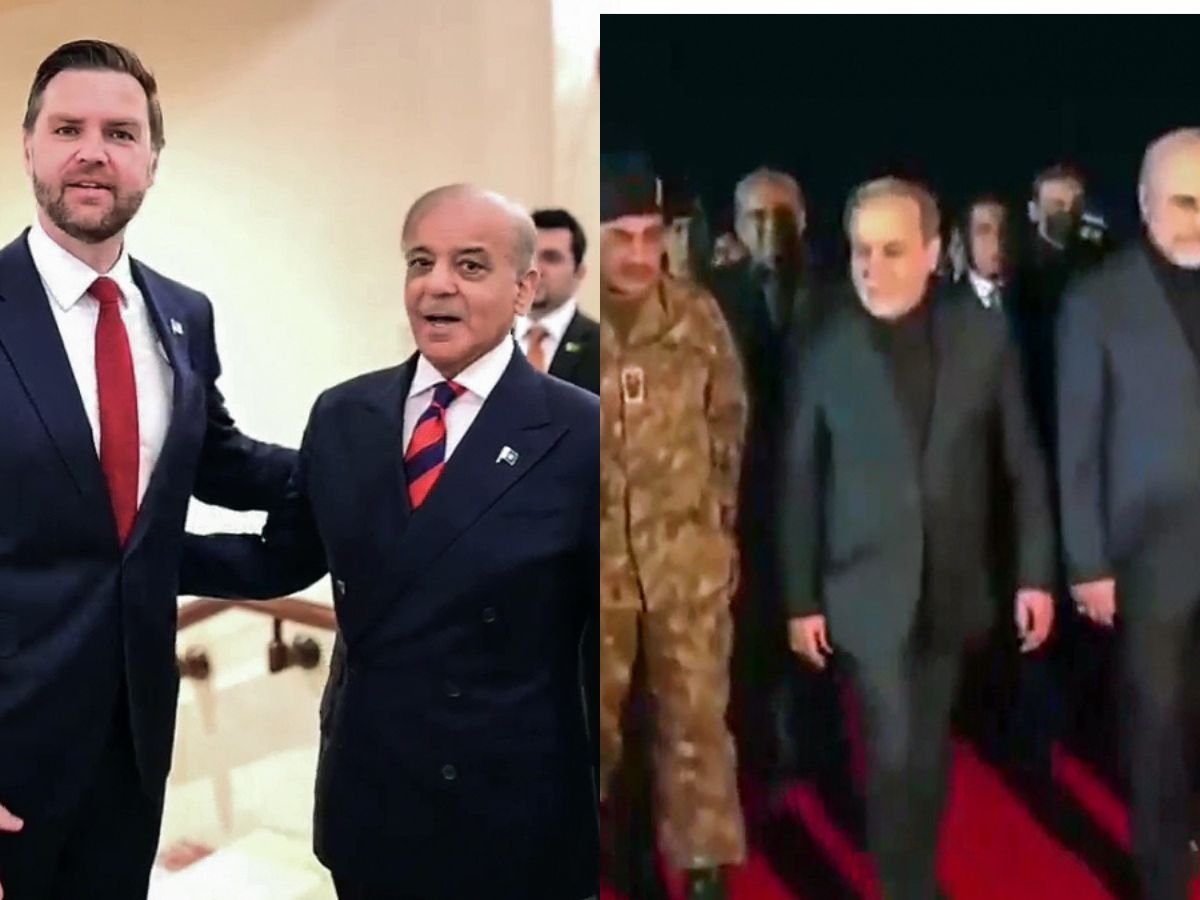
Islamabad Talks Failed: What Happens Now As JD Vance Calls Peace Talks Failure Bad News For Iran, Will Pakistan Pay The Price? (Image Credit: ANI)
The Islamabad talks, as Pakistan’s Shehbaz Sharif termed it, started on Saturday as a stakes high diplomatic initiative between the United States and Iran. JD Vance and Mohammad Bagher Ghalibaf, respectively, led the negotiations. Those talks were held in the backdrop of a weak ceasefire declared previously by Donald Trump who had urged a temporary lull in the hostilities and urged Islamabad to help in the talks. Pakistan put itself in the role of host, which indicated both diplomatic ambition and a pressing national interest in de escalation. But on Sunday morning, JD Vance announced that they are returning without a deal as the Islamabad talks failed.
The main question is what will happen after Islamabad Talks failed? Pakistan’s leaders are deeply concerned about the threats of a long term confrontation between Washington and Tehran. Hosting the talks, Pakistan tried to find the golden means of maintaining its relations with both parties, without being directly involved in the crisis. Nevertheless, the nature of the negotiations, with two long standing foes, who were highly suspicious of each other, did not precondition the success of the breakthrough in the first place. Both parties went into the negotiations with hard red lines, so there was little room to compromise.
‘Islamabad is seeking to reassert diplomatic relevance by positioning itself as a credible interlocutor, leveraging its ties with Washington, Tehran, and key Gulf capitals,’ Raza Rumi, a US-based Pakistani analyst, was quoted as saying by DW news outlet. Analysts said that in case such talks do not work, Pakistan may experience severe strategic repertoires. Geographically, the nation is at a strategic crossroads, both having a border with Iran and a close defence relationship with Saudi Arabia, the main regional competitor of Tehran. This is a precarious location which puts Islamabad at risk of spillover effects in case of any escalation. Analysts are afraid of a possible nightmare scenario, in which Pakistan will be coerced to pick sides or even take part indirectly in a larger regional conflict.
Pakistan also has internal security issues, which complicate the situation. The continued tensions on its western borders, especially with Afghanistan, and a very long term insurgency in Balochistan already puts a strain on the military and governance capacity of the country. A fresh US-Iran faceoff would virtually flame up several fronts at a time. This is a tight walking act on the part of the leadership of Pakistan, including the Army Chief Asim Munir, who have to balance external relations and internal stability.
The other sensitive issue is the potential of US strategic demands. Since it is a major regional partner to Iran, Pakistan might be requested by Washington to provide logistical or military assistance in case of escalation. Meeting these demands is likely to lead to domestic resistance, particularly since in Pakistan, the Shia community is a major constituency and it has been historically positioned within the larger Islamic community. Saying no would lead to an ugly relationship with the United States, and put Islamabad in a tricky diplomatic situation.
‘We have a reset going. We’re loading up the ships with the best ammunition, the best weapons ever made – even better than what we did previously and we blew them apart,’ the Post quoted Trump as saying. ‘And if we don’t have a deal, we will be using them, and we will be using them very effectively.’ A statement is expected any minute from US President Trump.
Sri Lanka’s Kusal Mendis found himself in an uncomfortable situation during a post-match press conference…
Apple and Google’s upcoming iPhone 18 Pro and Pixel 11 will likely use Samsung’s new…
Lucknow Super Giants take on the Gujarat Titans in an afternoon IPL 2026 clash today.…
