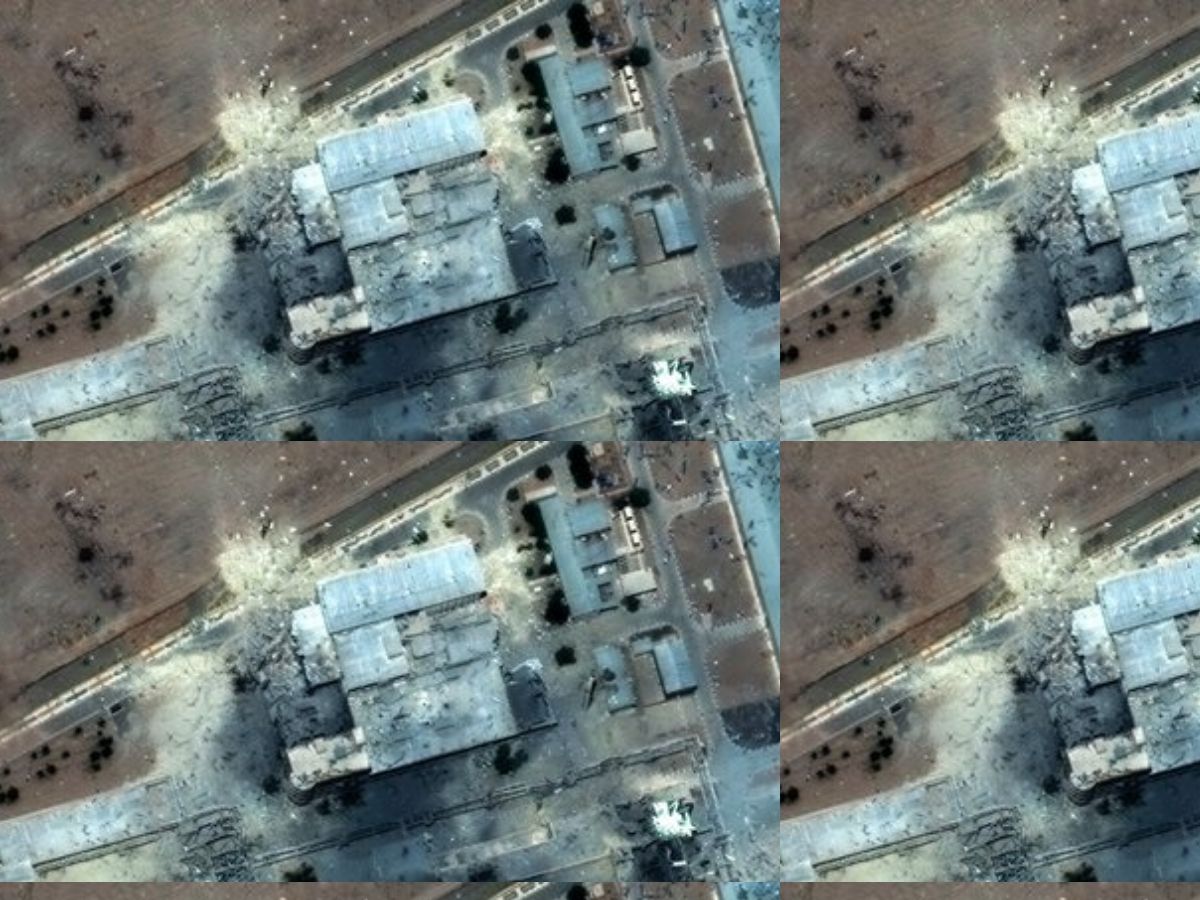
Israel has claimed that Iran's buried enriched uranium could still be retrieved as experts await data on US bunker-busting bombs after airstrikes last month. (Image courteys: X/@mdubowitz)
A senior Israeli official has raised concerns that Iran’s enriched uranium — buried deep at the Isfahan nuclear facility — may not have been destroyed in last month’s US airstrikes, according to a report published by The Associated Press.
“The enriched uranium at Isfahan could potentially be retrieved by Iranians,” the official told the US-based news agency on condition of anonymity, adding that “it would take a very difficult recovery effort.”
The official further told the publication that Israel believes the uranium was stored across all three targeted sites — Isfahan, Fordo and Natanz, and likely wasn’t moved before the attacks.
Two US officials from the Defense Threat Reduction Agency told AP that they are still waiting for post-strike data to confirm whether the GBU-57 “bunker buster” bombs, designed specifically for these kinds of fortified facilities, had reached their intended depth. These bombs were reportedly used on Fordo and Natanz, while Isfahan was hit by other munitions.
President Donald Trump has insisted the strikes “obliterated” all three nuclear sites, an assertion that Defense Secretary Pete Hegseth has backed saying that the facilities were “destroyed”.
However, American intelligence agencies have said the strikes caused significant damage but did not wipe out the facilities. CIA Director John Ratcliffe added that Iran’s only metal conversion facility was taken out, calling it a major setback.
Iranian President Masoud Pezeshkian told Tucker Carlson this week that the airstrikes were so devastating that authorities still haven’t been able to fully access the sites. “Unfortunately, as a result of the United States’ unlawful attacks… many of the pieces of equipment and the facilities there have been severely damaged,” he said, while also expressing willingness to resume cooperation with the UN nuclear watchdog, according to the AP.
Last month, Rafael Grossi, head of the International Atomic Energy Agency, had confirmed that the sites were heavily damaged. “Frankly speaking, one cannot claim that everything has disappeared,” he reportedly said, urging Tehran to grant inspectors full access to assess the damage.
ALSO READ: ‘Do Not Travel to Iran’: US Warns Bombing Has Stopped, But Travel Remains Unsafe
Police are investigating whether five spent cartridges found at Ashok Kharat’s farmhouse were linked to…
Gujarat’s proposed Uniform Civil Code Bill makes it compulsory for all live-in couples to register…
Iran has allowed limited passage through the Strait of Hormuz but blocked US- and Israel-linked…
