
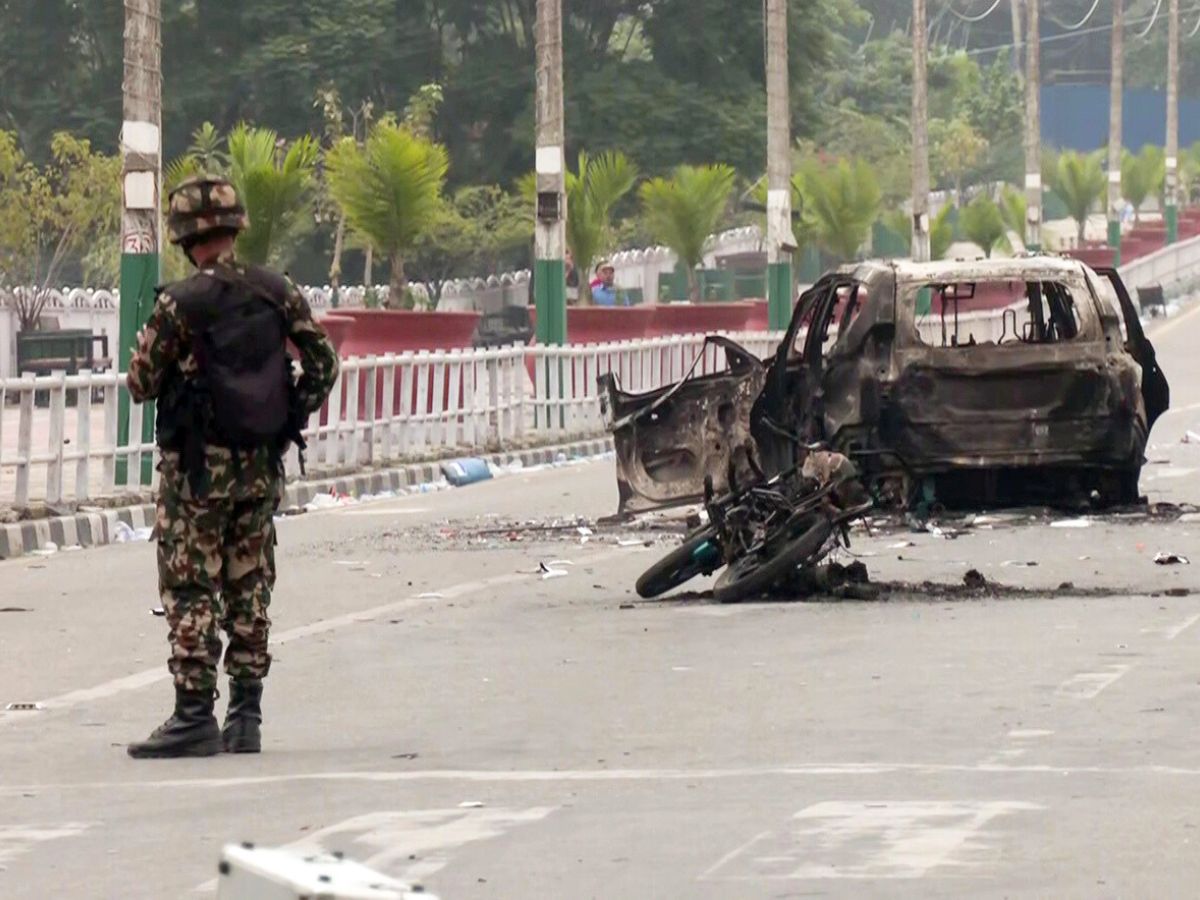
Nepal is voting today in a high-stakes general election, the first since last year’s dramatic Gen Z-led protests forced the resignation of former prime minister KP Sharma Oli and reshaped the country’s political landscape.
The election is being seen as a defining moment for the Himalayan nation, with nearly 1.9 crore eligible voters expected to determine whether power returns to traditional political forces or shifts toward a younger leadership.
The election comes months after youth-led demonstrations on September 8 and 9 demanded stronger anti-corruption measures, an end to nepotism, better governance and generational change in politics. The protests ultimately led to Oli stepping down as chair of the Communist Party of Nepal (Unified Marxist–Leninist) (CPN-UML).
Following the political upheaval, President Ramchandra Paudel dissolved the House of Representatives and appointed Sushila Karki as caretaker prime minister, paving the way for fresh elections.
Voting Underway Across the Country
Polling began at 7 AM local time and will continue until 5 PM. Nepal time is 15 minutes ahead of India, meaning voting started at 6:45 AM IST.
Authorities have described security arrangements as “foolproof,” with more than 300,000 security personnel deployed under an integrated plan coordinated with the Nepal Army.
Nepal has declared a three-day public holiday to facilitate smooth voting. According to the Election Commission, polling is taking place across 10,967 booths and 23,112 polling centres nationwide. Officials have expressed confidence that voter turnout will increase this time, aided by improved voter education efforts aimed at reducing invalid ballots.
How the Election Is Structured
Voters are electing 275 members to the House of Representatives, the lower chamber of Parliament. Of these, 165 members will be chosen through the first-past-the-post system, while the remaining 110 seats will be filled through proportional representation.
A total of 3,406 candidates are contesting the 165 direct seats, and 3,135 candidates are competing for proportional representation slots. In all, 65 political parties are participating in the election, reflecting the fragmented yet vibrant nature of Nepal’s democratic system.
Transporting ballot boxes remains a logistical challenge, particularly in snowbound and mountainous regions that include some of the world’s highest peaks. Ballots are counted manually, which can slow down the final declaration of results.
What Are the Key Issues?
This election is largely being shaped by the concerns raised by Gen Z protesters last year. Anti-corruption reforms, good governance, unemployment, nepotism and generational change dominate campaign narratives. Younger voters, many of whom took to the streets during the protests, are expected to play a decisive role in the outcome.
Traditional political forces are defending their track record and emphasising stability and experience. Meanwhile, newer and reformed parties are attempting to position themselves as vehicles of change, appealing to first-time voters and urban youth disillusioned with long-standing leadership.
Who Are the Key Contenders?
-
KP Sharma Oli- Prime ministerial face of CPN-UML, contesting from Jhapa-5 and representing the traditional political establishment.
-
Balendra Shah (Balen)- Former Kathmandu mayor and youth icon, projected as the prime ministerial candidate of the Rastriya Swatantra Party (RSP), challenging Oli in Jhapa-5.
-
Gagan Thapa- Leader of the Nepali Congress, positioning himself as a reformist alternative within the traditional framework.
-
Pushpa Kamal Dahal ‘Prachanda’- Veteran communist leader and head of the Maoist Centre, seeking to retain his party’s influence in national politics.
When Will the Results Be Out?
Counting will begin immediately after polling concludes and ballot boxes are collected. Results for the direct first-past-the-post seats are expected within 24 hours of the start of counting.
However, the proportional representation results could take an additional two to three days due to the complexity of the system and manual tabulation.
In the 2022 general election, it took more than two weeks for final results to be released because of Nepal’s difficult terrain and logistical constraints. While officials are hopeful of a quicker outcome this time, some delays cannot be ruled out.
A Turning Point for Nepal’s Political Future
The Nepal Election 2026 represents more than just a routine democratic exercise. It is widely viewed as a referendum on the country’s political direction after a youth-driven uprising reshaped the national conversation.
Whether voters choose experienced leaders or opt for generational change, today’s verdict will significantly influence Nepal’s governance and political stability in the years ahead.