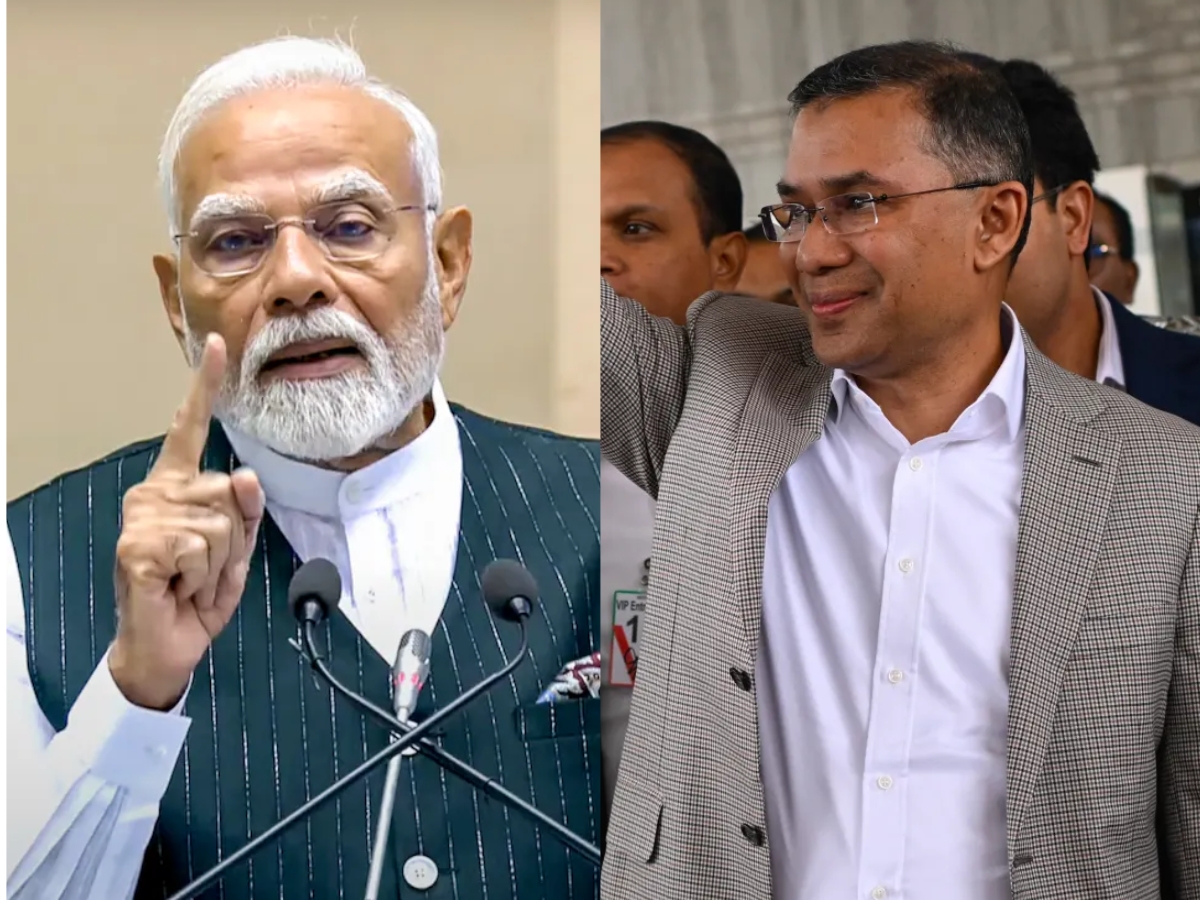
BNP wins Bangladesh polls with 212 seats as Tarique Rahman set to be PM; India reacts cautiously amid minority safety concerns. Photos: X
Bangladesh election results released on Saturday by the country’s Election Commission, and reported by The Dhaka Tribune and Prothom Alo English, showed the BNP overwhelmingly winning the polls. The BNP-led alliance won 212 seats out of the 299. Voting for the general elections took place on Thursday, February 12. BNP’s Tarique Rahman is all set to take charge as the country’s new Prime Minister.
In a statement, Bangladesh’s interim leader Muhammad Yunus congratulated Rahman for the “landslide victory of his party” as he prepares to step down and hand over power to an elected government.
The opposition Jamaat-e-Islami also issued a statement accepting the “overall outcome” of the election won by the rival nationalist party.
With the results now clear, attention has shifted to the formation of the new government. According to Prothom Alo, citing sources at Yunus’s office, the oath-taking ceremony of Members of Parliament may take place on Monday or Tuesday, with the prime minister and cabinet members likely to be sworn in the same day.
Less than two months after returning from 17 years of self-imposed exile in London, Rahman has emerged as the new face of Bangladesh’s political landscape.
The 60-year-old had left the country in 2008, citing the need for medical treatment following his release from detention under a military-backed caretaker regime. He had been arrested during a nationwide anti-corruption crackdown.
Also Read:
Rahman returned to Bangladesh last Christmas to a hero’s welcome following the ouster of former prime minister Sheikh Hasina in August 2024.
He comes from one of Bangladesh’s most influential political families. His mother, Khaleda Zia, long dominated national politics and served as prime minister, while his father, Ziaur Rahman, was a leading figure in Bangladesh’s independence movement and ruled the country from 1977 until his assassination in 1981.
India is weighing its next steps with cautious optimism following the decisive electoral verdict, viewing the BNP victory as an opportunity to restore stability in bilateral relations.
Reports citing senior government sources said the result reinforces India’s long-standing position that only a democratically elected government with a popular mandate can provide predictability in India–Bangladesh ties.
From New Delhi’s strategic perspective, the election outcome represents a clear break from the interim administration led by Muhammad Yunus.
Relations between the two countries deteriorated sharply during this period due to repeated delays in restoring democratic processes and a pattern of publicly blaming India and the Indian media for bilateral tensions.
New Delhi has “always engaged with the elected government of the day, which has a popular mandate.
Against this backdrop, India considers the return of elected leadership an “opportune moment” to repair diplomatic setbacks. The focus now shifts to Rahman, whom Indian officials describe as someone they are “cautiously optimistic” about. While acknowledging past differences with previous BNP governments, New Delhi believes Rahman may adopt a more pragmatic diplomatic approach shaped by economic realities and regional stability concerns.
The optimism was reflected in swift outreach from Indian Prime Minister Narendra Modi, who said on X that he was “delighted to speak” with Rahman and congratulated him on the “remarkable victory”.
Modi reaffirmed India’s commitment to peace, progress, and prosperity for both countries, emphasising the deep historical and cultural ties between the neighbours.
Diplomatic signalling is expected to continue, with a senior Indian representative likely to attend Rahman’s swearing-in ceremony.
This follows External Affairs Minister S. Jaishankar’s recent visit to Bangladesh to pay respects after the death of former prime minister and BNP chairperson Begum Khaleda Zia.
One of the most significant challenges facing Rahman will be ensuring the protection of minority communities, particularly Hindus, amid rising concerns over violence.
Hindus in Bangladesh have been living in fear following a spate of attacks in recent years. According to the Bangladesh Hindu Buddhist Christian Unity Council, more than 2,000 incidents of communal violence have been reported since the collapse of the Hasina government.
These incidents include at least 61 killings, 28 cases of violence against women, and 95 attacks on places of worship involving vandalism, looting, and arson.
Violence continued even during the election period. A day before voting, the bloodied body of a young Hindu tea garden worker was found in Kamalganj upazila in northeast Bangladesh with his hands and legs tied.
The surge in attacks during the interim government period had also inflamed tensions between New Delhi and Dhaka. Rahman will need to address fears within the Hindu community through concrete action.
Rahman has emphasised the need for inclusivity and security for all communities in Bangladesh.
“People from the hills as well as the plains live here. That apart, we have people belonging to Islam, Buddhist, Christian and Hindu faiths and for them we want to build a secure Bangladesh,” he said in a Bengali speech delivered at a public meeting in Dhaka’s Purvachal neighbourhood, according to The Hindu.
Zubair Amin is a Senior Journalist at NewsX with over seven years of experience in reporting and editorial work. He has written for leading national and international publications, including Foreign Policy Magazine, Al Jazeera, The Economic Times, The Indian Express, The Wire, Article 14, Mongabay, News9, among others. His primary focus is on international affairs, with a strong interest in US politics and policy. He also writes on West Asia, Indian polity, and constitutional issues. Zubair tweets at zubaiyr.amin
AI-Driven Transformation: AvenuesAI Reports 122% Revenue Surge and Profit Jump
AvenuesAI posts record quarterly results with 122% revenue growth, 59% profit increase, launches AI-driven payment…
ATLAS ISDI Brings Design-Led AI Discourse to Campus at AI Impact Pre-Summit
Mumbai (Maharashtra) [India], February 14: ATLAS SkillTech University and ISDI – School of Design & Innovation,…
The United States military reportedly used an artificial-intelligence system developed by Anthropic during the operation…
