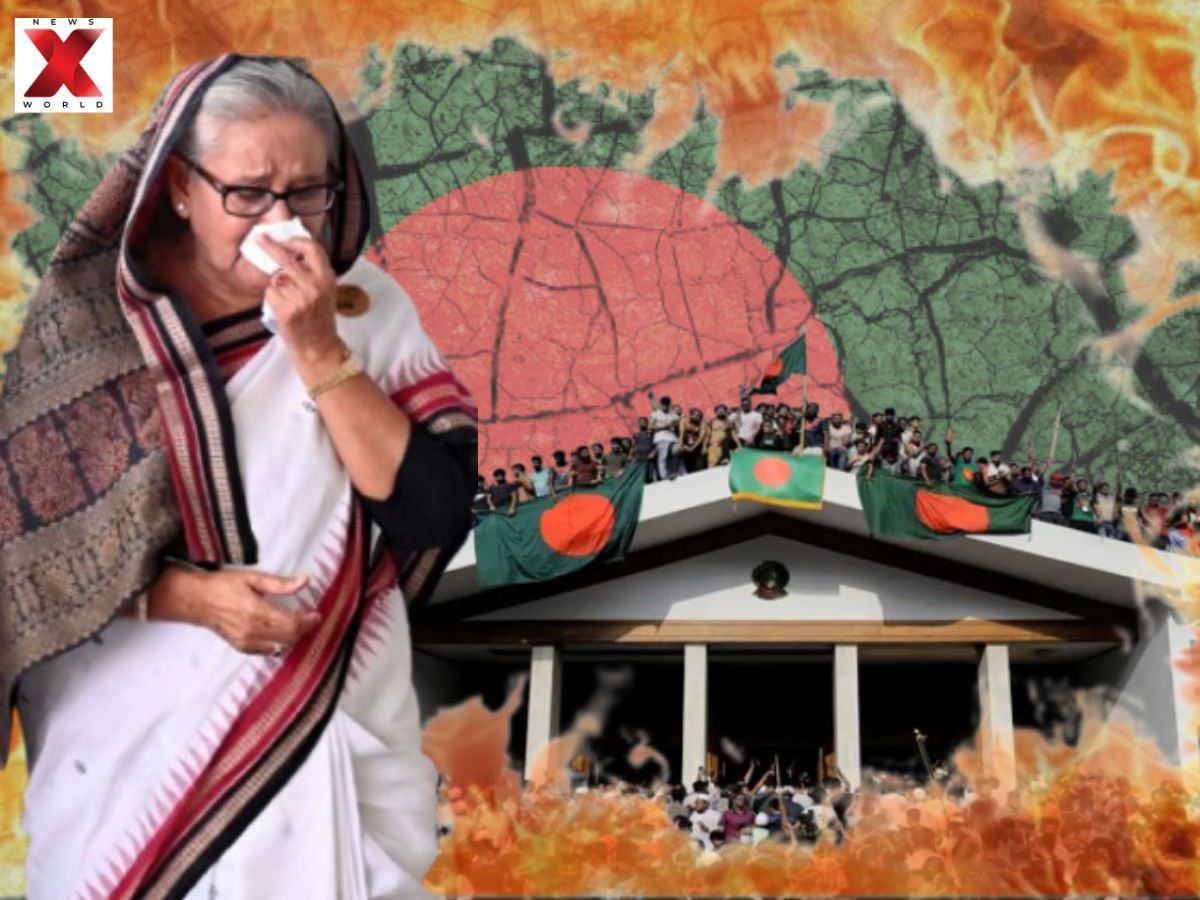
Sheikh Hasina Verdict: Bangladesh On Edge
The International Crimes Tribunal (ICT) in Bangladesh delivered its verdict in absentia against former Prime Minister Sheikh Hasina on November 17, 2025.
Hasina, who had been hiding in neighboring India since August 2024, faced five serious charges, including mass killings, ordering lethal force via helicopters and drones, and destruction of evidence during the 2024 student-led uprising. Prosecutors had pushed for the death penalty, while her former aides, ex-Home Minister Asaduzzaman Khan Kamal and former IGP Chowdhury Abdullah Al-Mamun, were also in the dock.
Sheikh Hasina’s rule was often described as a period when the country teetered on the edge, crumbs of governance and moral responsibility scattered in every corner. Her absence had taken a heavy toll on the Awami League and Bangladesh itself.
You Might Be Interested In
In one of her defiant statements, she had said, “Allah has given life, Allah will take it,” hinting at the precarious balance of power when leadership loses its way. The charges highlighted the extreme measures taken under her watch and the alleged inhumane actions committed during the violent crackdown.
As Bangladesh awaited the verdict, tensions were high, emotions raw, and history itself seemed to be watching.
Background Of The Case Sheikh Hasina Verdict: THE POLITICAL RUKUS CREATED
- Sheikh Hasina was ousted after weeks of student-led protests in July–August 2024.
- UN investigators estimate up to 1,400 civilians were killed during the violent crackdown.
- Hasina faces five counts of crimes against humanity.
- The trial is conducted in her absence; a court-appointed lawyer represents her.
- In a related case, she was sentenced to six months for contempt of court in July 2025.
Sheikh Hasina Verdict: Charges Against Sheikh Hasina And Aides
-
Provocation and Abetment: Inciting Violence Against Student Protesters
The speech of Sheikh Hasina on July 14, 2024, was claimed to have provoked organized attacks against unarmed student demonstrators. Prosecutors argued that her orders were directly backed by her aides, and they urged the police and security forces to clamp down on the protests using force. This allegation implies that there was an intentional effort to build civil strife, resulting in a massive loss of life.
-
Extermination Using Lethal Weapons: Use of Helicopters, Drones, and Live Ammunition
Hasina was claimed to have approved the use of helicopters, drones, and live ammunition against protesting students. The claim made by investigators was that such mass and indiscriminate firepower was used in a systematic manner to stifle dissent. The accusation brings forward claims of overuse and premeditated application of military-powered weaponry on civilians, escalating the level of violence in the events of July-August.
-
Killing of Abu Sayed: Targeted Lethal Action on University Student
This accusation is a reference to the lethal shooting of a Begum Rokeya University student, Abu Sayed, that took place on July 16, 2024. According to prosecutors, the security forces acted under the supervision or directions of Hasina with each individual student. It became symbolic of the state’s crackdown and a center of the accusations of crimes against humanity.
-
Chankharpul Killings: Execution of Six Unarmed Demonstrators
Apparently, six unarmed demonstrators were shot dead on August 5, 2024, in Chankharpul, Dhaka. According to the prosecution, the attack was planned as a state-violent retaliation to dissent. It also points to trends of specific executions, demonstrating a consistent method of suppressing protests instead of isolated cases of police misconduct.
-
Ashulia Mass Killing: Extreme Cruelty and Burnings
Six demonstrators were fired upon in Ashulia, and five corpses were burned, with one man said to have been burned alive. This accusation reflects excessive cruelty, which was supposedly carried out on the directive of Hasina. It highlights the diabolical inhumanity of the July Uprising and is one of the most crucial pieces of prosecution evidence about the crimes against humanity.
Sheikh Hasina Verdict: Death Sentence For Sheikh Hasina
Ousted Bangladesh Prime Minister Sheikh Hasina was sentenced to death on Monday by the International Crimes Tribunal-1 (ICT-1) for her role in the violence and killings during the July, August 2024 student agitation. Hasina, along with former Home Minister Asaduzzaman Khan Kamal and former Inspector General of Police Chowdhury Abdullah Al-Mamun, faced trial for crimes against humanity.
Hasina was found guilty on three counts: preventing justice, ordering killings, and failing to take measures to stop punitive killings. The tribunal spared Bangladesh’s former police chief Chowdhury Abdullah Al-Mamun from the death penalty, following his cooperation as a state witness.
Sheikh Hasina Verdict: Key Points
-
Orders And Evidence Against Hasina:
-
Quoting from several reports, the tribunal judges said, “there was evidence that Hasina herself ordered the use of helicopters and lethal weapons against the protesters in Dhaka.”
-
“Her government denied medical treatment, got victims admitted under false names, and hid bullet injuries.”
-
“A doctor was allegedly threatened to change the post-mortem report of Abu Sayed.”
-
The sentencing by the ICT, led by Justice Md Golam Mortuza Mozumder, was broadcast live.
-
Judges read portions from the 453-page judgment divided into six sections to hold Sheikh Hasina guilty in the crimes against humanity case.
-
Sheikh Hasina Found Guilty On Three Counts:
-
Sheikh Hasina was found guilty on three counts of incitement, ordering killings, and failing to prevent atrocities and punitive action against perpetrators.
-
As the chief judge ruled, “Imprisonment till death under charge one.”
-
Guilty Of Crimes Against Humanity:
-
The chief judge of ICT stated, “She is guilty of crime against humanity.”
-
“The accused Prime Minister Sheikh Hasina had superior control over the former Home Minister and police chief and did not take any punitive action against perpetrators of violence against the protesters.”
(With Inpust From Releases, Statements, Court Hearings)
Also Read: Sheikh Hasina Verdict: Bangladesh Court Sentences Ex-PM Hasina To……
Aishwarya is a journalism graduate with over three years of experience thriving in the buzzing corporate media world. She’s got a knack for decoding business news, tracking the twists and turns of the stock market, covering the masala of the entertainment world, and sometimes her stories come with just the right sprinkle of political commentary. She has worked with several organizations, interned at ZEE and gained professional skills at TV9 and News24, And now is learning and writing at NewsX, she’s no stranger to the newsroom hustle. Her storytelling style is fast-paced, creative, and perfectly tailored to connect with both the platform and its audience. Moto: Approaching every story from the reader’s point of view, backing up her insights with solid facts.
Always bold with her opinions, she also never misses the chance to weave in expert voices, keeping things balanced and insightful. In short, Aishwarya brings a fresh, sharp, and fact-driven voice to every story she touches.