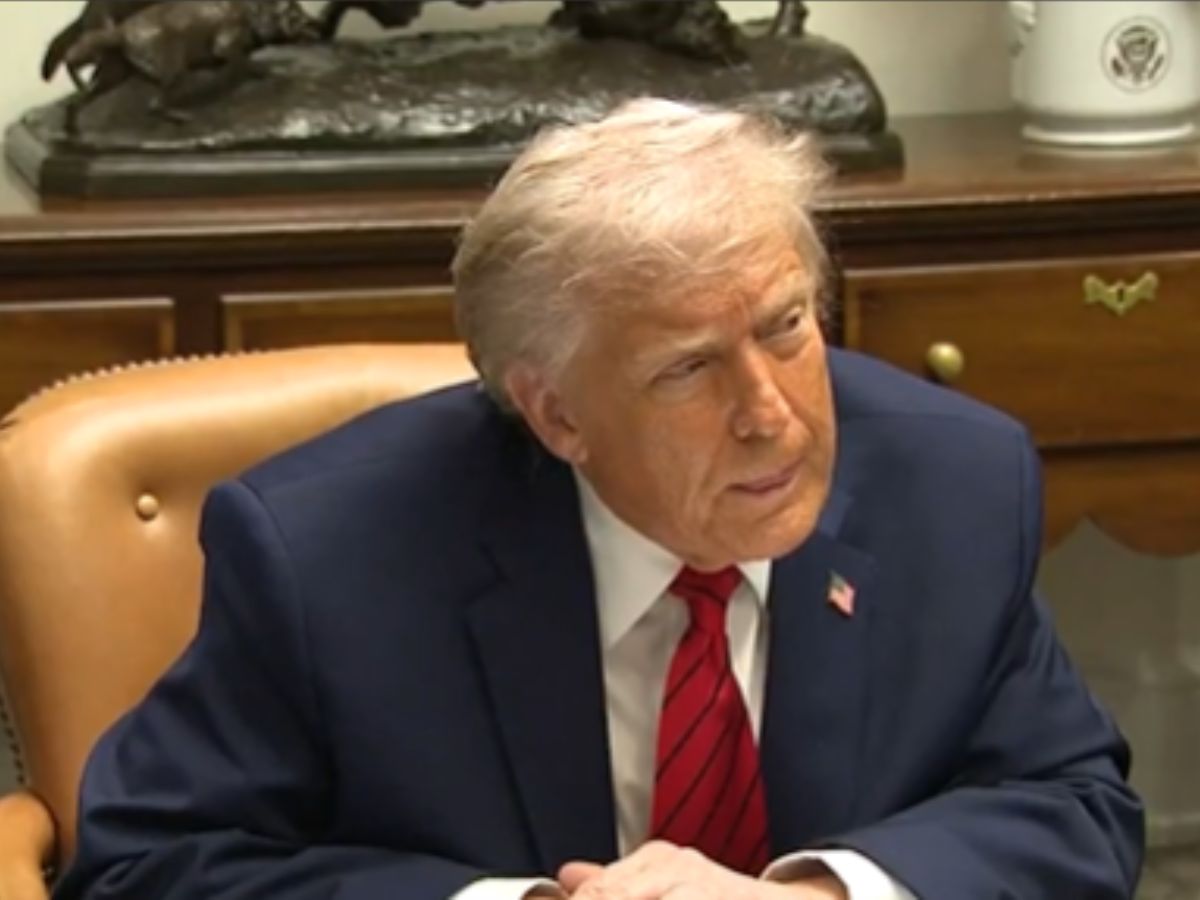
Donald Trump sparked backlash (Photo Credits: X)
The “Trump Gold Card” which was recently revealed marks a remarkable lift-off of a new project that foreign nationals with ultra-high-net-worth looking for a quicker way to get U.S. permanent residency will be the first ones to benefit from it. The program will be very different from the existing employment and family-based programs.
The new route to Green Card will be formed around an “immense, non-refundable” financial donation to the U.S. government where the money will not be considered a regular investment. Instead, the purpose will be to facilitate the entire process for the very best talent and the richest global investors.
The administration aims this new flow of foreigners with deep pockets will drive the economy and commerce of the nation. The program has been entrenched in an Executive Order that instructs federal agencies to carry out the framework and handle the special applications.
The program is presently accepting preliminary applications with main financial conditions. For the individual applicant to be able to apply for the Trump Gold Card, a non-refundable gift of $1 million USD to the Department of Commerce is required along with an initial application fee.
The Trump Corporate Gold Card, which is issued separately, allows the business to gift $2 million USD to the Department of Commerce for sponsorship of an eligible employee. Besides, each dependent family member associated (spouse plus unmarried children below 21 years of age) needs to make a further $1 million contribution.
The entire application process starts with a non-refundable $15,000 USD processing fee that is submitted to the Department of Homeland Security (DHS). This processing fee activates fast-tracked vetting and background check.
The Gold Card does not establish a new category for visas to be issued, rather it employs the monetary contribution as a strong indicator of either Exceptional Ability or National Interest under the current employment-based visa categories (EB-1 or EB-2).
This important difference in procedure aids in the avoidance of the usual difficult and time-consuming evidentiary requirements. After going through the DHS quarantine and making the payment of $1 million (or $2 million) for the gift, the immigrant petitioner will be granted approved status.
The execution of the new law is being carried out at a fast pace, and the Executive Order has set the deadline for the program to be in full swing by December 18, 2025. Potential applicants first have to present the initial Form I-140G petition along with the non-refundable processing fee to embark on their speedy journey towards a possible U.S. permanent residence.
A recent media graduate, Bhumi Vashisht is currently making a significant contribution as a committed content writer. She brings new ideas to the media sector and is an expert at creating strategic content and captivating tales, having working in the field from past four months.
India are scheduled to play a one-off Test and three ODIs against Afghanistan in June,…
The Central Board of Secondary Education (CBSE) has released the CTET Provisional Answer Key 2026…
Delhi Capitals' wicket-keeper batter Abhishek Porel was all in praise of KL Rahul and Axar…
