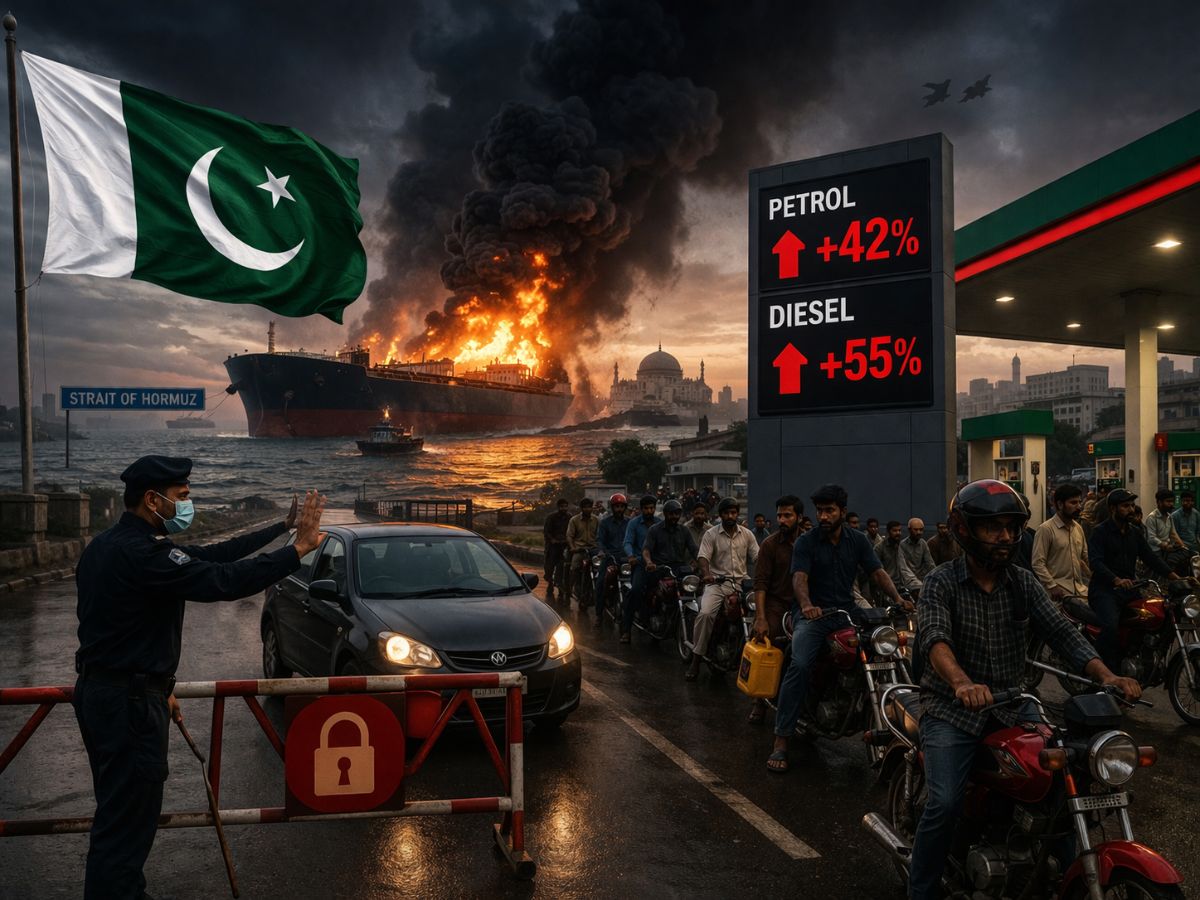
Pakistan announces smart lockdown (Image: AI-generated)
Pakistan’s fuel crisis is caused by several factors, not the least of which is the ongoing conflict in Iran and the resulting blockade of the Strait of Hormuz. The government is taking steps to reduce consumption by implementing targeted restrictions on certain areas of the country and on personal vehicles. The government has announced a “smart lockdown” that will allow businesses and people to operate as normal, but restrict alternative sources of fuel from being used or available.
A “smart lockdown” is a targeted way of restricting movement and activity without shutting everything down completely. Instead of a full nationwide lockdown, the government applies rules only in specific areas, sectors, or time periods where the problem is more serious. The goal is to reduce pressure, like saving fuel or controlling a crisis, while still allowing essential services, businesses, and daily life to continue as much as possible.
Key points about a smart lockdown:
Targeted restrictions: Only certain cities, areas, or sectors face limits instead of the whole country.
Time-based controls: Restrictions may apply on specific days (like weekends) or certain hours.
Essential services stay open: Hospitals, food supply, and key services continue working.
Reduced movement, not total stop: People are encouraged or required to limit travel, not completely stay home.
Flexible and adjustable: Rules can change quickly depending on how the situation improves or worsens.
With the prices of petrol rising by approximately 42% and diesel increasing by almost 55%, many individuals are beginning to see an immediate impact from these rising costs. The price increases are adding more upward pressure to inflation levels and will directly impact numerous aspects of society, from how much it costs to commute to work every day to how much you pay for groceries.
Globally, the crisis created by the war in Iran will continue to worsen. Energy analysts have emphasized that the disruption to global oil flows because of the war will far exceed any previous global oil crisis, including those experienced in 1973 and 1979. Closing off navigation through the Strait of Hormuz has resulted in a significant volume of global oil production being taken off-line, thus creating enormous upward pressure on prices and pushing countries to take urgent action.
To address the fuel shortage, Pakistan is has announced “smart lockdown” protocols. This is different from the type of lockdowns we saw through Covid-19 because the smart lockdown protocols are not intended to be full lockdowns. Instead, the goal is to target and restrict certain activities in an effort to conserve fuel while still allowing for all essential activities to continue.
According to drafts of the proposal, restrictions during the smart lockdowns may be put into place on specific days (weekend days for example) that will allow for limiting unnecessary driving and using excessive amounts of fuel. The draft proposal includes proposed restrictions for Saturday and Sunday beginning at 12:01 am on Saturday and ending at 11:59 pm on Sunday, but officials have made it clear that no decision would be made until after completion of the draft protocols.
The government is also looking into alternative ways to achieve similar results. These include working from home, moving schools into online formats, and similar solutions used during the Covid-19 Pandemic. Public sector fuel usage will decrease as per officials. Many services are anticipated to be moved to an online/digital environment to conserve energy.
A main concern is how long the country has available fuel. Currently, earlier forecasts indicated that petrol and diesel stocks were estimated to be viable for approximately 28 days, crude oil was approximately 10 days, and LPG fuel would be approximately 15 days.
Although authorities have stated that they have adequate fuel stocks as of now, the level of uncertainty is extremely high. The Government of Pakistan has communicated that if the Hormuz Disruptions were to continue that there may not be adequate fuel inventory levels very soon.
Khalid Qasid is a media enthusiast with a strong interest in documentary filmmaking. He holds a Master’s degree in Convergent Journalism from AJK MCRC. He has also written extensively on esports at Sportsdunia. Currently, he covers world and general news at NewsX Digital.
New Delhi [India], April 07: India is confronting a health crisis that does not spread…
Samsung will discontinue its Samsung Messages app by July 2026, urging users to switch to…
One attacker killed and two wounded in an extended gunfire that happened outside the Israeli…
