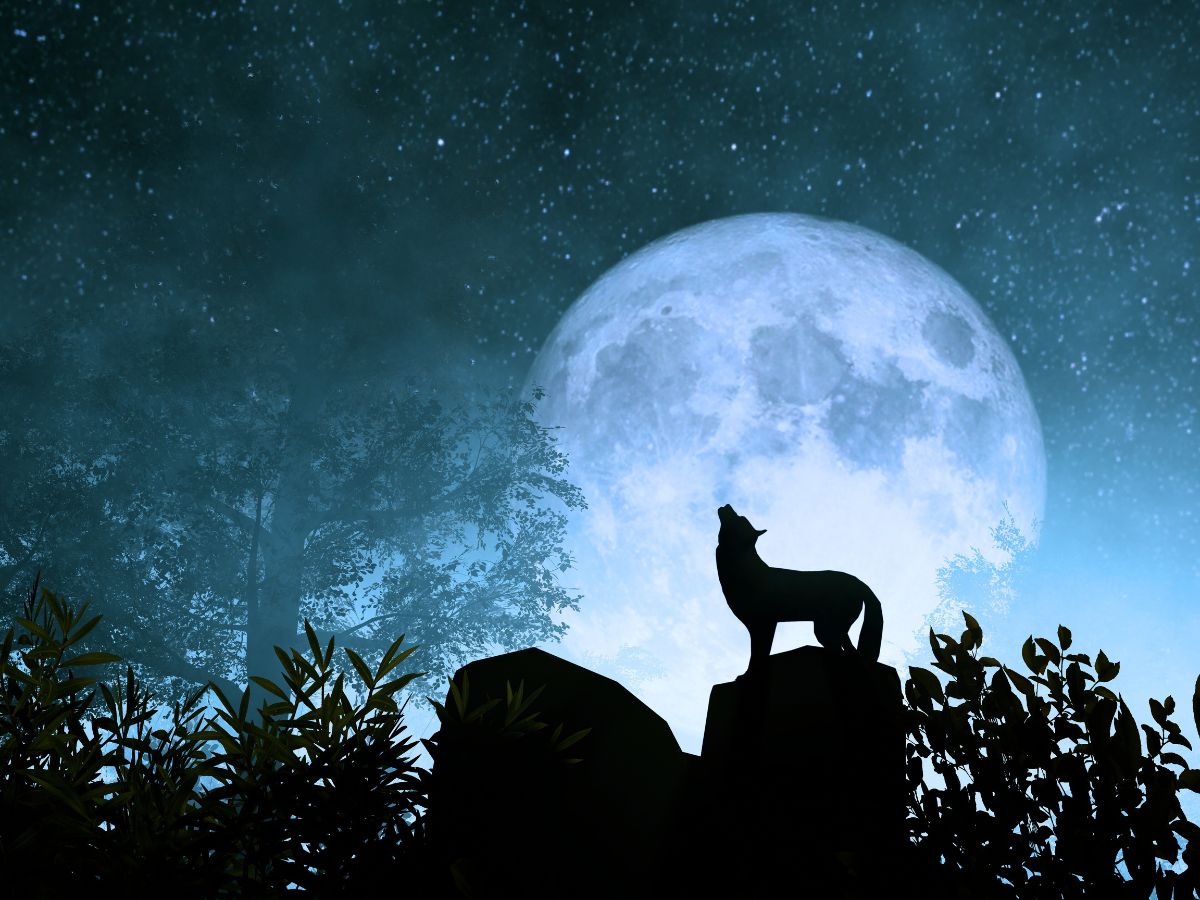
Wolf Supermoon rises to mark 2026’s first full moon.(Photo: Canva)
The first full moon of 2026, known as the Wolf Supermoon, is set to illuminate the night sky this weekend, offering skywatchers a brighter-than-usual lunar spectacle. This celestial event marks January’s full moon and also qualifies as the first supermoon of the year, making it a must-watch for astronomy enthusiasts.
The Wolf Moon is the traditional name given to the January full moon. The name dates back to Native American and European folklore, referring to the time of year when wolves were often heard howling during long, harsh winter nights.
This year, the Wolf Moon is extra special because it is also a supermoon. A Wolf Supermoon occurs when the full moon coincides with the Moon’s closest approach to Earth, known as perigee, causing it to appear larger and brighter than a regular full moon.
According to NASA, the Moon follows an elliptical orbit around Earth. During this roughly 27-day cycle, it reaches:
Perigee: about 363,300 km from Earth
Apogee: about 405,500 km away
When a full moon happens near perigee, it is called a supermoon. Supermoons typically appear up to 14% bigger and 30% brighter than a micromoon and usually occur three to four times a year, often in a sequence.
The Wolf Supermoon of January 2026 is also the final supermoon in a series that began in October 2025, which included the Harvest Moon, Beaver Moon, and Cold Moon.
Date: January 3, 2026
Peak full moon: 10:03 GMT (5:03 a.m. EST)
Best viewing time: Evenings of January 2 and January 3, shortly after sunset
Even if you miss the exact peak time, the Moon will appear full and bright for about two nights, making it ideal for casual viewing and photography.
The Wolf Supermoon will be visible worldwide, weather permitting.
Tips for the best view:
Find a location with a clear horizon and minimal light pollution
Watch the Moon just after sunset for dramatic views near the horizon
No telescope is needed, but binoculars or a camera can enhance the experience
The Moon may appear larger when it’s near the horizon due to the Moon illusion
Skywatchers will be treated to 13 full moons in 2026, including multiple eclipses and supermoons:
January – Wolf Moon (Supermoon)
February – Snow Moon
March – Worm Moon (Total lunar eclipse in North America)
April – Pink Moon
May – Flower Moon
May – Blue Moon (Second full moon of the month)
June – Strawberry Moon
July – Buck Moon (Partial lunar eclipse)
August – Sturgeon Moon
September – Harvest Moon (Corn Moon)
October – Hunter’s Moon
November – Beaver Moon (Supermoon)
December – Cold Moon (Supermoon)
The Wolf Supermoon is not just a visual delight it marks the beginning of the Moon’s annual cycle and offers a reminder of humanity’s deep cultural connection with the night sky. As the first supermoon of 2026, it sets the tone for a year filled with rare lunar events.
If skies are clear, step outside this weekend and look up the Wolf Supermoon is ready to shine.
Sofia Babu Chacko is a journalist with over five years of experience covering Indian politics, crime, human rights, gender issues, and stories about marginalized communities. She believes that every voice matters, and journalism has a vital role to play in amplifying those voices. Sofia is committed to creating impact and shedding light on stories that truly matter. Beyond her work in the newsroom, she is also a music enthusiast who enjoys singing.
Pawtucket Ice Rink Shooting: A youth hockey game in Pawtucket, Rhode Island, turned deadly on…
Ameesha Patel: Legal trouble has resurfaced for Bollywood actor Ameesha Patel after a Moradabad court…
Emmanuel Macron: Emmanuel Macron arrived in Mumbai on Tuesday for his India visit scheduled until…
