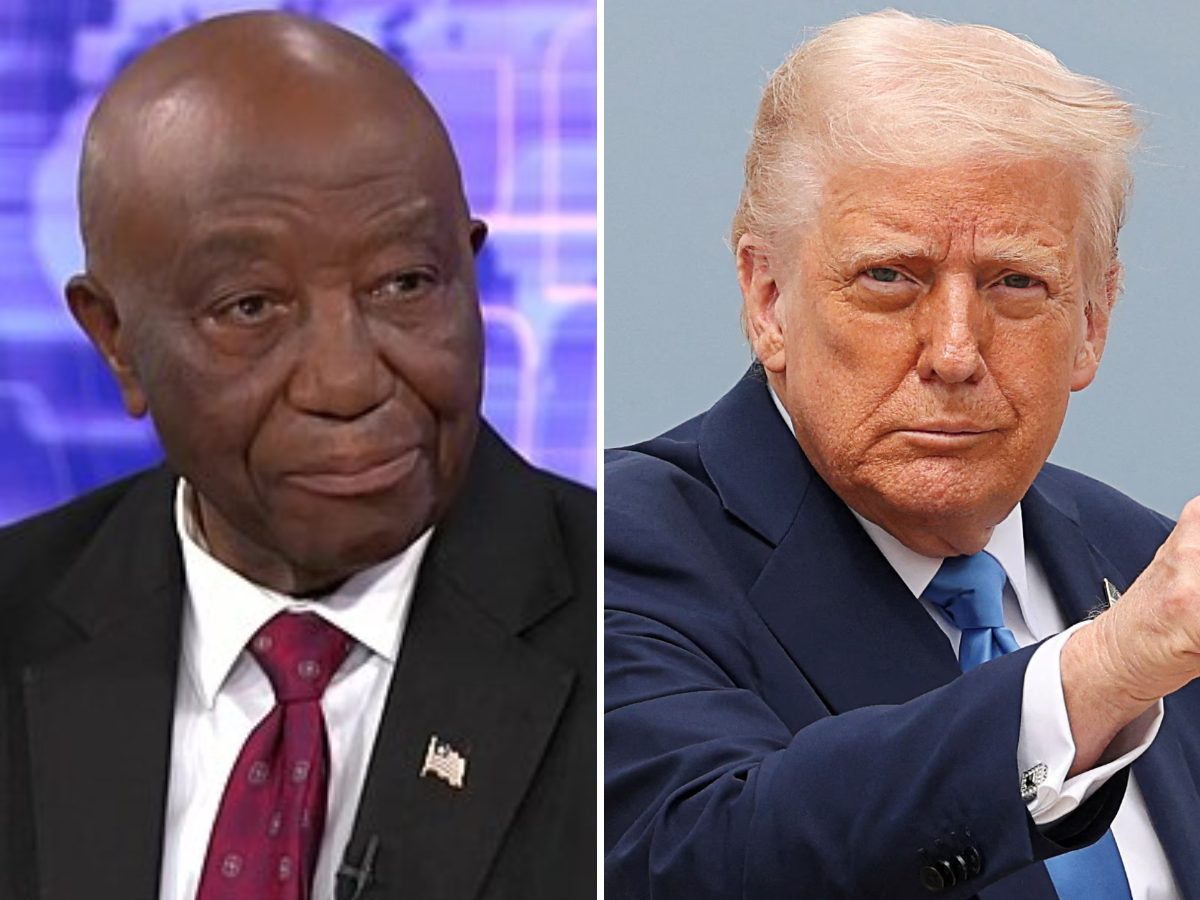
Liberian President Joseph Boakai and Donald Trump
Donald Trump was hosting a lunch at the White House for African leaders on Wednesday, July 9. After President Joseph Boakai made some brief remarks, Trump turned to him and asked about his English skills.
“Thank you, and such good English… Where did you learn to speak so beautifully? Where were you educated?” Trump asked.
Boakai, who like most Liberians speaks English as his first language, replied that he’d been educated in Liberia.
Boakai was facing away from the cameras, so reporters couldn’t see his exact expression, but his short, quiet answer suggested he felt a bit uncomfortable. Trump, sitting among other West African presidents—many of whom were French speakers—kept going.
“It’s beautiful English. I have people at this table can’t speak nearly as well,” he said.
The exchange quickly drew criticism online, with many calling it tone-deaf. English has been Liberia’s official language since its founding in 1822, when freed Black Americans settled there with support from American abolitionists and former slaveholders.
At the event, Boakai thanked Trump for the invitation, emphasising Liberia’s longstanding ties with the United States. He said, “Liberia is a longtime friend of the United States, and we believe in your policy of making America great again. We just want to thank you so much for this opportunity.”
Trump used the meeting, which included the presidents of Gabon, Guinea-Bissau, Mauritania, and Senegal, to promote a shift in US policy toward Africa—moving away from aid and focusing more on trade.
He also positioned the US as a better partner for African nations than China. While some leaders spoke through interpreters, Boakai addressed the gathering in fluent English.
A White House spokesperson later described Trump’s remarks as a “heartfelt compliment” and called the meeting a significant step toward strengthening US-Africa relations. Trump also expressed his hope to visit Africa in the future.
Liberia’s ties to the United States go back to the 1820s, when the American Colonization Society, backed by Congress and slaveholders, started sending freed slaves to what’s now Liberia. Thousands of these “Americo-Liberian” settlers eventually declared independence in 1847 and established a government over the African majority.
Liberia today has a wide range of indigenous languages and creole dialects; Kpelle is the largest single language group. Boakai himself can read and write Mendi and Kissi, but he mainly uses English, which is the country’s official language.
ALSO READ: Trump Imposes 50% Tariffs On All Imports From Brazil Over Bolsonaro Trial
Huge blow for Rajasthan Royals! England all-rounder Sam Curran is set to miss IPL 2026…
India will source crude oil and LPG from multiple countries, including Russia, amid global disruptions.
Border 2 OTT Release: When And Where To Stream Sunny Deol’s Epic War Drama? Check Key Details Here
Sunny Deol’s blockbuster Border 2 is set for its OTT debut on Netflix on March…
