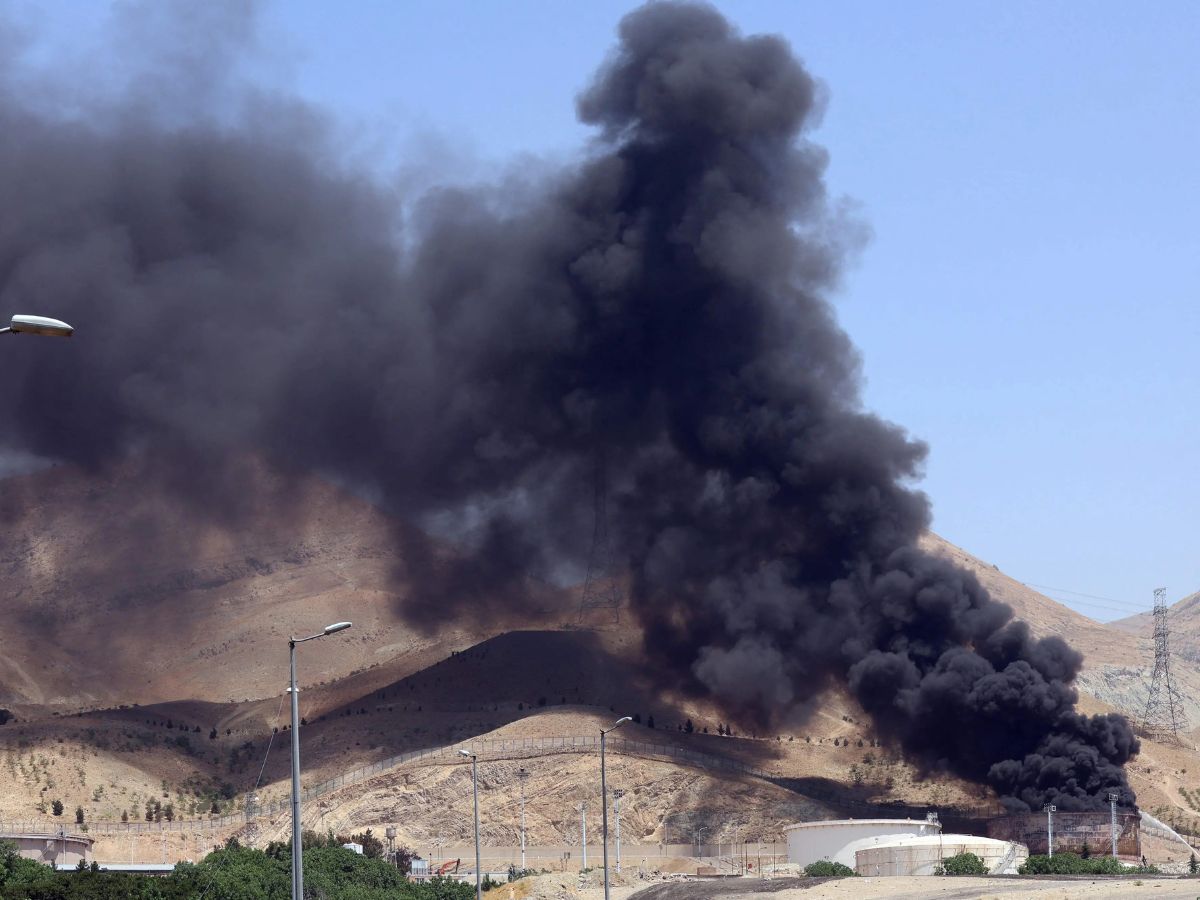
On Thursday, Israel launched an airstrike on Iran’s Arak heavy water nuclear reactor — a key part of Tehran’s nuclear program. Not long after, Iran fired back, and one of its missiles hit a hospital in southern Israel, causing what reports described as “extensive damage.”
The strikes happened on the seventh day of ongoing clashes between the two countries, and they’ve taken this already tense situation to a whole new level.
The Arak Nuclear Complex is in western Iran, about 280 km from Tehran. It’s made up of two main parts:
A heavy water experimental reactor
A plant that produces heavy water
Heavy water is used to cool down nuclear reactors. Iran has always said the site is just part of its peaceful energy program. But the problem? This type of reactor also creates weapons-grade plutonium as a byproduct — and that’s what makes people nervous.
Several outlets, like Politico and the Missile Defence Advocacy Alliance, have reported that if Iran ever wanted to build a nuclear bomb, Arak’s plutonium could help do it — without even needing enriched uranium.
That’s why countries around the world, especially Israel, have been watching this site closely.
Iran started building the heavy water reactor back in 2003, but it was done secretly — mainly because in the ‘90s, Iran tried to get help from other countries and was denied.
Then came the 2015 nuclear deal, which Iran signed with the US, UK, EU, and others. As part of the agreement, Iran said it would redesign the Arak reactor and scale down its nuclear work in exchange for sanctions relief worth billions.
Fast forward to 2019, and Iran kicked off the secondary circuit of the reactor. While this didn’t officially break the deal, it definitely moved Iran closer to being able to make weapons-grade materials.
Meanwhile, after the US pulled out of the deal in 2018 under President Trump, the UK stepped in and helped redesign the reactor to reduce how much plutonium it could make.
Iran also agreed to sell its heavy water to western countries to stay in line with the deal — but ever since the US exit, that agreement has been hanging by a thread.
Despite repeated warnings from international watchdogs like the IAEA and UN, Israel went ahead and hit the Arak facility on Thursday. They said it was to stop Iran from getting any closer to making nuclear weapons. “The strike targeted the component intended for plutonium production, in order to prevent the reactor from being restored and used for nuclear weapons development,”
said the Israeli military.
Iran, on the other hand, continues to deny it has any intention of building a bomb. Right now, it’s enriching uranium up to 60%, which is just below weapons-grade (90%) — but still way above what was allowed under the 2015 deal.
At the same time Israel was targeting Arak, a missile from Iran hit a hospital in southern Israel, according to the Associated Press. It caused “extensive damage,” but full details about injuries or casualties haven’t been released yet.
This back-and-forth, with nuclear facilities and civilian areas being hit, is pushing the situation into even more dangerous territory.
The attack on Arak is a huge escalation. Nuclear sites have always been seen as red lines—and now that Israel has struck one, Iran’s next move could be even bigger.
The Trump administration has shared a 15-point peace plan with Iran through intermediaries, including Pakistan,…
Alan Ritchson, star of Reacher and War Machine, is under investigation after a physical altercation…
Iran says the US and Israel struck targets near the Bushehr Nuclear Power Plant, raising…
