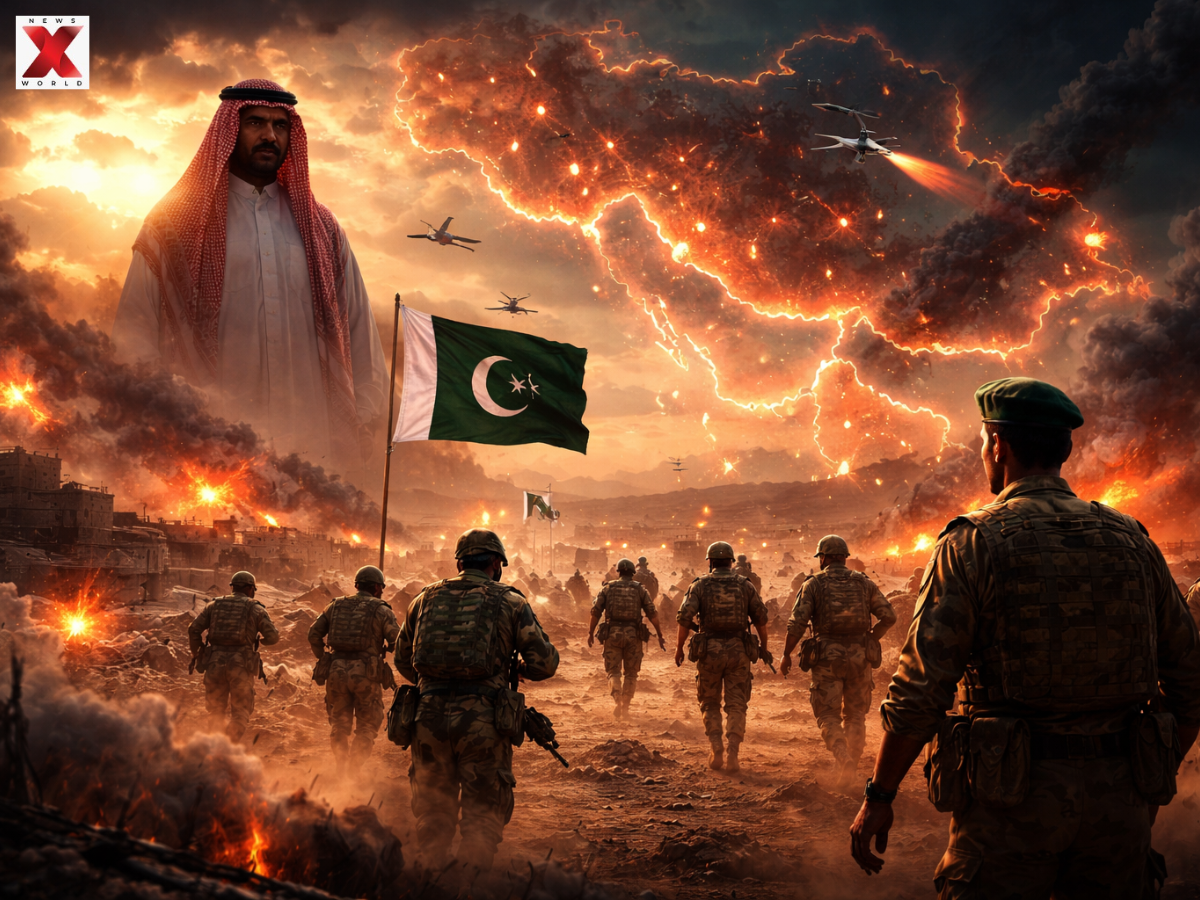
Saudi Arabia is pressing Pakistan to fight against Iran (AI IMAGE)
Referencing a defence agreement thought to have been reached in 2025, Saudi Arabia is allegedly pressuring Pakistan to play a more active role against Iran as tensions rise in West Asia.
As the situation in the region becomes more unstable, signals from Riyadh, communicated through strategic channels and the media, point to growing pressure on Islamabad.
Pakistan is thought to be seen by Riyadh as an important military ally because of its sizable and skilled armed forces. Saudi Arabia seems eager to avoid heavy ground engagement following protracted difficulties in conflicts such as Yemen.
Pakistan is a desirable ally due to its strategic capabilities and military might. According to analysts, Saudi Arabia could improve its deterrence posture by working with Islamabad, especially in light of the escalating hostilities with Iran. Pakistani assistance could help secure crucial maritime routes like the Strait of Hormuz or open more pressure points in the event of a conflict.
The alleged 2025 defence deal between Pakistan and Saudi Arabia is still mostly unknown. Experts speculate that it might concentrate on improved military cooperation, intelligence exchange, and crisis logistical support.
According to some strategic observers, the agreement might also include more comprehensive security guarantees, which could improve Saudi Arabia’s reputation in the region.
For Pakistan, any direct confrontation with Iran would come with serious consequences. One of the biggest concerns is internal stability. Iran, being a Shia-majority country, shares religious ties with a significant Shia population within Pakistan, raising fears of sectarian tensions.
Economic risks are equally pressing. A conflict could disrupt trade, push up oil prices, and affect remittances from the Gulf—further straining Pakistan’s already fragile economy.
Security challenges would also intensify. With a long and sensitive border shared with Iran, any escalation could invite retaliation.
At the same time, Pakistan is already managing tensions on multiple fronts, including its eastern border and internal security threats, making any additional conflict highly complex.
Despite external pressure, indications suggest that Pakistan is unlikely to commit to a full-scale military role. Instead, its current stance appears to favour restraint and balance.
Islamabad has so far maintained a neutral position in the broader US-Israel-Iran tensions, calling for dialogue and de-escalation.
Student claims lizard in Bhopal mess food; cook denies it, eats it calling capsicum. Viral…
AP Staff Nurse Recruitment 2026: Application Process, Fee, Eligibility Details
The Office of the Regional Director of Medical and Health Services (RDMHS), Guntur (Zone-III), has…
A dispute over an autorickshaw queue in Malad East, Mumbai, escalated into a violent mob…
