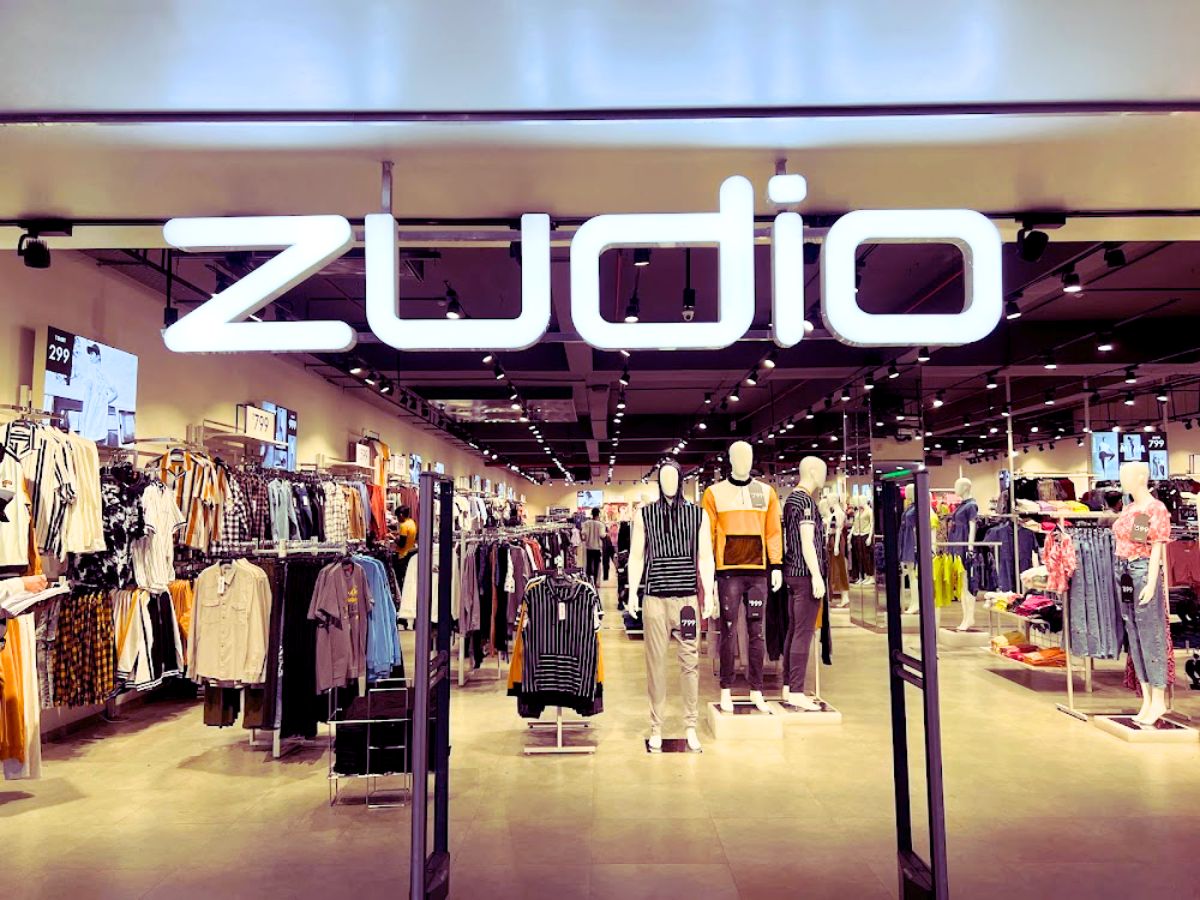
Zudio is rapidly winning India’s next billion consumers by offering affordable, trend-driven fashion. (Photo: X)
Zudio: India’s consumer landscape is undergoing a quiet but a major shift. For decades, the country’s much-hyped consumption story revolved around a narrow base of roughly 150 million affluent, English-speaking Indians concentrated in major metropolitan cities.
Today, that story is rapidly expanding beyond urban elites, as companies pivot towards a far bigger prize: India’s next billion consumers living in Tier 2 and Tier 3 cities.
Cheap mobile data, mobile-first platforms, expanding logistics networks, and rising aspirations are reshaping consumption patterns far beyond metros.
From fashion and food delivery to streaming and mobility, businesses are redesigning products, pricing, and distribution to cater to a value-conscious yet aspirational India that was once dismissed as too frugal to monetise. As a Bloomberg report notes, this next phase of growth is where the real battle lies.
As India accelerates towards becoming the world’s fourth-largest economy, discretionary spending is no longer limited to metros. Smaller towns are seeing a steady rise in purchasing power, with consumers willing to spend on clothing, electronics, food, and digital services albeit at carefully calibrated price points.
This new consumer cohort is aspirational but budget-aware. They seek style, convenience, and brand value, without the premium pricing that global brands often demand. It is in this space that Zudio, Tata Group’s homegrown fast-fashion brand, has found its sweet spot.
While international fast-fashion giants such as Zara and H&M continue to battle for visibility in urban malls, Zudio has quietly stitched itself into the wardrobes of millions across small-town India. Owned by Trent Ltd., a Tata Group company valued at around $9.6 billion, Zudio has grown from near obscurity to over 800 stores in less than a decade.
Unlike its global rivals, Zudio positions itself unapologetically as affordable. Its stores, typically spread across 7,000–8,000 square feet, focus on volume rather than visual extravagance. As of FY24, nearly 85% of Zudio’s products are priced below ₹1,000, with most items falling in the ₹300–₹500 range. For India’s next billion consumers, affordability is not just a feature it is the brand.
A retail analyst at Edelweiss summed it up succinctly: affordability is Zudio’s strongest magnet in a market where aspirations often outpace purchasing power.
Despite being part of one of India’s most trusted conglomerates, Zudio has deliberately avoided prominent Tata branding.
According to Bernstein Research, this strategic distance allows the brand to feel local, accessible, and non-corporate key attributes for its target audience.
While Tata’s other retail brands, such as Westside, cater to middle and upper-middle-class shoppers, Zudio focuses squarely on value-conscious consumers shopping for everyday style rather than fashion statements. This clarity of purpose has helped the brand carve out a distinct identity in a crowded market.
Zudio’s operational playbook borrows selectively from global fast-fashion models. Like Zara, it refreshes styles every three to four weeks, ensuring stores remain dynamic and trend-responsive.
However, Zudio executes this at Indian-tier pricing, making fashion accessible to consumers in smaller cities.
Perhaps the most contrarian aspect of Zudio’s strategy is what it chooses not to do.
The brand has no e-commerce presence no app, no marketplace listings, and no direct-to-consumer online strategy. In an era dominated by D2C brands, this offline-only model appears counterintuitive.
Yet, the numbers tell a different story. Trent reported that Zudio crossed $1 billion in revenue in FY25, even as it doubled its store count within two years. By staying offline, Zudio retains complete control over inventory, pricing, and customer experience, while benefiting from rising mall footfall in Tier 2 and Tier 3 cities where digital penetration remains uneven.
Trent’s aggressive rollout strategy has further fuelled Zudio’s dominance. The company plans to add around 200 new Zudio stores in FY25 alone, far outpacing competitors in the value-fashion segment. Its asset-light approach using a mix of owned and leased properties allows rapid expansion at lower costs.
Zudio stores reportedly break even within 18 months and generate over ₹1,000 per square foot per month in many locations, underscoring the operational efficiency backing its growth.
Inside a Zudio outlet on Ballupur Road in Dehradun, young shoppers browse ribbed sweaters, jeans priced at around $10, sneakers for $11, and personal-care products starting at $1. The store mirrors Zara’s fast-fashion format, but at prices tailored for small-city India.
Zara, by contrast, remains firmly anchored in metros, with just 22 stores across major cities. While the Spanish fast-fashion giant has built its global reputation on cutting-edge designs and rapid inventory turnover, its premium pricing and limited geographic reach have constrained its appeal beyond urban India.
Zudio’s ability to offer similar styles at a fraction of the price has given it a decisive edge in smaller towns, where fashion aspirations are high but budgets are limited.
Despite its success, Zudio faces emerging challenges. Analysts caution that an offline-only strategy may limit scalability as younger consumers increasingly prefer hybrid shopping experiences.
Competition is also intensifying, with Reliance’s Yousta and Shoppers Stop’s Intune entering the value-fashion space.
Additionally, Zudio’s fast-fashion model has drawn criticism over environmental and ethical concerns, particularly as sustainability awareness grows among Indian consumers.
Still, Zudio is not trying to become the next Zara or H&M. By focusing on value, speed, and local relevance, Tata’s Made-in-India brand has built a rare retail success one that grows rapidly without shouting.
The real test now is whether this quiet dominance can sustain itself as India’s next billion consumers come fully into their own.
ALSO READ: Top 10 Entrepreneurs Are Set to Redefine Their Industries with Innovation in 2026
Sofia Babu Chacko is a journalist with over five years of experience covering Indian politics, crime, human rights, gender issues, and stories about marginalized communities. She believes that every voice matters, and journalism has a vital role to play in amplifying those voices. Sofia is committed to creating impact and shedding light on stories that truly matter. Beyond her work in the newsroom, she is also a music enthusiast who enjoys singing.
Four people were killed, and 29 others were hospitalised following a massive crash involving more…
Online speculation surrounding the disappearance of 84-year-old Nancy Guthrie has intensified after viral social media…
Pinterest Down: 4,000+ Users Report Major Outage in US — What’s Behind the App and Feed Crash?
Pinterest is experiencing a major outage in the United States, with more than 4,000 users…
