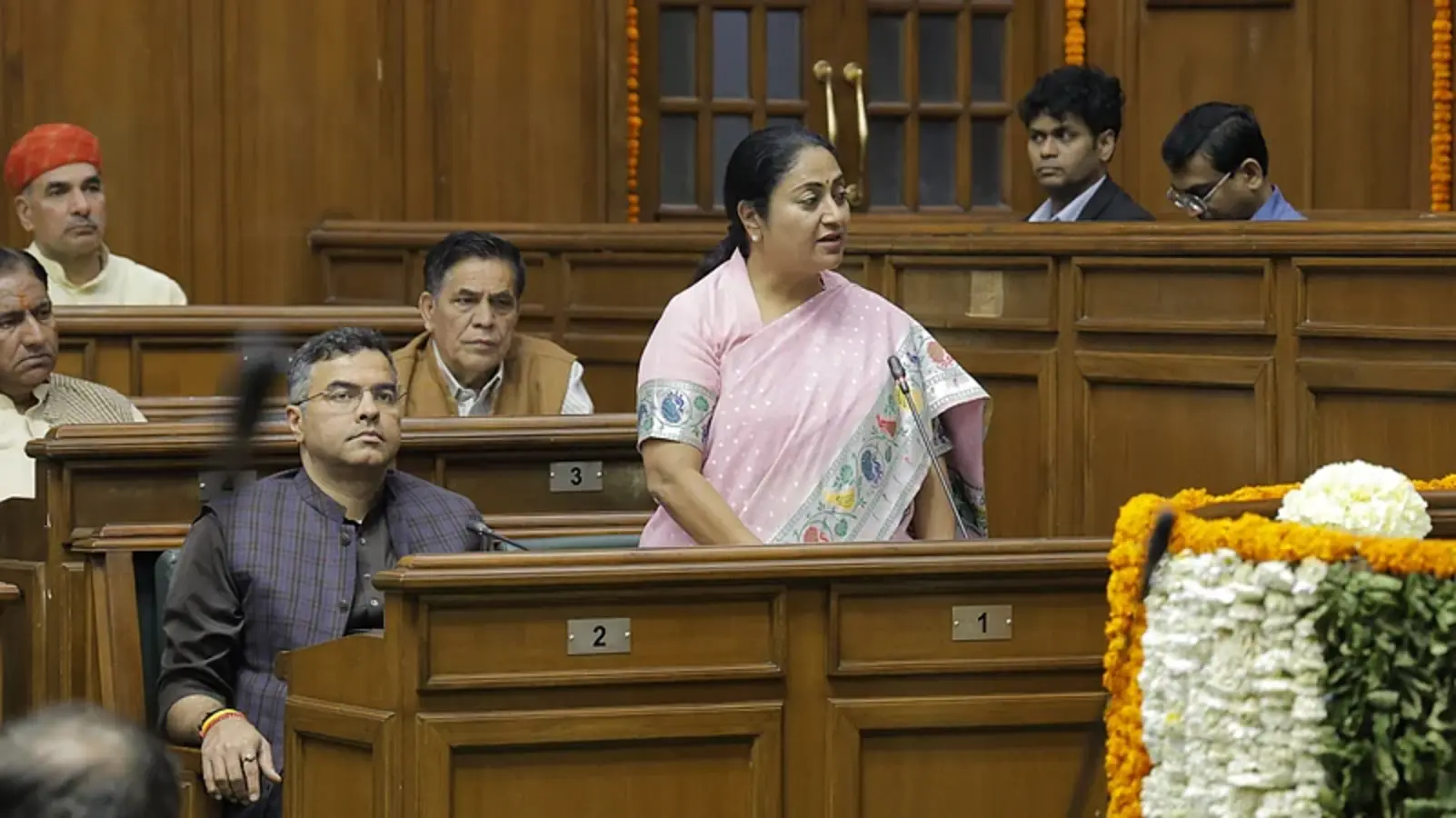
[IMAGE CREDIT-TOI]; The Delhi School Education Fee Regulation Bill, 2025, proposes a three-tier oversight system to regulate private school fee hikes
The Delhi government’s Delhi School Education (Transparency in Fixation and Regulation of Fees) Bill, 2025 was initiated in the Assembly during the Monsoon Session, aiming to overhaul private unaided school fee structures and elevate accountability
School-level fee committee includes school leaders, teachers, and five parent representatives selected by lot (with quotas for women and SC/ST).›
District Fee Appellate Committee chaired by Deputy Director of Education with chartered accountants and parent members.›
Revision Committee, led by an education expert and senior officials.
Fee determination criteria: consider infrastructure, teacher salaries, and operational costs, while explicitly banning profiteering.
Mandatory disclosure: Schools must publish and justify their proposed three-year fee structure. Any fee increase is permitted only once every three years.
Heavy penalties for violations:
Fines range from ₹1 lakh to ₹10 lakh based on severity, with penalties multiplying for repeated offenses.
If a student faces harassment or removal due to fees argument, schools may be fined ₹50,000 per case.
Persistent non-compliance may result in revoking school recognition or government takeover.
Grievance threshold: A formal acknowledgement is allowed only if signed by 15% of parents at the school—a clause parents say could inhibit genuine complaints.
Legal immunity provisions: Fee committees and education department officers are shielded from civil court jurisdiction, and their decisions cannot be legally challenged.
Supporters, including parent associations and some educators, applaud the bill for introducing regulation, transparency, and structured fee governance.
Critics, led by AAP, say the framework favors school administrations. They argue that school-level committees are dominated by management with limited parent influence. They also call the 15% complaint requirement unrealistic. AAP leaders demand:
Fee freeze at 2024-25 levels until final law passage
Referral of the bill to a Select Committee for deeper public consultation.
AAP protests: AAP MLAs staged a walkout in the Assembly and called the bill a “calculated sham” tailored to privatize education further.
Education Minister Ashish Sood upholds the bill as a democratic reform that gives parents a meaningful stake in governance and curbs arbitrary fee practices in Delhi’s private schools.
This legislation resists long-standing grievances over unchecked fee hikes, undisclosed charges, and lack of accountability in private schooling. At its core, the bill tries to institutionalize oversight and protect parents.Although, challenges persist about representativeness of committees, legal cover for decisions, and whether the reform genuinely constrains profit-driven education models.
ALSO READ: PM Modi to Inaugurate Kartavya Bhavan, India’s First Sustainable Central Secretariat Building
External Affairs Minister S. Jaishankar said India will not act as a “dalal country,” stressing…
On March 25, 2026, Anthropic’s Claude AI experienced a major outage, affecting thousands globally. Downdetector…
Ratna Debnath is the mother of the RG Kar rape-murder victim who has now entered…
