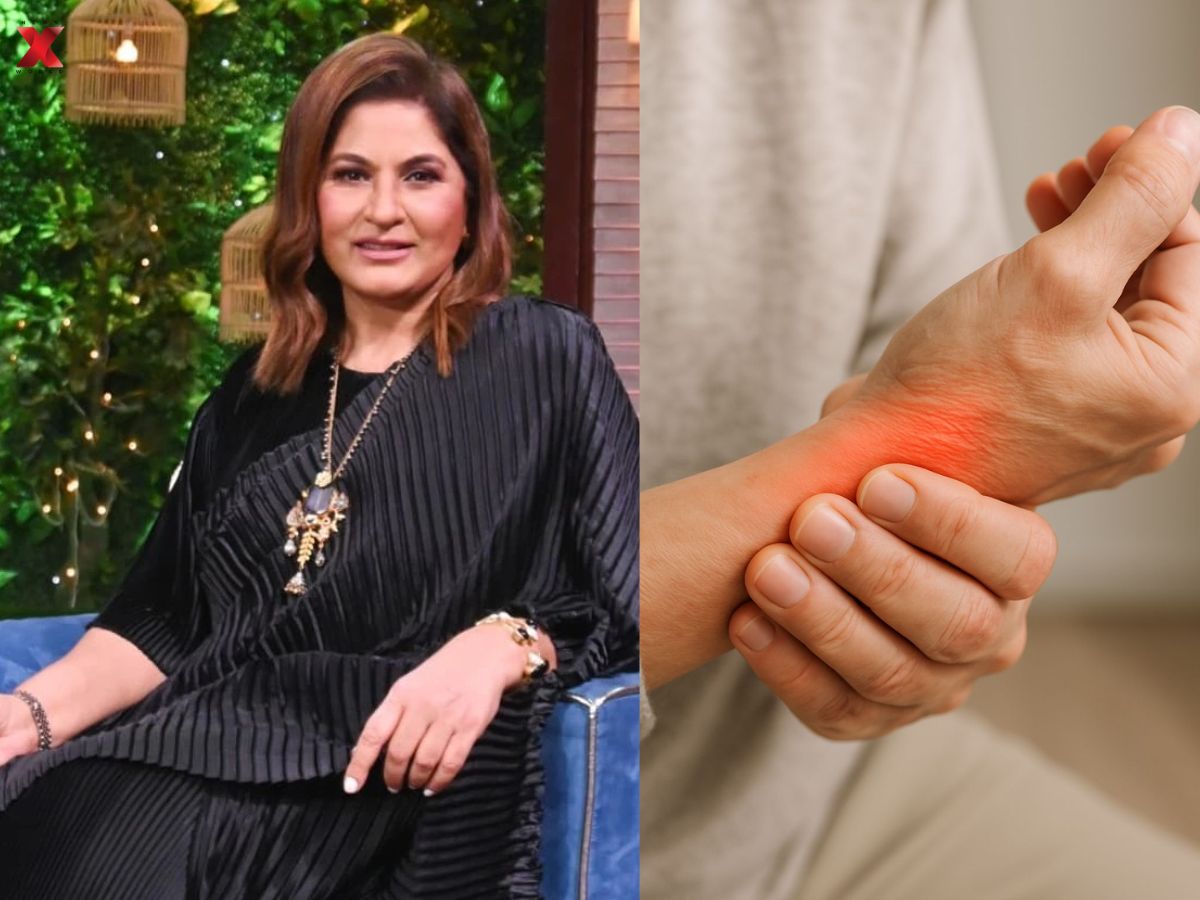
What Is Complex Regional Pain Syndrome? Archana Puran Singh Opens Up About Rare, Debilitating Condition
The well-known media figure Archana Puran Singh enlightened us by revealing her diagnosis of Complex Regional Pain Syndrome (CRPS), thus emphasizing one of the most painful medical mysteries covered by science.
Often referred to as the “suicide disease” owing to the pain’s severity, CRPS is a long-lasting neurological disorder that commonly affects a limb following an injury, surgery, or trauma.
It results from the abnormal functioning of both the central and peripheral nervous systems, which send to the brain incredibly painful signals that are totally out of proportion with the original physical damage.
CRPS, or complex regional pain syndrome, is primarily characterized by an intense, astringent, or “pins and needles” feeling, which is likened to the limb being tortured or cremated.
Patients usually go through a very high degree of allodynia, where even the lightest touch, like from a piece of clothing or wind, becomes unbearably painful.
In addition to the sensory storm, the affected limb may show some changes: the skin may have a different color (looking mottled, purple, or bright red), the temperature could go from freezing to burning, and swelling in that area is very likely.
If the situation continues, the person may lose movement in that limb and suffer from muscle atrophy, joint stiffness, and pain, which will turn normal daily activities into an almost impossible mission.
At present, there is still no absolute “silver bullet” cure for CRPS, which makes it absolutely important to take early action in order to avoid permanent disability.
The treatment of the disease is focused on a multidisciplinary approach: the physical therapist helps the patient to maintain the functionality of the affected limb, the anesthesiologist performs nerve blocks to block the transmission of pain signals, and the psychologist provides support to cope with the mental strain caused by the chronic suffering.
Meanwhile, some patients who experience spontaneous remission tend to view their condition as “functional recovery” mainly. Releasing treatments, such as spinal cord stimulation and ketamine infusions, provides a glimmer of hope, yet for a few like Archana, the journey is one of resilience, slow-paced living, and expert care to prevent the nervous system from being in a non-stop state of high alert.
A recent media graduate, Bhumi Vashisht is currently making a significant contribution as a committed content writer. She brings new ideas to the media sector and is an expert at creating strategic content and captivating tales, having working in the field from past four months.
A cryptic post appeared on Ayatollah Ali Khamenei’s X account shortly after Trump claimed the…
Why Is 19 Minute 34 Second Viral MMS Still Trending After 2 Months? Everything You Should Know
19 minute 34 second Viral MMS: According to cybersecurity experts, the vast majority of such…
Ayatollah Khamenei Is Dead, Confirms Trump, Says Bombing Will Continue, Calls Iran's Supreme Leader 'One…
