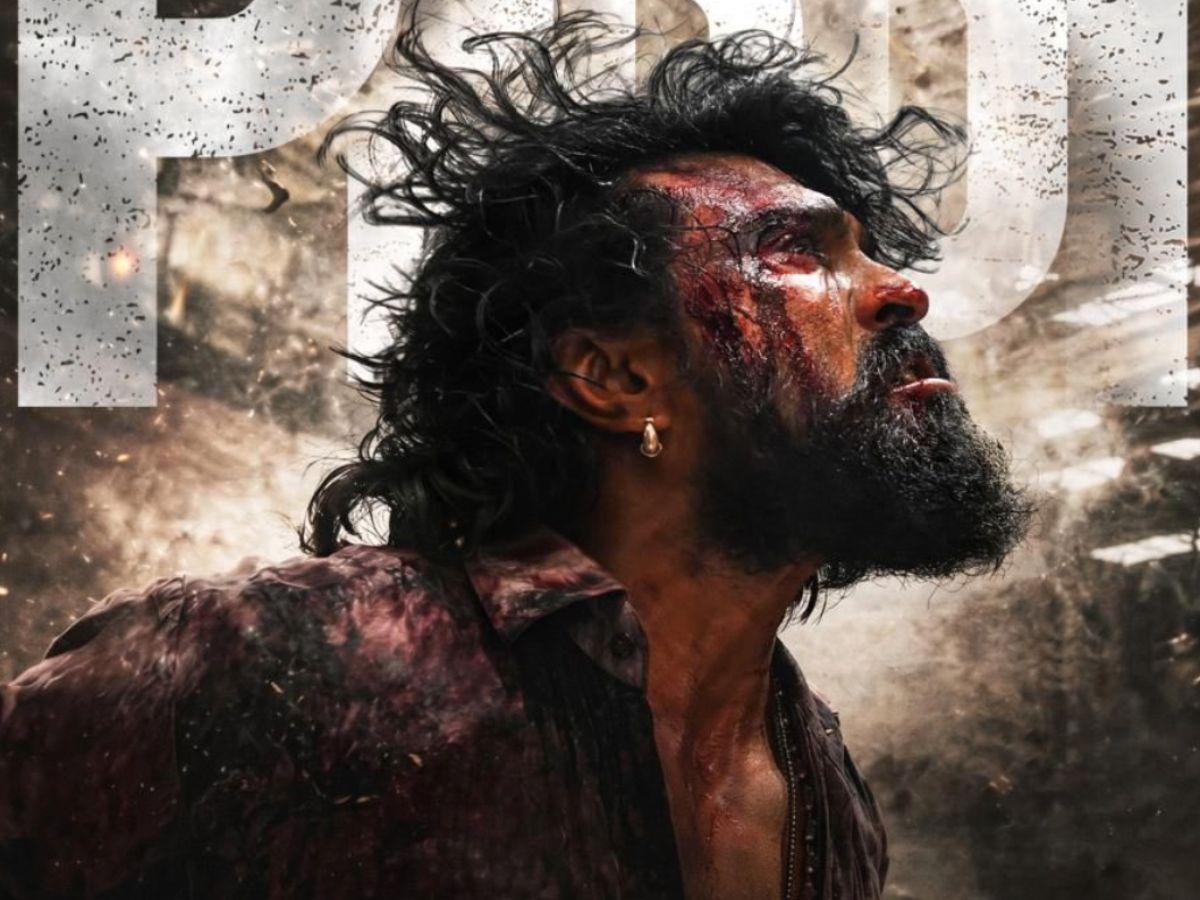
Peddi (Photo; X/@taran_adarsh)
“Is this a Hindi film or a Bhojpuri one?” — that was the reaction of a social media user after watching the trailer of South star Ram Charan’s film Peddi. The trailer was released recently. Though the movie is originally a Telugu film, it is also coming out in Hindi with dubbing, following the pan-India formula.
But the Hindi dubbing has caught people’s attention because many on social media felt it sounded more like a Bhojpuri film. One dialogue, for example, goes: “Khelay hamra ghamand hai” (“Playing is my pride”).
Another reason behind this perception is the character of lead actress Janhvi Kapoor. In the trailer, the camera seems more focused on her body than on the depth of her character in the script. But is this a mistake by the makers? Probably not. It appears to be a deliberate strategy.
Whether this strategy succeeds or not remains to be seen, but the reasons behind it seem quite strong.
The makers of Peddi have clearly targeted North Indian audiences through Bhojpuri-flavored Hindi dubbing — and there’s a strong business angle behind it too.
If you’ve watched dubbed South Indian films on Hindi TV channels, you’d remember that this Bhojpuri-mixed Hindi style has been very common in such movies.
In fact, dubbed South Indian films have long had a massive audience base in states like Uttar Pradesh and Bihar. Single-screen viewers in these regions enjoy this Bhojpuri-flavored texture in film dialogues.
During the 2000s, Bollywood shifted toward urban stories and aesthetics. As a result, audiences from small towns and villages began to feel disconnected from mainstream Hindi cinema.
This audience — often called the “mass audience” in film language — loves action-packed masala entertainers with powerful dialogues. When Bollywood stopped supplying such films, South Indian cinema filled the gap.
At that time, Goldmines Telefilms, led by Manish Shah, grabbed the opportunity. The company started buying Hindi dubbing rights of South films and selling them to TV channels.
In an old interview, Manish Shah revealed that the first dubbed rights he bought were for the 2004 Telugu film Mass. After dubbing it into Hindi as Meri Jung: One Man Army, he sold it to a TV channel for ₹7 lakh. At a time when TV movie ratings were usually around 0.8, the film earned a strong 1.2 TRP rating.
That single success created an entire market for Hindi-dubbed South films — a market that remains powerful even today.
In this market, rural-themed South Indian films were often dubbed in Bhojpuri-style Hindi. The South movies you watched on TV with Bhojpuri-style dialogues were a result of this strategy.
Today, this market has expanded beyond television to YouTube through channels like Goldmines Telefilms and others.
The strength of this audience can be understood from the fact that K.G.F: Chapter 1 had not just a standard Hindi version but also a separate Bhojpuri-style dubbed version on Goldmines’ YouTube channel. That version has reportedly crossed 850 million views — enough to suggest the enormous revenue potential.
Peddi seems aimed directly at this North Indian mass audience.
Ram Charan’s film is arriving with Bhojpuri-mixed Hindi dubbing not just for metro cities, but also to penetrate theaters in small towns and villages. While multiplex tickets in big cities generate more money per ticket, the real crowd often comes from single-screen theaters in smaller towns.
Tickets there may be cheaper, but higher footfall can generate huge earnings overall.
A good example is the “Blockbuster Tuesday” offer in multiplexes. Nowadays, when ticket prices drop below ₹200 on Tuesdays, movie collections often rise because more people come to watch.
The story of Peddi also carries strong rural appeal. The hero is portrayed as an all-round sports talent who wants to rise from his village and earn recognition at the national level. At the same time, the trailer also shows him struggling in Delhi doing small jobs.
This emotional and aspirational setup is likely to connect with rural viewers. In that context, Bhojpuri-style Hindi dubbing could help the film attract a larger audience — and larger audiences mean stronger box office earnings.
The makers of Peddi have clearly played a bold card. Now it remains to be seen how successful that gamble turns out to be.
Olivia Sarkar is a Senior Content Producer on the Entertainment and Lifestyle desk with 6 years of experience. In 6 years, she worked with ANI, IANS, Zee News. Known for covering trends and engaging storytelling, she covers a wide spectrum of topics including entertainment news, fashion, fitness, health, food, travel, astrology. From major film announcements to industry controversies. Throughout her career, she has interviewed several notable personalities such as Femina Miss India World 2022 Sini Shetty, Miss World 2024 USA contestant Victoria DiSorbo, Miss France 2020 Clémence Botino.Her interview portfolio also includes celebrities like Milind Soman, Tiger Shroff, and Vikrant Massey, along with acclaimed singers Shubha Mudgal and Padma Shri awardee Dr. Jaspinder Narula. Beyond work, Olivia enjoys exploring new food joints, being wanderlust, and writing poetry. You can reach her out on X: @OliviaSarkar11
Hyderabad to Host Taekwondo Premier League Season 2 – Leg 2 on June 6–7; TPL Eyes Global Expansion
Hyderabad, May 21, 2026: Following the successful completion of Taekwondo Premier League (TPL) Season 2…
Indian Railways is strengthening security across its network by deploying AI-based surveillance, drones, advanced CCTV…
Shaidai tells us the story of Ali Khan, who is a wealthy businessman. He disguises…
