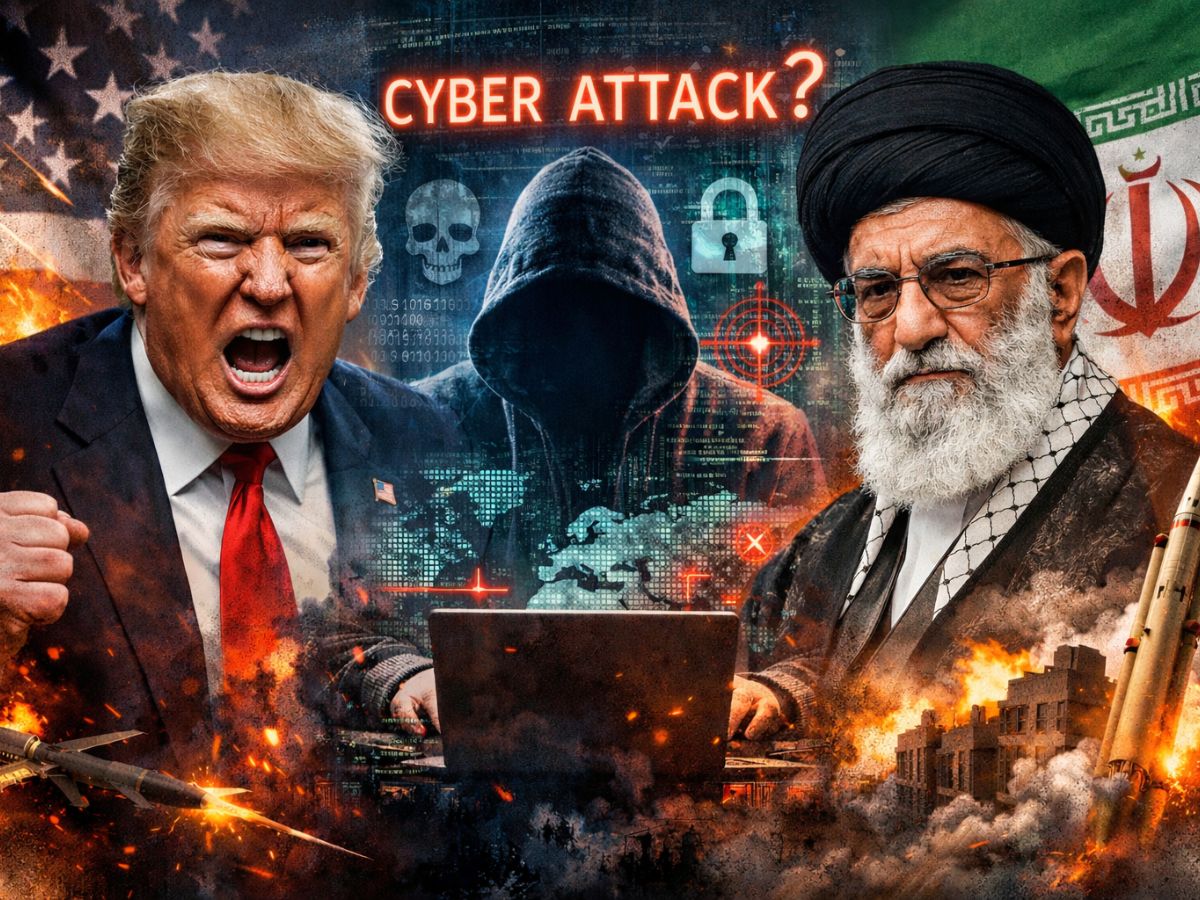
Will Iran Use a Cyber Warfare Strategy against US? (Photo: AI)
A loud explosion was reported at Iran’s nuclear and military facility in the Parchin region on Tuesday. The Islamic Revolutionary Guard Corps (IRGC) Quds Force confirmed the incident.
Several social media reports, including one from Iran Spectator, released videos showing smoke and loud noises from the affected site.
While the cause of the explosion remains unclear, tensions between Iran and the U.S. have intensified, raising concerns about potential retaliation.
For U.S. security experts, the most realistic threat from Iran isn’t a missile, but cyber warfare. Iran’s prominent hacking groups, “Charming Kitten” and “Mint Sandstorm”, have significantly advanced in capability over the past decade.
While Iran currently lacks a confirmed intercontinental ballistic missile (ICBM) capable of reaching the U.S., its space program provides dual-use technology that could, in the future, be adapted for long-range strikes.
Military analysts stress that cyber operations can achieve psychological and economic impact without firing a single missile. Critical U.S. infrastructure including power grids, water treatment facilities, and financial systems could be targeted, bringing the war to American cities in an invisible but disruptive manner.
Beyond cyberattacks, Iran maintains “sleeper cells” and proxies operating in North America. While large-scale attacks remain unlikely, U.S. intelligence agencies (FBI and DHS) remain vigilant against potential sabotage or assassination attempts targeting key officials and sensitive facilities. These “shadow war” tactics allow Iran to project power internationally without conventional warfare.
Iran has become a leader in low-cost, long-range loitering munitions (suicide drones), which, while limited in range, could theoretically be deployed from converted commercial ships in the Atlantic or Caribbean.
Analysts warn these platforms could potentially target U.S. coastal cities, bypassing traditional missile systems. This hybrid approach demonstrates Iran’s focus on asymmetric warfare and innovation in response to conventional limitations.
Cyberwarfare is central to Iran’s military doctrine. The Cyber Defense Command, operating under Iran’s Passive Civil Defense Organization, oversees offensive and defensive cyber operations.
Iran has both experienced cyberattacks most notably the Stuxnet virus in 2010, which targeted its nuclear facilities and improved its capabilities in response.
According to international reports, Iran is considered one of the most active cyber actors globally. Iranian hackers now engage in espionage, sabotage, economic disruption, and intelligence-gathering, often with precision.
Cooperation with groups such as Hezbollah and potential alliances with other cyber powers, including Russia, could further expand Iran’s reach.
President Trump has positioned the USS Abraham Lincoln in the region to ensure the cost of striking the U.S. mainland remains “existential” for Iran. Ground-based missile defenses in Alaska and California provide an additional shield.
Meanwhile, U.S. authorities continue to monitor potential threats from Iranian-linked actors domestically, preparing for both cyber and “gray zone” retaliation scenarios.
Analysts note that while Iran’s cyber capabilities are not yet at the level of countries like Israel or the U.S., they are evolving rapidly. In the event of an escalation, experts expect Iran to favor digital attacks over physical missiles, leveraging asymmetric strategies to inflict economic and psychological damage without direct military confrontation.
As tensions mount, the global security community is closely watching Iran’s next moves, particularly in cyberspace, where the next strike could be silent but devastating.
Sofia Babu Chacko is a journalist with over five years of experience covering Indian politics, crime, human rights, gender issues, and stories about marginalized communities. She believes that every voice matters, and journalism has a vital role to play in amplifying those voices. Sofia is committed to creating impact and shedding light on stories that truly matter. Beyond her work in the newsroom, she is also a music enthusiast who enjoys singing.
US vs Iran: Tehran conducts live-fire drills near Strait of Hormuz as US-Iran tensions rise,…
BAFTA 2026 nominations announced: One Battle After Another leads, full list of nominees includes Hamnet,…
Iran warns neighbours: "Any use of soil, sky, or waters against us will be hostile",…
