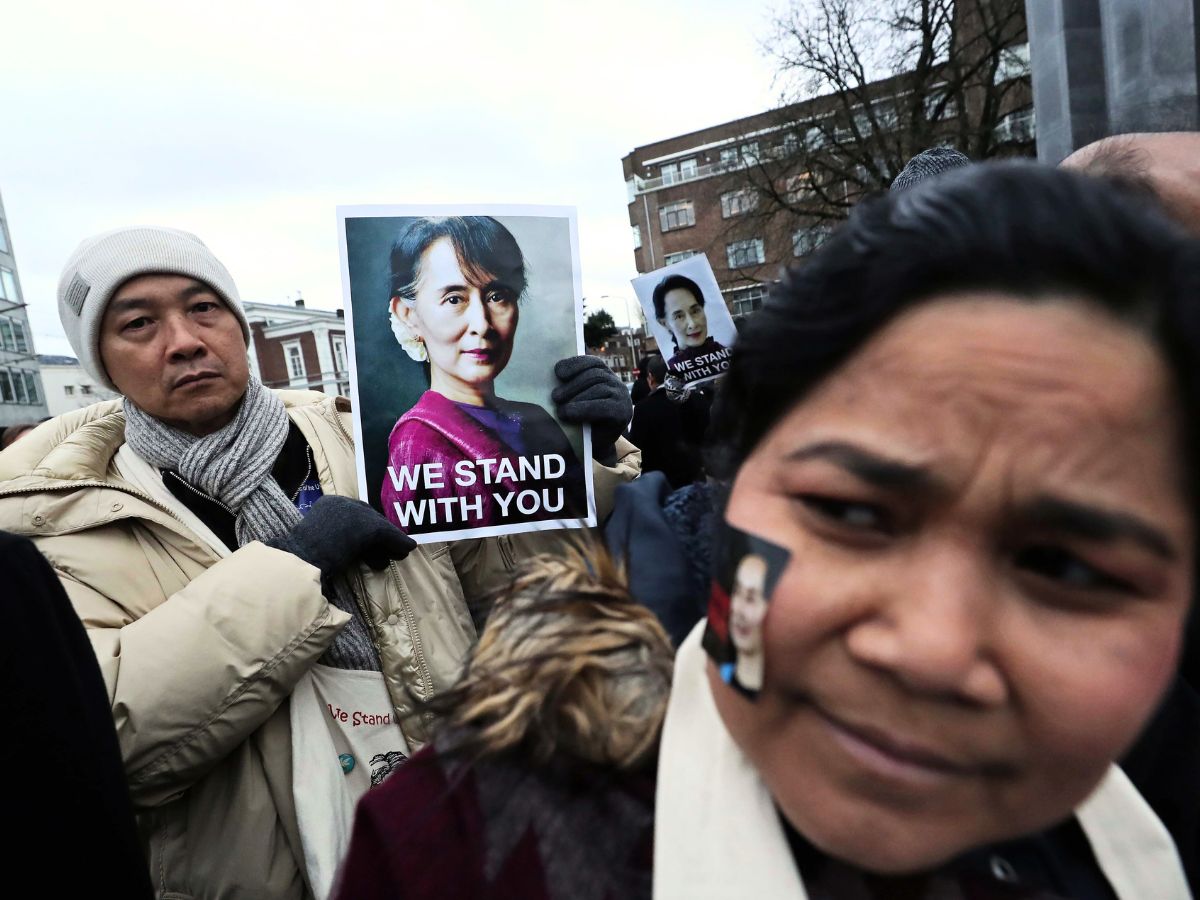
Myanmar votes under the shadow of military rule. (Photo: ANI/REUTERS)
Myanmar has begun holding its first general elections in nearly five years, but instead of marking a return to democracy, the process has drawn widespread condemnation from opposition groups, human rights organisations, and several Western governments.
The crucial elections, organised by the country’s ruling military junta, are being described by critics as a “sham” aimed at legitimising continued army rule rather than reflecting the will of the people.
Voting began on Sunday in selected parts of the country amid intense civil conflict, political repression, and humanitarian distress. The polls come nearly four years after the military overthrew the elected civilian government led by Nobel Peace Prize winner Aung San Suu Kyi in a coup that plunged Myanmar into chaos.
The military government has scheduled the elections in three phases spread across a month. The first phase took place on December 28 in 102 of Myanmar’s 330 townships. The second round of voting is set for January 11, followed by the third phase on January 25. According to official timelines cited by the Associated Press, the final results are expected to be announced by February.
Authorities say more than 4,800 candidates from 57 political parties are contesting seats in national and regional legislatures. However, the scope of competition is sharply limited. Only six parties are competing nationwide, severely restricting meaningful political choice for voters. Many townships remain excluded due to ongoing fighting, effectively disenfranchising millions of people.
At the heart of the controversy is the exclusion of Myanmar’s most popular political force. Aung San Suu Kyi’s National League for Democracy, which won a landslide victory in the 2020 general election, has been barred from participating. The military annulled the 2020 results, alleging fraud without credible evidence, and seized power in February 2021.
With the NLD banned and its leadership jailed, critics argue that the current election is designed to produce a predetermined outcome. Human rights groups and independent analysts say the vote is meant to provide a veneer of civilian governance while leaving real power in the hands of the military.
Tom Andrews, the United Nations’ special rapporteur on human rights in Myanmar, described the exercise as political theatre, saying an election organised by a junta that bombs civilians, jails political leaders, and criminalises dissent cannot be considered free or fair.
Concerns about the integrity of the elections deepened after the junta introduced a harsh new law aimed at suppressing criticism. In July 2025, the military enacted the Law on the Protection of Multiparty Democratic General Elections from Obstruction, Disruption, and Destruction. The legislation imposes severe penalties, including life imprisonment and even the death penalty, for actions deemed to interfere with the election process.
Human Rights Watch reported that dozens of people were arrested under the law for social media posts criticising the elections or questioning their legitimacy. By late December, the military said the number of detainees had more than doubled. Several face lengthy prison terms for peaceful expression, further eroding confidence in the process.
The elections are taking place against the backdrop of an ongoing civil war that has turned Myanmar into one of Asia’s gravest humanitarian crises. Since the coup, the military has carried out airstrikes on civilian areas, imprisoned tens of thousands of people, and forced millions to flee their homes.
Large parts of the country remain under the control of resistance groups, making voting impossible in nearly half of Myanmar’s territory. Aid agencies estimate that more than 11 million people are facing food insecurity, raising serious questions about the moral and logistical basis of holding elections at such a time.
Despite these conditions, junta leader Min Aung Hlaing insisted after casting his vote that the election was free and fair, saying the military could not allow its name to be tarnished.
On the ground, voter reactions have been mixed and often shaped by fear rather than political conviction. Some voters said they participated in the hope that elections might bring stability or reduce violence. Others said they felt pressured to vote amid reports of soldiers intimidating residents and urging turnout.
Analysts say such participation should not be confused with genuine democratic engagement, as many voters see the process as unavoidable rather than meaningful.
Aung San Suu Kyi remains imprisoned and isolated, with limited access to family or legal counsel. She has been convicted on multiple charges that international observers widely consider politically motivated. Her continued detention means she has no role in the current political process.
Her son, Kim Aris, recently told Reuters that he has no information about her condition, underscoring concerns about her health and safety. With the NLD banned and the military showing no signs of compromise, Suu Kyi’s political future appears increasingly uncertain.
The military-backed Union Solidarity and Development Party is widely expected to emerge as the dominant force in Parliament. Analysts believe this will allow Min Aung Hlaing, who has ruled the country since the coup, to transition into the presidency, giving military rule a civilian façade.
Opponents warn that such an outcome would not signal a return to democracy but rather the institutionalisation of military dominance.
Most Western governments have refused to recognise the election and declined to send observers, calling it a sham and maintaining sanctions against Myanmar’s generals. In contrast, countries such as China and Russia have expressed support, while neighbours including India and Thailand have adopted a more cautious stance.
China, in particular, views stability in Myanmar as essential to protecting its infrastructure projects and strategic corridors linking it to South and Southeast Asia, even if that stability comes at the cost of democratic norms.
When results are announced in February, Myanmar is likely to see the formalisation of military control rather than meaningful political change. As United Nations Secretary-General António Guterres has warned, the conditions for free and fair elections simply do not exist in the current climate of conflict and repression.
For many in Myanmar, the elections represent not a step forward, but a reminder of how far the country has drifted from democratic rule.
Sofia Babu Chacko is a journalist with over five years of experience covering Indian politics, crime, human rights, gender issues, and stories about marginalized communities. She believes that every voice matters, and journalism has a vital role to play in amplifying those voices. Sofia is committed to creating impact and shedding light on stories that truly matter. Beyond her work in the newsroom, she is also a music enthusiast who enjoys singing.
A huge crowd gathered near Arun Jaitley Stadium ahead of the India vs Namibia ICC…
JioHotstar announces Rajshri’s Sangamarmar, a family drama on love, duty, and bonds, starring Sheen Savita…
The Budget Favourite Explained: Why the Alto 800 Still Leads Second Hand Maruti Cars
For decades, the Maruti Alto 800 has been the unofficial first car of the Indian…
