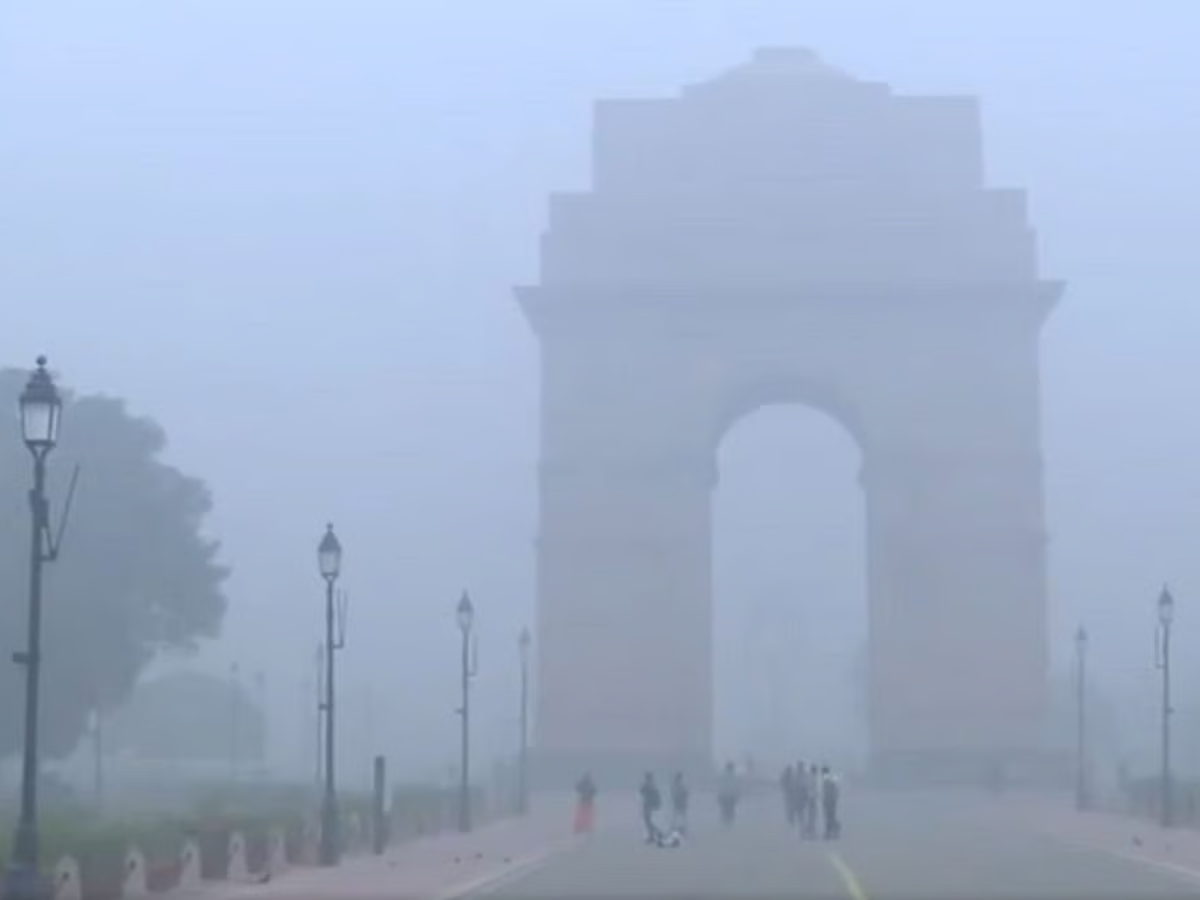
Delhi AQI Turns Toxic
Delhi woke up to another morning covered in thick smog on Wednesday as the average Air Quality Index (AQI) touched 388 at 7 am. The Central Pollution Control Board (CPCB) placed the air quality in the “very poor” category.
The Commission for Air Quality Management (CAQM) continued with the measures under GRAP Stage 3 to control rising pollution. Authorities did not move to GRAP Stage 4, even though the AQI showed only slight improvement from Monday, when the city recorded an AQI of 351.
Officials continued to monitor the situation as pollution levels remained high.
GRAP Stage 4 comes into force when Delhi’s AQI crosses 451, which falls under the “Severe Plus” category. This stage includes emergency actions to reduce major pollution sources.
Once GRAP Stage 4 is triggered, authorities impose strict curbs that can lead to large-scale shutdowns across the National Capital Region.
The restrictions aim to cut emissions quickly and prevent a further rise in smog levels. Agencies closely track pollution readings to assess whether the situation requires emergency enforcement. Stage 4 remains the final and most severe part of Delhi’s graded response system.
Under GRAP Stage 4, authorities enforce several major bans to reduce toxic emissions. All trucks except those carrying essential goods face a complete entry ban into Delhi. Diesel-run medium and heavy goods vehicles that are BS-IV or lower cannot operate, except for essential services.
Construction and demolition activities also stop entirely, including work on roads, flyovers, highways, pipelines, and power transmission projects. Offices may shift to 50% work-from-home for government, municipal, and private staff.
For students in Grades VI to XI, physical classes may stop and move online to protect them from rising pollution levels.
Even under GRAP Stage 4, some essential activities continue. Trucks carrying essential goods and services remain allowed. Vehicles using cleaner fuels, including LNG, CNG, electric, and BS-VI diesel trucks, can enter Delhi.
State governments can add further emergency steps when required, such as enforcing the odd-even vehicle rule. Authorities may also consider closing colleges and non-essential commercial activities to reduce traffic and emissions.
These measures aim to slow the rise in pollution while keeping essential services running. Officials monitor pollution levels constantly to decide if stricter actions are needed.
Must Read: Most Wanted Gangster Amol Bishnoi To Be Deported From US Today, NIA Awaits His Arrival In Delhi
Swastika Sruti is a Senior Sub Editor at NewsX Digital with 5 years of experience shaping stories that matter. She loves tracking politics- national and global trends, and never misses a chance to dig deeper into policies and developments. Passionate about what’s happening around us, she brings sharp insight and clarity to every piece she works on. When not curating news, she’s busy exploring what’s next in the world of public interest. You can reach her at [swastika.newsx@gmail.com]
Kerala Blasters vs Chennaiyin Live Streaming: Where to Watch ISL match on TV and Online In India?
Check out the Live Streaming and Telecast details of Check out the Live Streaming and…
Watch: CCTV Captures Moment Two Attackers Stab Ex-Muslim YouTuber Saleem Wastik In Ghaziabad Home
Family members and residents rushed and soon took Saleem Wastik to a hospital to get…
The ongoing war between the United States and Iran has entered its second week, raising…
