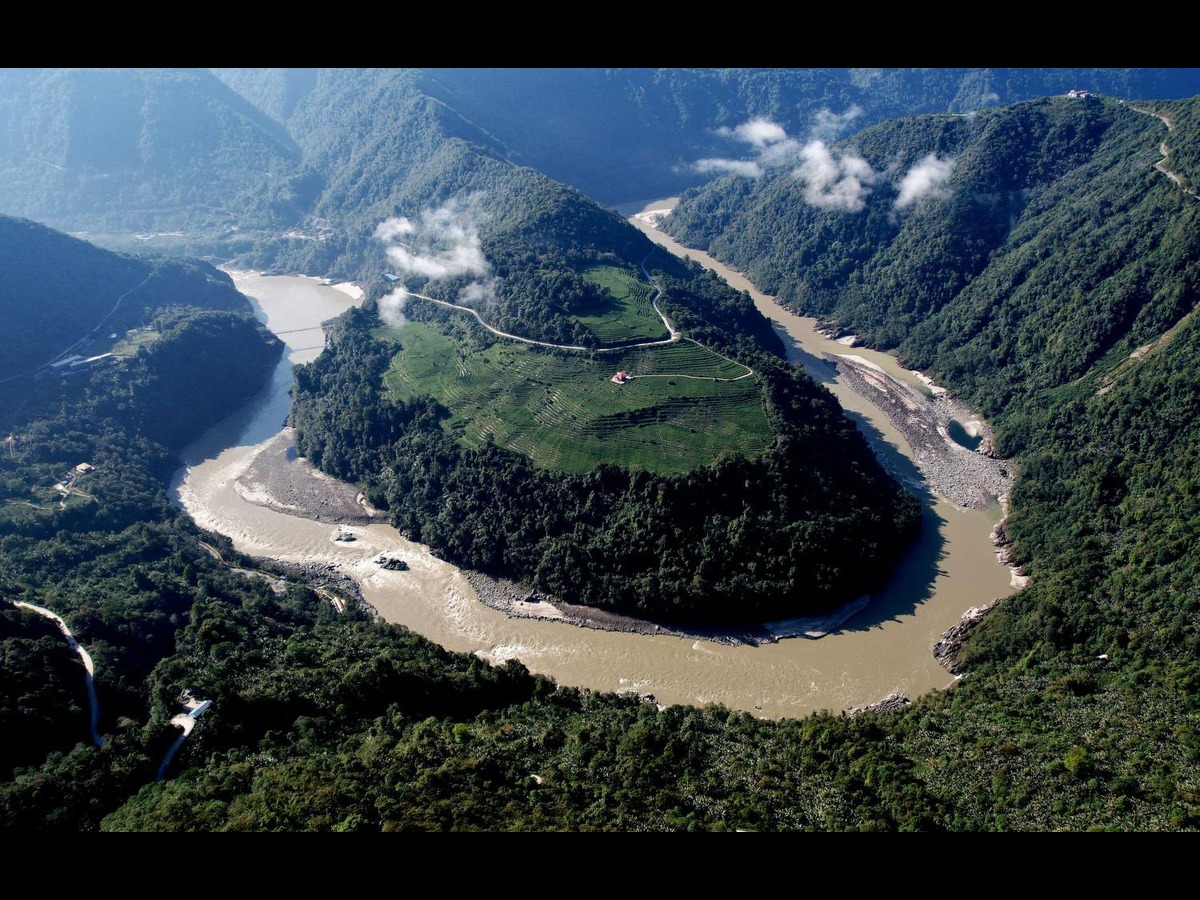
The project is situated in a seismically active and ecologically fragile part of the Himalayas.
The Government of India has raised serious concerns over China’s reported construction of a mega dam on the lower reaches of the Yarlung Tsangpo River in Tibet, a development that could have significant implications for South Asia’s ecology, water security, and geopolitics, according to Phayul.
The Ministry of External Affairs said in a statement that they were carefully monitoring China’s hydropower project on the lower reaches of the Yarlung Tsangpo (upper reaches of the Brahmaputra) River in Tibet.
This project, first made public in 1986, has been a subject of concern for India due to its potential impact on the country’s interests and the livelihoods of local tribes.
Minister of State for External Affairs, Kirti Vardhan Singh, said that the government carefully monitors all developments related to the Brahmaputra River and takes necessary measures to protect its interests. The government has consistently conveyed its views and concerns to the Chinese authorities, emphasising the need for transparency and consultation with downstream countries.
“The Government of India has taken note of reports about the commencement of construction of the mega dam project by China on the lower reaches of the Yarlung Tsangpo (upper reaches of the Brahmaputra) River in Tibet. This project was first made public as far back as 1986 and since then, preparations have been underway in China,” the MEA stated in response to an unstarred question in the Rajya Sabha.
The MEA said that the government remained committed to safeguarding Indian interests in the region.
“Government carefully monitors all developments relating to the Brahmaputra river, including plans by China to develop hydropower projects, and takes necessary measures to protect our interests, including preventive and corrective measures to safeguard life and livelihood of Indian citizens residing in downstream areas,” the statement said.
The Yarlung Tsangpo originates in Tibet’s Jiema Yangzong Glacier near Mount Kailash, flows into Arunachal Pradesh as the Siang, becomes the Brahmaputra in Assam, and eventually merges with the Ganges in Bangladesh before reaching the Bay of Bengal. Any disruptions upstream could directly affect ecosystems, agriculture, and livelihoods across the entire region, Phayul reported.
The project is situated in a seismically active and ecologically fragile part of the Himalayas. Environmentalists, quoted by Phayul, have warned that such large-scale infrastructure in this region could have devastating consequences, including disrupted river flows, loss of biodiversity, and increased flood risks.
India and China have discussed such issues under the Expert Level Mechanism set up in 2006, as well as through ongoing diplomatic engagement. Singh highlighted that India has urged China to ensure transparency and to engage in meaningful consultations with downstream nations before moving ahead with any hydropower developments, Phayul noted.
India has also pressed for the resumption of hydrological data sharing, which China has suspended during crucial monsoon periods in the past. The issue was brought up again during External Affairs Minister S. Jaishankar’s visit to China from July 14-16 for the Shanghai Cooperation Organisation (SCO) Foreign Ministers’ Meeting, according to Phayul.
While China has promoted the dam as part of its renewable energy strategy, India remains wary that the project could allow Beijing to exert control over water flows in South Asia, a strategic tool with far-reaching consequences, Phayul reported.
(Inputs From ANI)
Banasthali Vidyapith 42nd Convocation: More Than 4,500 Students Graduate
More than 4,500 students were awarded graduate, postgraduate and doctoral degrees during the 42nd convocation…
Made in Korea streams on Netflix from March 12. Kim Min-ha dubs Priyanka Mohan’s Shenba…
Pavitra Punia surprised fans when she announced her engagement to a US-based man in October…
