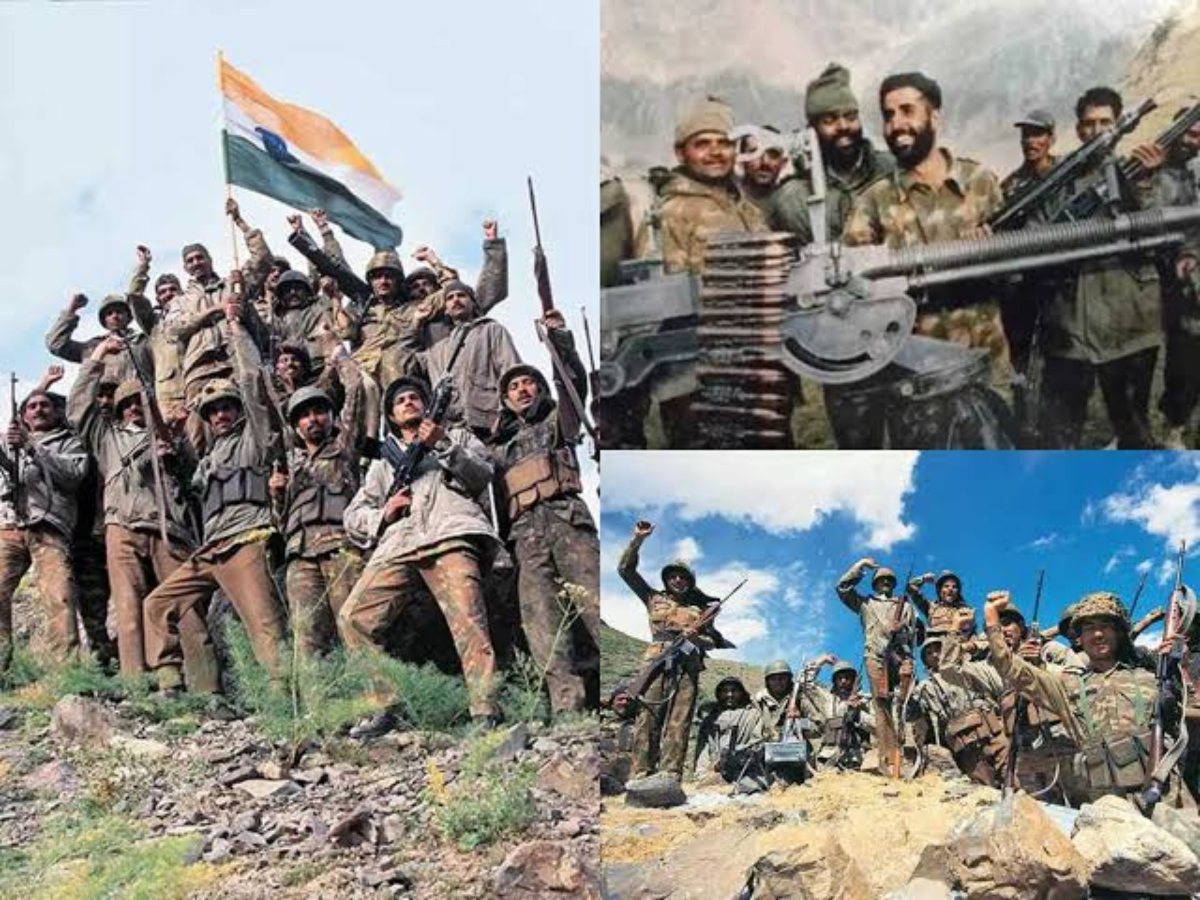
Kargil War 1999
The Kargil War of 1999 was more than just a military operation; it tested India’s courage, strategy, and national unity. In May 1999, Pakistani troops and militants secretly took control of strategic mountain peaks in Kargil, a part of India. In response, India launched Operation Vijay to push them out. After intense fighting that lasted over two months, India recaptured all occupied positions and hoisted the national flag atop the peaks on 26 July 1999. However, the victory came at a heavy cost—hundreds of soldiers lost their lives, military resources were stretched, and thousands of crores were spent during the conflict.
The war posed a big economic challenge for India. Experts estimate that India spent between ₹5,000 crore and ₹10,000 crore during the conflict. The Indian Air Force conducted over 300 airstrikes that alone cost ₹2,000 crore. On the ground, the Army spent ₹10 crore to ₹15 crore daily on operations. At the peak of the conflict, daily spending is believed to have touched ₹1,460 crore. Despite these high costs, India’s economy remained strong. At the time, the country had foreign exchange reserves of USD 33.5 billion and a defence budget of USD 10 billion, which helped manage the burden.
The biggest price India paid was in human lives. During the war, India lost 527 soldiers and over 1,363 were injured. These brave men fought fierce battles across snow-covered mountain peaks, displaying unmatched courage and patriotism. Their dedication and sacrifices ensured that the nation’s pride remained intact. These soldiers climbed steep, enemy-occupied heights under heavy fire to protect India’s borders. Their supreme sacrifice continues to be remembered every year on Kargil Vijay Diwas, and their stories inspire generations to serve the country with the same spirit and fearlessness.
Pakistan faced more severe military losses than India in the Kargil War. Reports suggest nearly 3,000 Pakistani soldiers were killed, though Pakistan officially admitted to only 357 deaths. After retaking key posts, Indian forces recovered several Pakistani soldiers’ bodies, which Pakistan refused to accept. This refusal drew international criticism. The Kargil intrusion occurred just months after the Lahore Declaration, a peace agreement signed between both countries. The world viewed Pakistan’s actions as a betrayal, damaging its global image. India’s diplomatic efforts, along with battlefield wins, helped highlight the truth internationally.
Unlike India, Pakistan lacked the resources to sustain a long conflict. Its estimated daily war expenditure was ₹370 crore, much lower than India’s, but its economic condition was much weaker. Under international pressure and with limited military capability, Pakistan could not continue the fight. India, on the other hand, relied on strong leadership and stable financial reserves to stay in control. This economic gap forced Pakistan to withdraw. The war showed that a strong economy, good planning, and unified leadership play a major role in military success during any armed conflict.
The Kargil War revealed gaps in India’s defence preparedness. One of the biggest issues was the absence of weapon-locating radars. Because of this, Indian troops came under heavy artillery fire without precise counter-attacks. After the war, India deployed the Swathi Radar System to locate enemy artillery with accuracy. Shortages of bulletproof jackets, night vision devices, and basic supplies also came to light. In response, India modernised its defence equipment and ensured better supply chains to troops in border regions. These upgrades aimed to prepare the armed forces for future challenges.
Must Read: Nitish Kumar Announces Rs 15,000 Pension Hike For Journalists In Bihar, Says ‘Khayal Rakh Rahe’
Swastika Sruti is a Senior Sub Editor at NewsX Digital with 5 years of experience shaping stories that matter. She loves tracking politics- national and global trends, and never misses a chance to dig deeper into policies and developments. Passionate about what’s happening around us, she brings sharp insight and clarity to every piece she works on. When not curating news, she’s busy exploring what’s next in the world of public interest. You can reach her at [swastika.newsx@gmail.com]
As Ramadan nears its end, the big question remains: when will Eid be celebrated in…
Apple is preparing to launch the iPhone 18 Pro and iPhone 18 Pro Max with…
Over 400 killed in Kabul as a Pakistani airstrike hits a hospital. Afghanistan stars Rashid…
