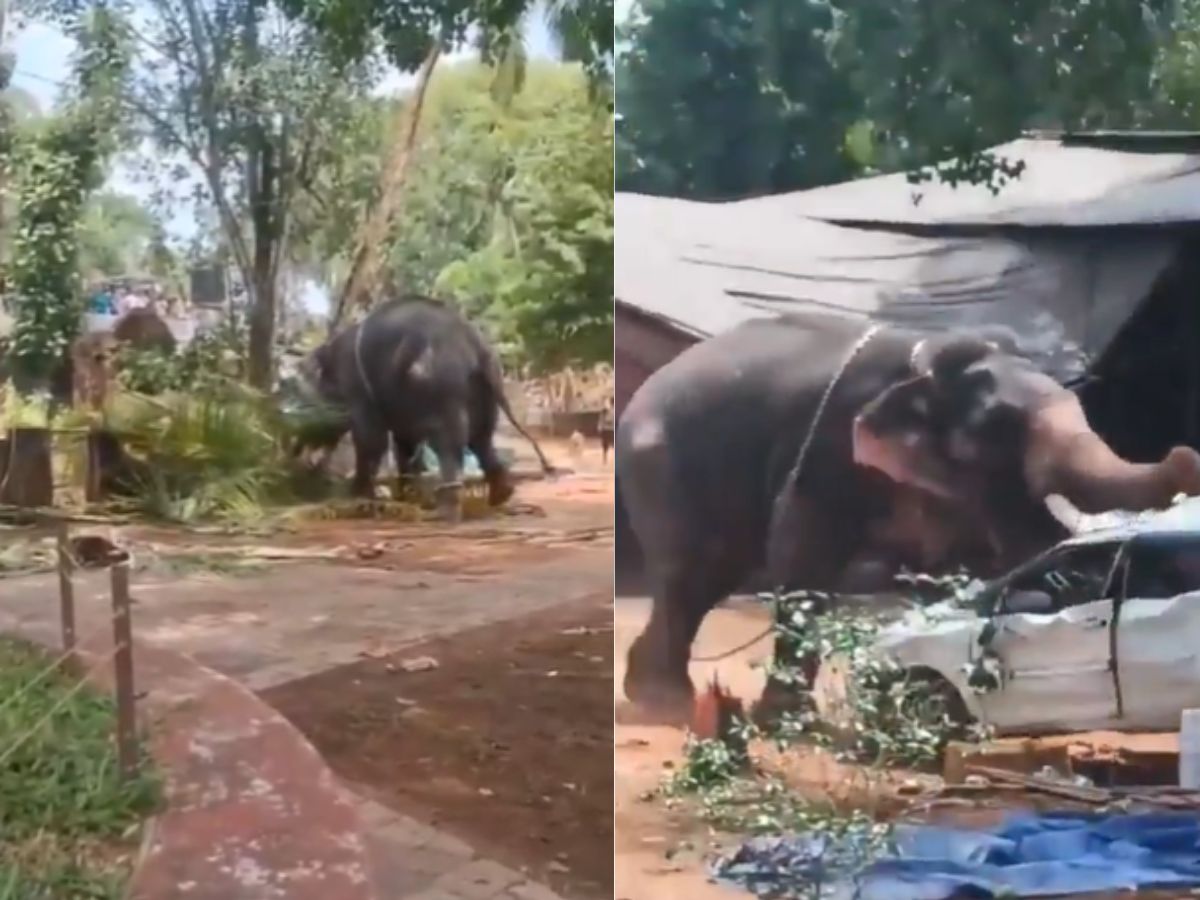
Panic in Kerala as Elephant Turns Violent, One Dead and Several Injured in Sudden Attack
The peaceful morning at Kidangoor Mahavishnu Temple, located in Angamaly, Kerala, experienced disruption on May 1 when the temple elephant, Mayyanad Parthasarathy, began to exhibit violent behavior. The incident, which began at 9:45 am, resulted in the death of 40-year-old Vishnu, who worked as a lorry driver from Kollam and died while transporting the animal to the festival location. Witnesses described a scene of absolute terror as the tusker turned on those closest to it after it suddenly entered musth, which is a periodic aggressive state experienced by male elephants.
Mahout Pradeep experienced serious injuries when he tried to stop the elephant, which had entered a state of panic. The rampage extended beyond human casualties because the animal destroyed various parts of the temple compound wall and smashed multiple vehicles, which included two-wheelers that were parked nearby. The police and forest department officials needed to work together for two hours before they could use tranquilizer darts to control the situation and protect the animal.
The shift from a ceremonial role to something that behaves like an unstoppable natural force demonstrates how animal control operations face challenges with managing elephant behavior. A tusker’s testosterone levels will increase to sixty times their regular amounts during musth because this condition triggers heightened territorial behavior and unpredictable violent episodes. The deadly threat from this physical transformation becomes active during the restricted space and packed space of a temple festival.
The deadly accident, which killed the transporter and injured the elephant keeper, demonstrates how human-elephant relationships become weak when natural elephant behavior interrupts the training process. The event demonstrates that all safety measures established for public protection and handler protection will collapse when an elephant in captivity experiences its biological triggers.
The physical destruction at the Kidangoor Mahavishnu Temple demonstrates how a rogue elephant generates massive kinetic energy, which ends up destroying contemporary temple structures. The event changed from a minor incident to a major public safety emergency after Mayyanad Parthasarathy destroyed both the perimeter fence and local transportation vehicles. Authorities used an immediate-response drugging method to end the standoff because they needed to save the animal while stopping additional human fatalities.
The chaotic two-hour period required authorities to execute an emergency evacuation because many devotees and residents had to leave their homes, which demonstrated that emergency containment areas need to improve at sites where large animals are present. The incident demonstrates how current high-stress festival spaces need to better manage megafauna biological patterns, which creates a need to rethink how cultural practices and community protection are implemented nowadays.
Also Read: Gurugram Tragedy: Five Found Dead, Husband Battles for Life in Alleged Poisoning Case
A recent media graduate, Bhumi Vashisht is currently making a significant contribution as a committed content writer. She brings new ideas to the media sector and is an expert at creating strategic content and captivating tales, having working in the field from past over 10 months.
Ahead of Tamil Nadu Election Results 2026, Vijay’s TVK is preparing for possible resort politics…
Kerala Election Results 2026: Can Pinarayi Vijayan Break Anti-Incumbency Pattern?
Kerala Election Results 2026: Can Pinarayi Vijayan defy anti-incumbency as voters weigh welfare vs jobs,…
The Panihati elections 2026 have turned into a high-stakes battle between Ratna Debnath and Tirthankar…
