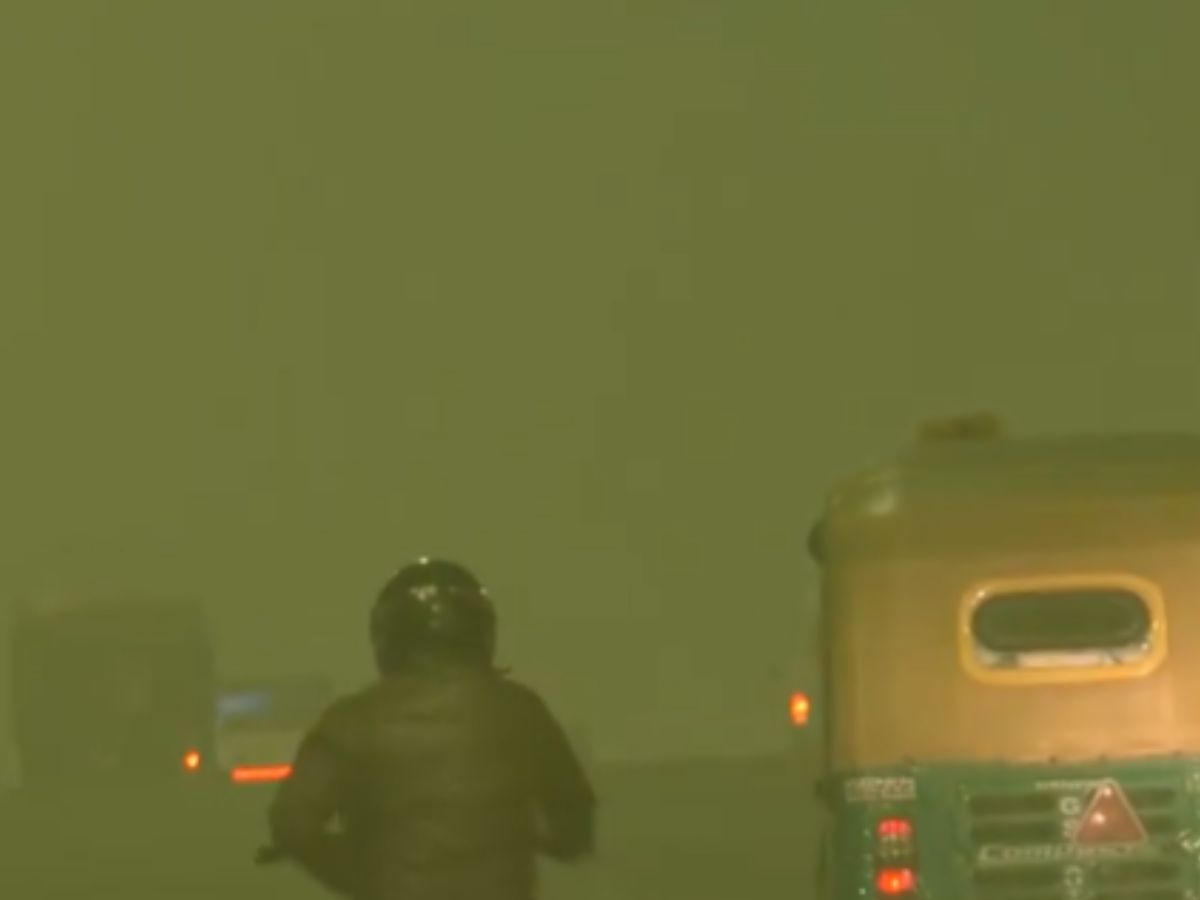
Toxic Smog Engulfs Delhi, AQI Crosses 400, Airport Visibility Drops Amid Public Health Emergency (Pc: ANI Via X)
A layer of thick and toxic smoke has again covered the National Capital Territory (NCT) of Delhi, causing the city to be declared a public health emergency. The Air Quality Index (AQI) has exceeded the critical limit of 400, classifying the air quality as ‘Severe’ and putting the lives of the people in the city at risk. This natural disaster of heavy fog and pollutant particles has completely blocked the sight in the whole area.
The low-visibility procedures were activated at Indira Gandhi International Airport, which made the travelers anxious as the operations were severely impacted. The situation is very serious in the hot spot areas like Wazirpur and Anand Vihar where the localized AQI readings have gone up to more than 440, thus unhealthy conditions even for healthy people. This yearly catastrophe not only highlights the region’s need for an immediate but also a long-term comprehensive environmental action.
The sudden decline in air quality is mainly caused by a mixture of bad weather conditions and pollution from local and regional sources. Meteorological conditions such as low wind and temperature inversion trap the pollutants near the surface, making them unable to disperse naturally, just like a lid over the city basin. The reports show that one of the major factors in local pollution is the automobile emissions which discharges fine particulate matter (PM2.5) that goes deep into the lungs.
Additionally, the haze from burning of agricultural waste in nearby states is intensified by the winds bringing the smoke over, thus adding to the pollution level significantly. Also, the cold weather conditions help in the creation of heavy fog.
The prolonged period of ‘Severe’ air quality has a direct and also a health matter that will last for years to come. The medical community is witnessing a rapid rise in the number of patients with acute respiratory infections, asthma attacks, and chronic obstructive pulmonary disease (COPD) in the case of the elderly and children who are already affected, thus, their respiratory systems are more likely to be irreversibly damaged.
The exposure to the highest concentration of PM2.5 is not only affecting the lungs but also the heart causing it to be stressed, beating abnormally, and making it hard to see and feel the skin. The government has no option but to impose emergency measures that include the Stage-IV provisions of the GRAP that restrict the movement of the people and sources of pollution such as cars, trucks, factories, and power plants.
Also Read: Delhi Weather Update: Rain To Return In Delhi? UP On Yellow Alert, Check Weather Forecast
Bhumi Vashisht is a passionate media graduate and emerging voice in digital journalism, currently working with NewsX as an Entertainment and Viral Content Writer for the past 10 months. With a strong understanding of trending digital culture, celebrity news, and audience engagement, she specializes in crafting compelling entertainment stories and viral content that resonate with modern readers. Known for her creative storytelling approach and sharp eye for trends, Bhumi brings fresh perspectives and strategic content ideas to the fast-paced media industry.
27th AsiaOne ASEAN Business & Social Forum 2026, Kuala Lumpur, Malaysia
Mr. Rajat Raj Shukal, Global Head & Principal Partner of AsiaOne Media Group New Delhi…
JD Vance Claims US-Iran Deal Is Already Signed
JD Vance said the US and Iran have already "signed the deal digitally", but stressed…
Dia Mirza Faces Backlash After Claiming Patriarchy Is Responsible for Climate Change
Dia Mirza has sparked an online debate after stating on Soha Ali Khan's podcast that…
