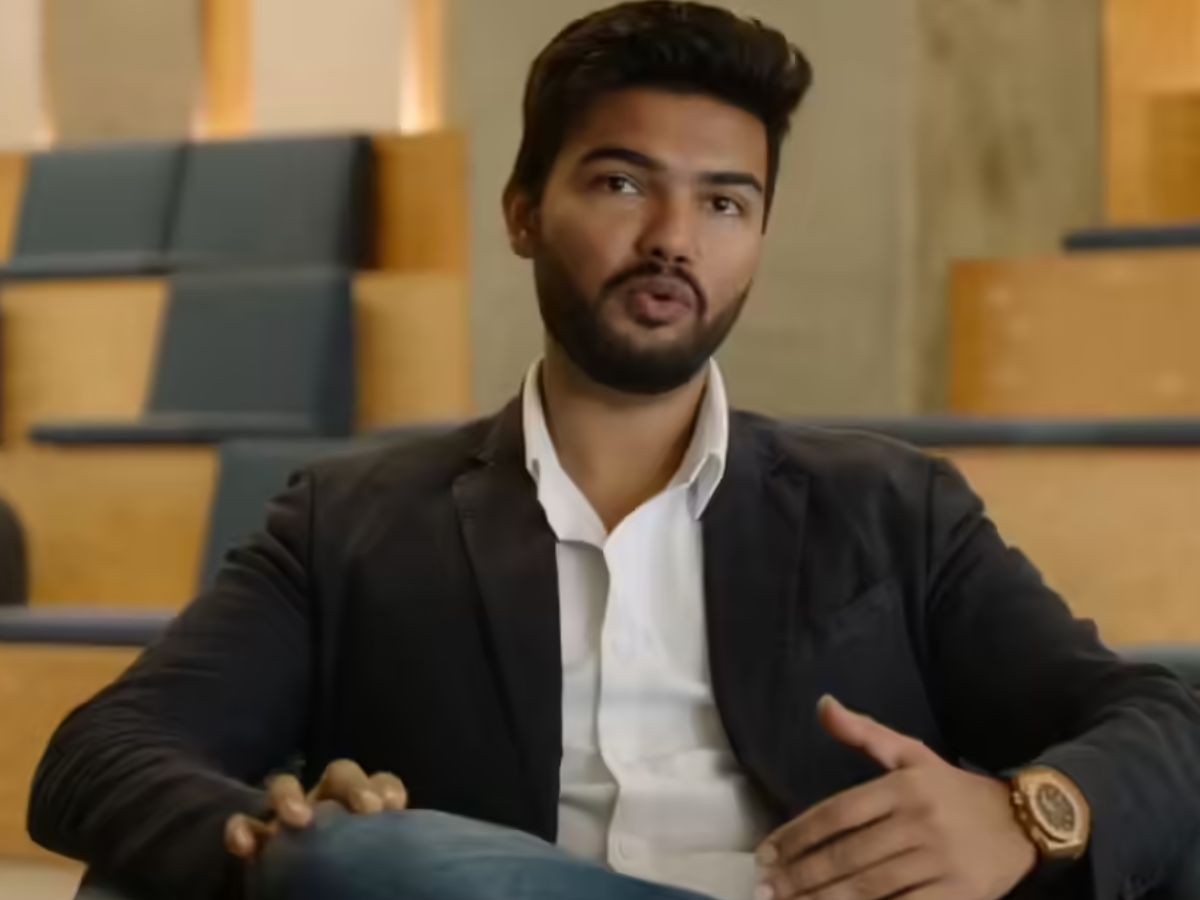
Who Is Tanay Kothari? The 27-Year-Old Behind $700M AI Startup Wispr
Tanay Kothari, an entrepreneur of Indian descent, operates his startup, Wispr, from San Francisco to create a new method for people to interact with computers.
Kothari began his professional career as a teenage programmer in Delhi and later achieved the position of CEO at a company valued at $700 million, which demonstrates his expertise in technology and his capacity to handle various situations.
After completing his studies at Stanford University, where he worked with AI expert Andrew Ng, Kothari chose to create a “voice-first” future instead of following traditional business paths.
Wispr Flow, his main product, enables users to dictate text with instant response and precise accuracy because it uses sophisticated neural processing technology, which makes the human voice the main control method for today’s digital work environments.
The rapid growth of the Wispr startup exists because Kothari chose to make a dangerous business change from developing neurotechnology hardware to creating high-performance software.
Kothari established the company in 2021 with plans to develop brain-computer interfaces, but he discovered that existing voice-to-text tools created more obstacles than missing neural sensors.
He achieved substantial funding success after changing the company direction to develop a software voice operating system, which resulted in a $25 million Series A extension that took place in late 2025.
Notable Capital led this funding round, which increased the company valuation to $700 million because investors showed strong belief that Kothari could develop intelligent speech systems that would succeed the 60-year-old QWERTY keyboard standard.
Tanay Kothari achieves success through his dedication to engineering solutions that prioritize user needs and his understanding of human behavior.
He used video calls to personally onboard the first 500 users of Wispr Flow during its initial rollout while he studied their micro-reactions to detect real-time friction points. The “zero-edit” dictation system evolved from this research because the AI system could transcribe speech and simultaneously identify speaker tone and correct grammar and generate properly structured text.
Kothari improved a difficult-to-use tool into a smooth mental extension by developing sub-second latency and complete desktop application integration, which allows users to handle their work with ease. The company achieved 90% organic growth through word-of-mouth because Kothari installed his system without using a sales team.
Also Read: Maharashtra Shocker; 30-Year-Old Kalyan Man Commits Suicide After Dog Bite Over Rabies Fear
A recent media graduate, Bhumi Vashisht is currently making a significant contribution as a committed content writer. She brings new ideas to the media sector and is an expert at creating strategic content and captivating tales, having working in the field from past four months.
The ICC may shift the T20 World Cup 2026 knockout venues if Pakistan or Sri…
In a shocking Lucknow murder case, 21-year-old Akshat Pratap Singh confessed to killing his father,…
Prime Minister Narendra Modi arrived in Israel for a two-day State visit at the invitation…
