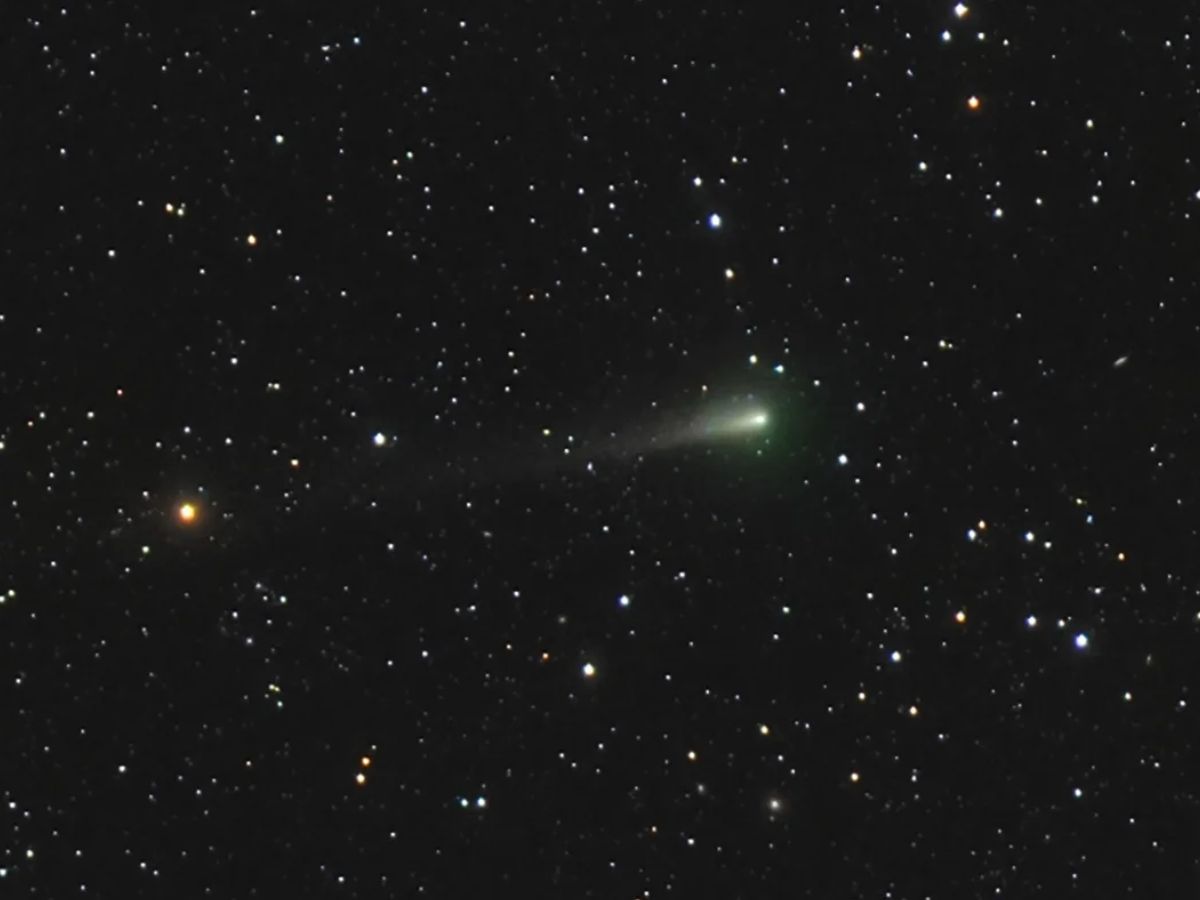
The ‘Other Atlas’ Golden Comet, known as C/2025 K1 (ATLAS), recently made the news for breaking apart while approaching Earth.
Discovered in 2025, this comet caught the attention of many because of its bright “golden” appearance. The glowing effect was exciting because of how sunlight lit up its icy dust tail. It belongs to the rare group of comets that have not previously made a pass near the sun, so it was highly intriguing for astronomers.
On November 11th and 12th of 2025, scientists determined that the comet broke apart into at least two larger pieces and some smaller pieces. This likely happened shortly after it had flown very near the sun as it was passing through our solar system. The sun was expected to crack comets like this one, because is primarily made of ice and dust. The heat and gravity along with the proximity to the sun likely caused the surface to break and separate. Throughout their travels, the gravitational pull from the sun also caused the pieces of the comet to fly at various distances as the chunks of debris are floating toward our planet.
The scientific community has addressed worries and speculation and assures that the scientific consensus finds no danger to Earth. There will be no threat from the comet, as any debris will be approximately 60 million kilometers (or about 150 times the distance of Earth to the moon) from Earth. No parts of the comet are on an impact trajectory with Earth.
Scientists are eager to study comets of this type because they will provide data about the outer formation of our solar system. When a comet breaks up, a scientist can observe the inner material of the comet, which scientists theorize represents material that hasn’t changed since the time of planet formation. These events and details would be valuable in the scientific process of trying to understand early Earth and the origin of life.
Information is based on current astronomical observations and may change. No impact threat is indicated; observe safely with proper equipment.
Vani Verma is a content writer with over 2 years of experience in lifestyle, entertainment, health and digital media. She has a knack for creating engaging and research-driven content that resonates with readers, blending creativity with clarity. Passionate about media trends, culture, and storytelling, she strives to craft content that informs, inspires, and connects.
Lucknow 4-year-old allegedly tortured to death by father and stepmother; body shows 18 injuries, electric…
The Pakistani drama Meri Zindagi Hai Tu is approaching its finale. The series stars Hania…
Former England captain Kevin Pietersen has confirmed he will not return as Delhi Capitals mentor…
