
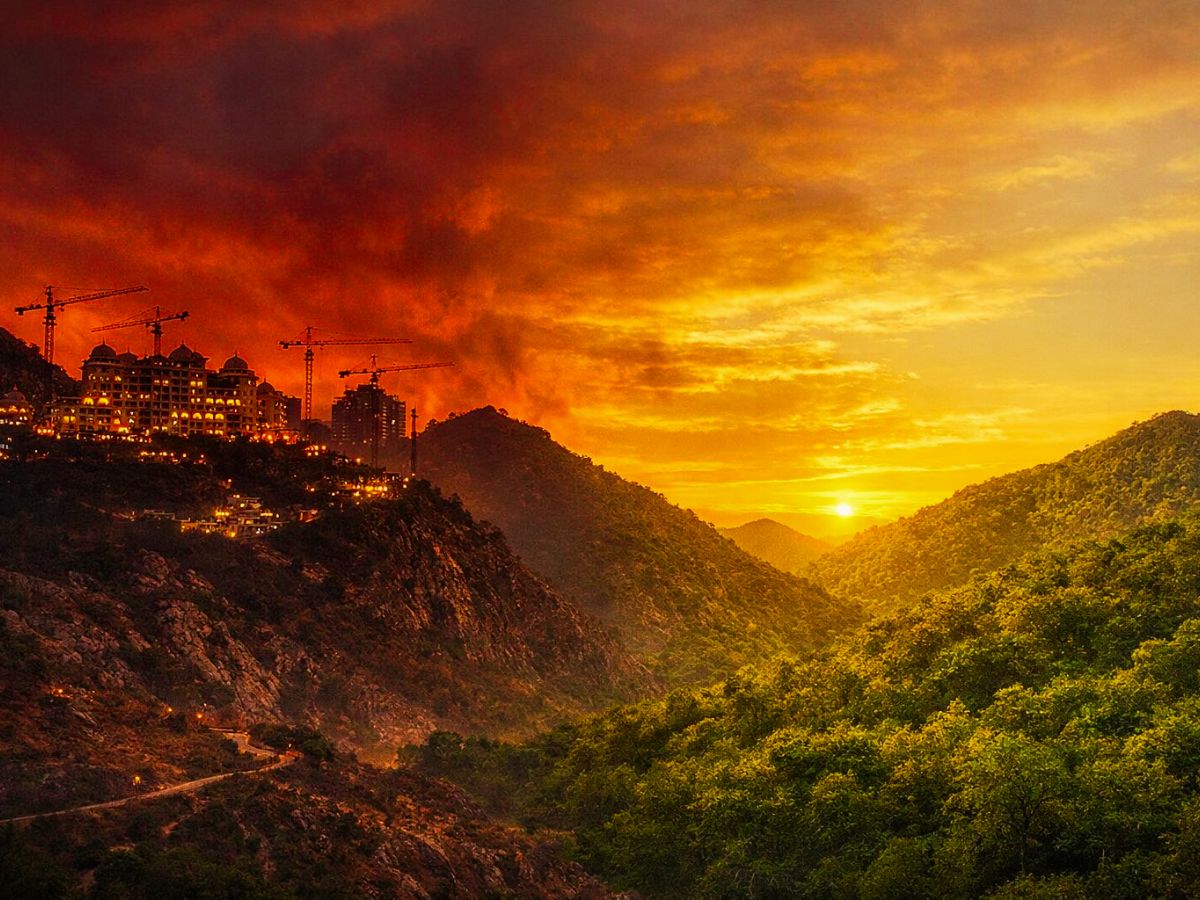
Top Court Steps In As Questions Rise Over Environmental Impact And Legal Clarity
The Supreme Court of India has intervened in the matter of the Aravalli and has brought it to the highest court of the country. The court, during its Saturday session, on the basis of its own motion, acknowledged the controversy surrounding the Centre’s remarkable alteration of the ancient mountain range definition, and it was a clear signal that the matter could not be ignored anymore. The dispute, titled “Definition of Aravalli Hills and Mountain Ranges and Related Issues,” will be addressed by a three-judge vacation bench on December 29.
Chief Justice Surya Kant, along with Justices JK Maheshwari and AG Masih, will hear the case, a sign that the court considers it not only a legal issue but also a question with significant environmental impacts. Meanwhile, everyone is talking about Monday.
Background Of The Case: How The Aravalli Row Began
- The controversy began after the Centre issued a new definition of the Aravalli mountain range.
- Environmentalists and scientists objected, claiming the change was made without sufficient scientific study or public consultation.
- The revised criteria apply to parts of Haryana, Rajasthan, and Gujarat, regions ecologically linked to the Aravallis.
- The new definition relies on a 100-metre height benchmark, which critics say is too simplistic for an ancient and complex mountain ecosystem.
- Opponents argue that such a definition could weaken environmental safeguards and open sensitive areas to exploitation.
Supreme Court’s November 2025 Decision For Aravalli: The Spark That Lit The Fuse
The United States Supreme Court in November 2025 performed a silent act that stirred up controversies later on. The highest court, following the recommendation of a committee established by the Environment Ministry, legalized a standard legal definition of the Aravalli Hills and the Aravalli Range. It was a temporary administrative fix that existed only on paper.
It drew critics from all walks of life. Opponents claimed the definition turned a sophisticated, ancient ecosystem into a legal box that could easily be overlooked while deciding matters related to land, mining, and conservation. What was thought to be a simple technical ruling has now escalated into a major environmental and legal battleground—the court is even having to reconsider it.
(With Inputs From ANI)
Also Read: No PUCC, No Petrol: Delhi Makes Two GRAP-4 Bans Permanent Amid Pollution Crisis…