
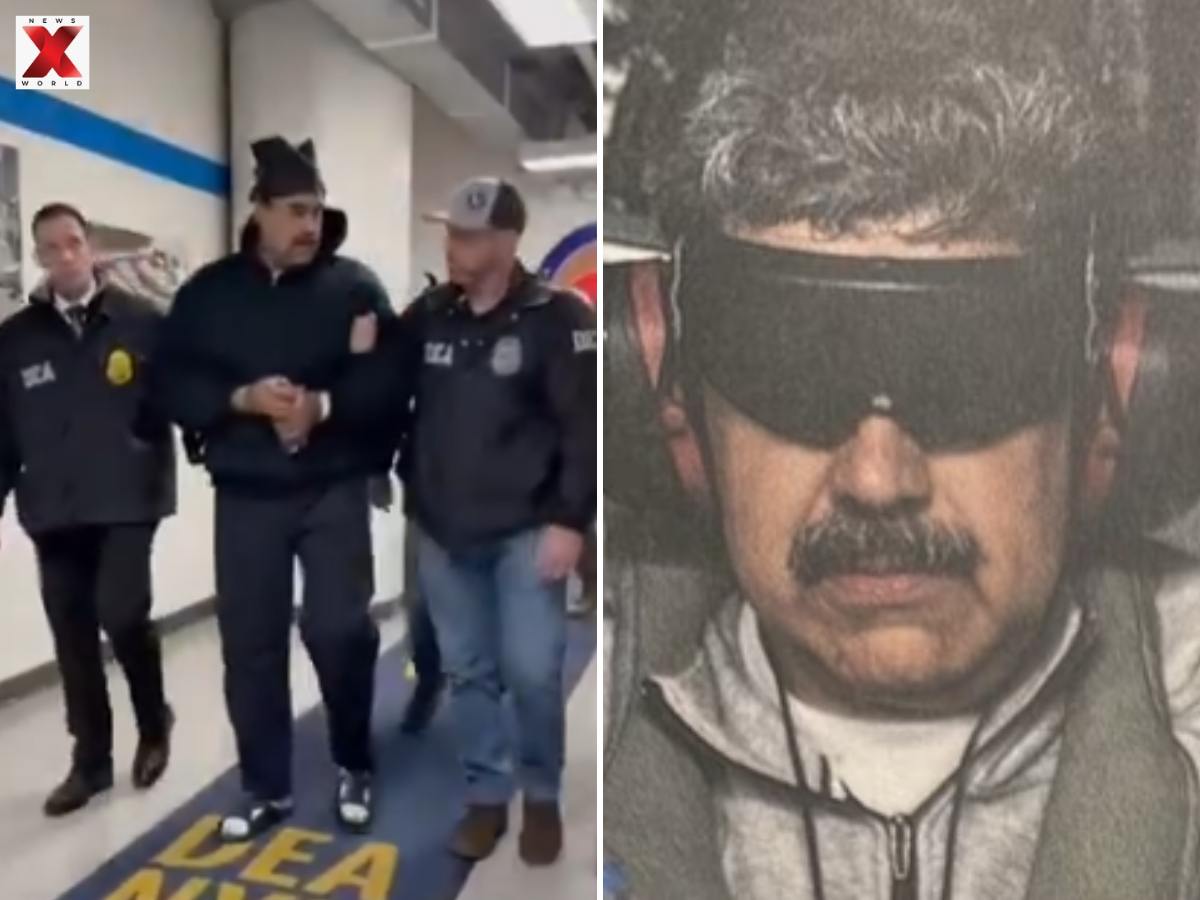

US troops pulled off a bold move: they captured Venezuelan President Nicolas Maduro and his wife, Cilia Flores. Now, Maduro sits in a New York jail, waiting to go to trial on narco-terrorism charges.
Back in Washington, President Trump didn’t waste any time. He announced that the US would “run the country” for now.
People who follow these things say that grabbing Maduro as this goes even further than the US actions in places like Panama or Iraq. It’s on a whole other level, and it’s got folks wondering if grabbing another country’s leader like this is even legal.
US forces capture Venezuela President
On Saturday, January 3, US forces hit Venezuela hard. There were at least seven explosions. The New York Times says the strikes killed at least 40 people. The targets? The Generalissimo Francisco de Miranda Air Base, La Carlota airfield, Fuerte Tiuna (which is a major military base in Caracas), Port La Guaira (that’s Caracas’ main way out to the Caribbean), Higuerote Airport, and some key telecom towers on Cerro El Volcan in Miranda state.
Right after the attacks, US troops seized Maduro and Cilia Flores. They took them to the USS Iwo Jima, which was waiting offshore, and then flew them straight to New York. Now, Maduro’s locked up in the Metropolitan Detention Centre.
This didn’t just come out of nowhere. Saturday’s assault capped months of US military pressure in the region. The US bombed boats accused of drug trafficking and grabbed oil tankers off Venezuela’s coast. Since September, the Trump administration launched 35 boat strikes, killing over 115 people, and parked a bunch of warships nearby.
How did the US react to striking Venezuela?
American officials say the Justice Department asked for military backup to catch Maduro. A New York grand jury had already indicted him along with his wife, his son, two political leaders, and a guy they say leads an international gang on terrorism, drug, and weapons charges.
US Attorney General Pam Bondi posted on social media that the suspects “will soon face the full wrath of American justice on American soil in American courts.”
At his press conference, Trump pointed fingers at Venezuela for “stealing” US oil, promised to take it back, and said America would run things in Venezuela for a while. He didn’t offer any details.
Former president of the UN war crimes court in Sierra Leone Geoffrey Robertson KC, who was a founding head of Doughty Street Chambers, was quoted by The Guardian saying that it was an attack on Venezuela that violated article 2(4) of the charter. The point is that America violates the charter of the United Nations, he said. It has fought the crime of aggression and the court of Nuremberg termed it the greatest crime of all, it is the worst of all crimes.
Susan Breau, another international law professor, echoed these points. She said the only way an attack like this could be legal is if the UN Security Council approved it or if it was true self-defence. Neither, she said, fits here.
What does the law say?
The US Congress is the one with the power to declare war, and that didn’t happen in this case. Trump’s own Chief of Staff, Susie Wiles, told Vanity Fair that if Trump wanted to send troops into Venezuela, he’d need Congress to sign off.
International law is clear too: countries can’t use force against each other except in rare cases like if the UN Security Council says so or if it’s true self-defence.
Drug trafficking and gang violence don’t count as a reason to invade another country. Legal experts say these are criminal issues, not reasons for war.
So, any precedent for this?
The US has grabbed suspects from other countries before, like in Libya, but usually with the local government’s okay.
Back in 1989, the US arrested Panama’s leader, Manuel Noriega, after indicting him on drug charges. The US claimed it was protecting its citizens after a US soldier was killed, and it argued that Noriega wasn’t the real leader. Washington recognized someone else as Panama’s president.
More recently, the US extradited former Honduran president Juan Orlando Hernández on drug charges. He was convicted and sentenced to 45 years. Oddly enough, Trump pardoned him in December.
But in Maduro’s case, there’s a twist: the US calls him illegitimate, but hasn’t recognised any other Venezuelan leader who could legally okay his arrest.
And what about immunity? Usually, heads of state can’t be prosecuted by foreign courts. But does Maduro get that protection? The US says no, Secretary of State Marco Rubio calls him a drug kingpin pretending to be president.
Still, Venezuela’s own election authorities declared Maduro the winner in both 2018 and 2024. Sure, lots of people cried fraud, and since 2019, the US hasn’t recognized him as the country’s leader. But on paper, at least in Venezuela, he’s still the president.




