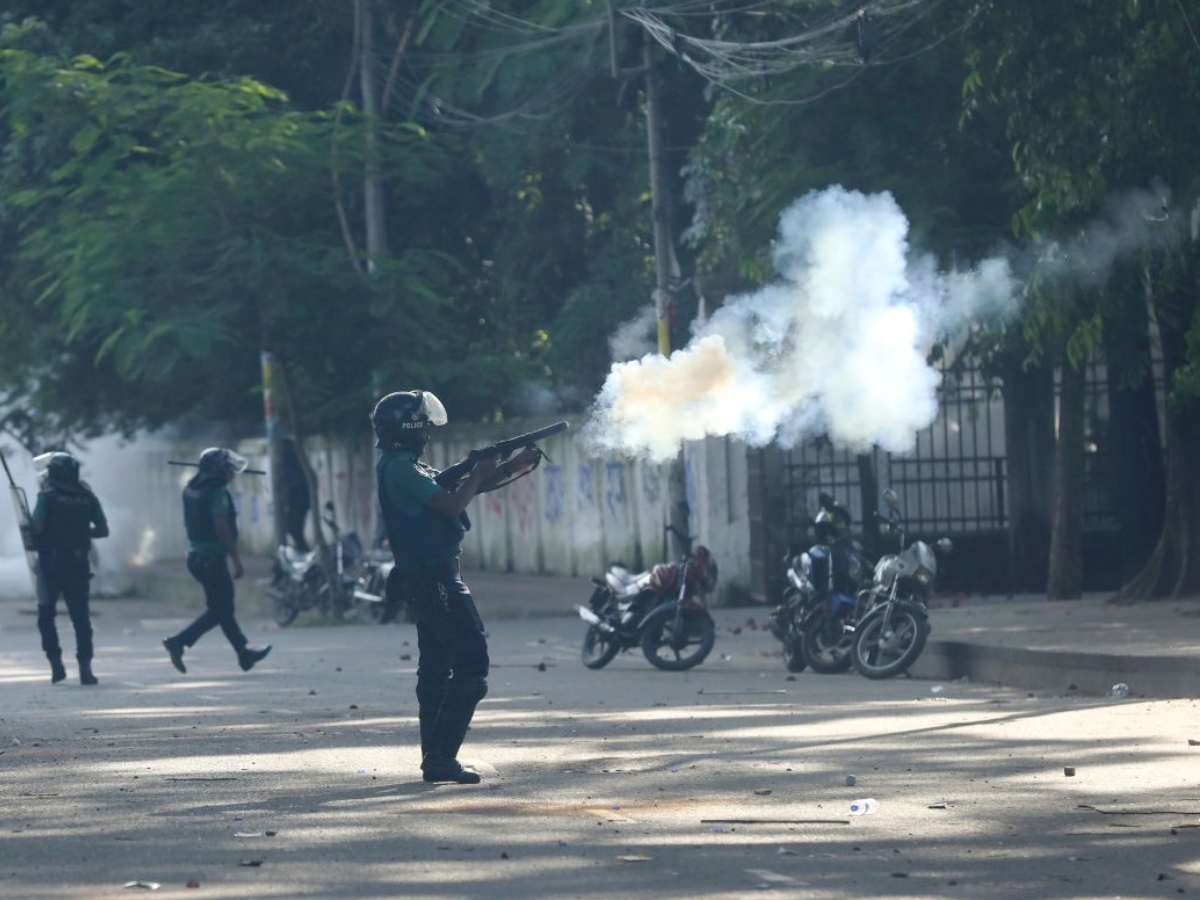
Bangladesh sees violent protests after ICT sentences Sheikh Hasina to death for July uprising crimes, triggering nationwide unrest. Photo: X.
Bangladesh witnessed a fresh wave of violent unrest on Monday after the International Crimes Tribunal (ICT) handed former Prime Minister Sheikh Hasina a death sentence for crimes against humanity linked to last year’s student-led uprising that toppled her government.
Protests intensified across multiple districts as demonstrators blocked highways, led marches, and clashed with police. Security forces were deployed across Dhaka and other major cities anticipating large-scale violence following the verdict.
According to Bangladeshi media, police used batons, sound grenades, and tear gas to disperse crowds as confrontations escalated in several protest zones.
The Dhanmondi 32 area, home to the historic residence of Bangladesh’s founding father, Sheikh Mujibur Rahman, and Hasina’s father, remained particularly volatile. Reports said protesters attempted to march toward the house and vandalise the property, prompting heightened security.
Supporters of the Awami League, which was banned by the Muhammad Yunus-led interim government for its alleged role in the 2024 anti-government protests, clashed with members of Jatiya Chhatra Shakti, a group formed by coordinators of the student uprising.
These clashes intensified after the ICT announced it would deliver its verdict on Monday. In anticipation, the Awami League had already called a two-day nationwide bandh, describing the case against Hasina as “politically motivated.”
The International Crimes Tribunal-1 sentenced Sheikh Hasina to death on two charges related to killings and other crimes against humanity during the July mass uprising. The tribunal said the allegations against her and two other accused had been “proven”.
This marks the first ruling connected to violence and rights violations committed during the student-led movement.
Alongside Hasina, two senior officials from her ousted administration were convicted:
Asaduzzaman Khan, former Home Minister, has also been sentenced to death.
Chowdhury Abdullah Al-Mamun, former Inspector General of Police (IGP), has been sentenced to five years in prison.
The tribunal’s ruling has triggered one of the most intense periods of political unrest since the upheaval that forced Hasina out of office last year.
Also Read: Sheikh Hasina’s Death Penalty On Marriage Anniversary, A Calculated Move? Social Media Takes A Dig
Zubair Amin is a Senior Journalist at NewsX with over seven years of experience in reporting and editorial work. He has written for leading national and international publications, including Foreign Policy Magazine, Al Jazeera, The Economic Times, The Indian Express, The Wire, Article 14, Mongabay, News9, among others. His primary focus is on international affairs, with a strong interest in US politics and policy. He also writes on West Asia, Indian polity, and constitutional issues. Zubair tweets at zubaiyr.amin
A video from a Central Board of Secondary Education (CBSE) affiliated English medium school has…
Drone Strike Forces Suspension Of Operations At Lanaz Refinery In Iraq’s Erbil Amid Ongoing Iran War
Operations at the Lanaz oil refinery in Erbil were suspended on Saturday after a drone…
Mirzapur: A shocking case from Mirzapur has raised serious concerns about the dangers of incomplete…
