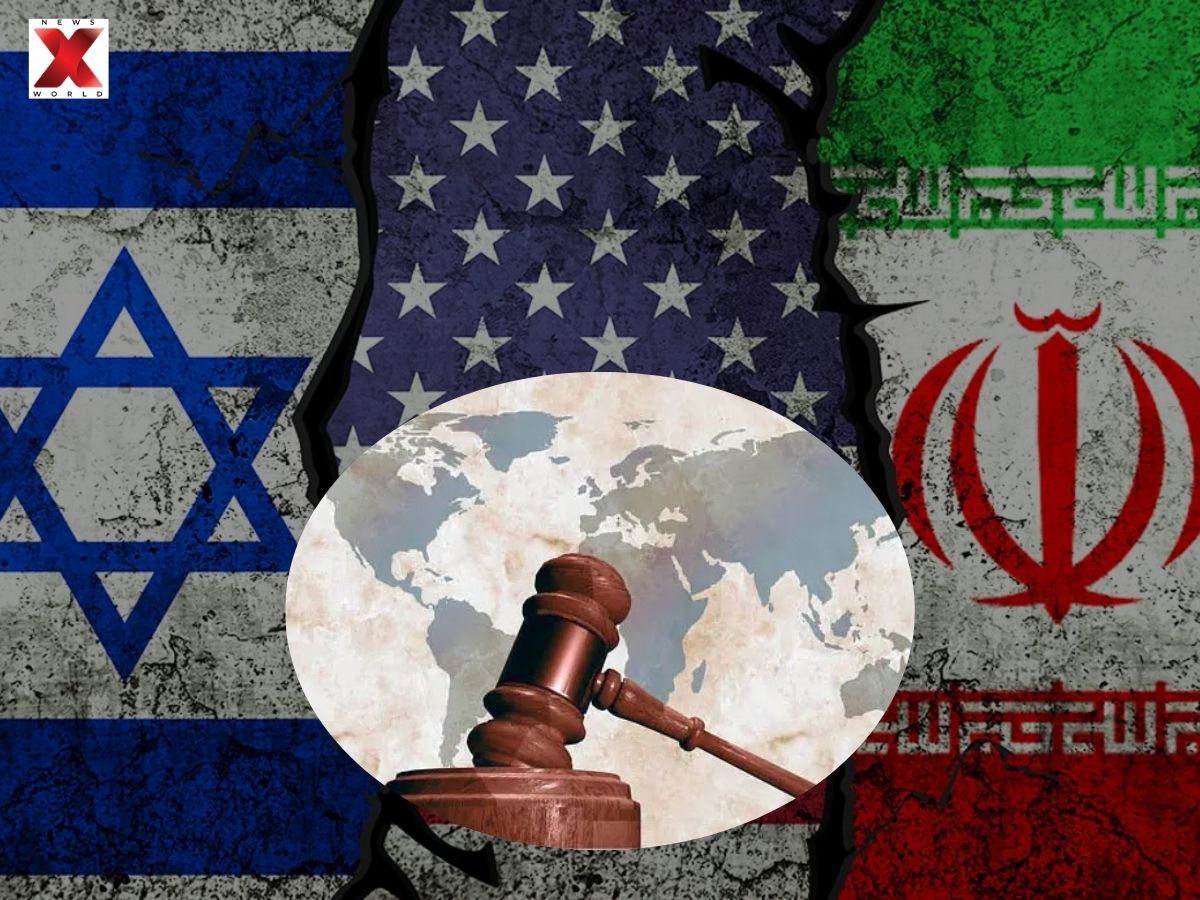
US–Israel Strikes On Iran Escalate; But Is The Action Legal Under US And International Law?
US And Israel Strikes On Iran Escalate Into Full‑Blown Turmoil
The Middle East has become the world’s most intense real-time action movie. Precision US and Israeli strikes are targeting Iranian cities and military installations, creating global shockwaves after Supreme Leader Ayatollah Ali Khamenei reportedly died.
Explosions and counterstrikes, from Tehran’s streets to Gulf airbases, create a dangerous situation that escalates with every missile launch. Readers can feel the intense heat accompanying each act of retaliation. The conflict develops into a geopolitical thriller, as news headlines turn into real-time events showing how each action could affect world affairs.
Who will strike next? And how far will this spiral go?
President Donald Trump insists that US and Israeli military strikes against Iran were essential to protect American interests from imminent threats. He warned that Iran could acquire a nuclear weapon within a month – though critics point out he offered no proof, and some claims even clash with his earlier statements that Iran’s nuclear program had been “obliterated.”
The US Senate has entered the situation by introducing a bipartisan War Powers Resolution, which seeks to limit presidential authority and requires Congress to approve any military actions against Iran. Lawmakers are preparing to vote on legislation that will establish their political positions for the upcoming election season, despite the fact that they need two-thirds backing for it to succeed.
The political arena in Washington has become as dangerous as the situation in the Middle East, with missiles flying, debates flaring, and tweets raging. The Constitution sets limits that will determine whether the current situation represents a new phase of presidential authority or not.
The reported killing of Ayatollah Ali Khamenei has triggered one explosive question: was it an act of war – or an illegal assassination? According to emerging reports, the strike was carried out by Israel with alleged US intelligence support. This particular detail places Washington in a legal grey zone between two boundaries.
US personnel are prohibited from engaging in assassinations under Executive Order 12333. However, the situation becomes complicated because armed conflict has led to differing interpretations of this ban. The legal position could shift if Khamenei were recognized as a legitimate military target during wartime activities involving the United States.
The key question is whether he was a head of state protected by international norms or a wartime commander directing military operations against an adversary. The answer could establish new limits defining contemporary warfare. On today’s battlefield, the distance between a targeted killing and an act of war appears increasingly narrow, as drones move faster than legal deliberations.
US lawmakers will vote on a bipartisan War Powers Resolution that seeks to stop military actions against Iran while requiring Congress to authorize any future military action. The move forces senators to go on record in an election year, even though securing the required two-thirds majority appears unlikely.
The US Constitution gives the president the power to serve as commander-in-chief, but only Congress possesses the authority to declare war. Legal experts argue that recent military actions may test these constitutional boundaries, unlike previous Congress-authorized wars in Afghanistan (2001) and Iraq (2003).
The War Powers Resolution restricts unilateral military action. The law permits armed engagement only if Congress declares war, authorizes the use of force, or if the US is attacked. Any unauthorized deployment must end within 60 days unless lawmakers approve an extension.
The UN Charter requires nations to refrain from using force except when authorized by the UN Security Council or when acting in self-defence against an armed attack. Pre-emptive self-defence applies only with clear evidence of an imminent threat. Many experts believe the strikes could face global legal criticism.
(With Inputs From Reuters)
Also Read: Who Is Mojtaba Khamenei? Ali Khamenei’s 56-Year-Old Son With No Official Post, Sanctioned By US, Owner Of….
Aishwarya is a journalism graduate with over three years of experience thriving in the buzzing corporate media world. She’s got a knack for decoding business news, tracking the twists and turns of the stock market, covering the masala of the entertainment world, and sometimes her stories come with just the right sprinkle of political commentary. She has worked with several organizations, interned at ZEE and gained professional skills at TV9 and News24, And now is learning and writing at NewsX, she’s no stranger to the newsroom hustle. Her storytelling style is fast-paced, creative, and perfectly tailored to connect with both the platform and its audience. Moto: Approaching every story from the reader’s point of view, backing up her insights with solid facts.
Always bold with her opinions, she also never misses the chance to weave in expert voices, keeping things balanced and insightful. In short, Aishwarya brings a fresh, sharp, and fact-driven voice to every story she touches.
Spain firmly rejects White House claims of cooperation in Middle East strikes, resists US pressure,…
US–Israel strikes kill over 1,000 in Iran, triggering missile retaliation, leadership uncertainty, US casualties in…
India and England face off in the T20 World Cup 2026 semi-final at Wankhede Stadium.…
