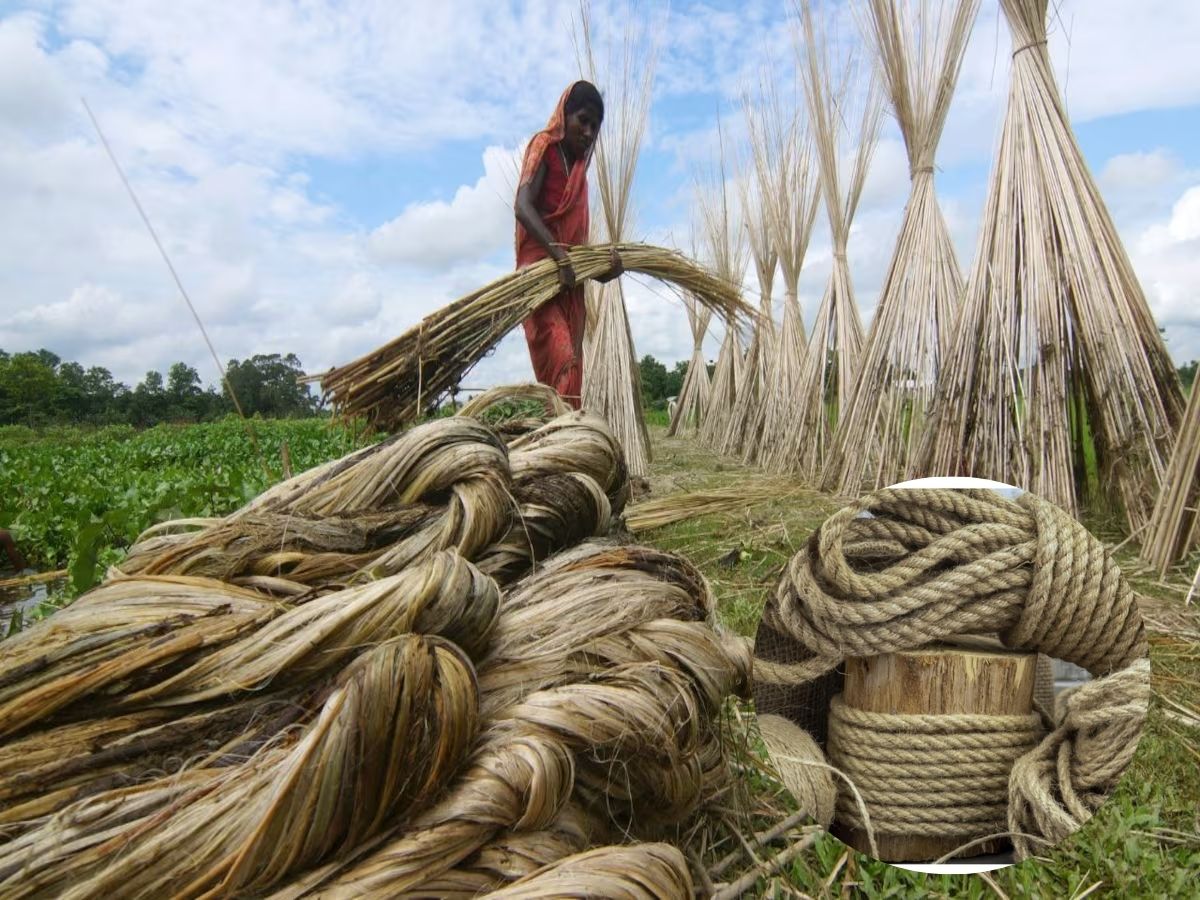
India bans jute imports from Bangladesh via land borders, tightening trade amid escalating diplomatic tensions, Photos/X.
India on Monday announced an immediate ban on imports of select jute products and ropes from Bangladesh through all land border points, signaling increased trade restrictions amid worsening bilateral ties.
According to a notification issued by the Directorate General of Foreign Trade (DGFT), these imports will continue to be permitted only through the Nhava Sheva Seaport in Maharashtra.
The DGFT notification stated, “imports from Bangladesh shall not be allowed from any land port on the India-Bangladesh Border,” adding that “Import of certain goods from Bangladesh to India is regulated with immediate effect.”
The list of restricted items includes bleached and unbleached woven fabrics made of jute or other textile bast fibres, twine, cordage, rope of jute, as well as sacks and bags made of jute.
Also Reaad: When Will Bangladesh General Election Be Held? Poll Body Chief Provides Big Update
This move follows earlier restrictions imposed on June 27, when India prohibited imports of various jute products and woven fabrics from Bangladesh via land routes but allowed their entry solely through the Nhava Sheva port.
At that time, the restrictions covered items such as jute products, flax tow and waste, jute and other bast fibres, single flax yarn, single yarn of jute, multiple folded woven fabrics of flax, and unbleached woven jute fabrics.
India had announced similar trade curbs on imports from Bangladesh in April and May this year. On May 17, port restrictions were imposed on certain goods including ready-made garments and processed food products from Bangladesh.
Furthermore, on April 9, India revoked the transshipment facility it had earlier granted Bangladesh for exporting goods to the Middle East, Europe, and other regions, excluding Nepal and Bhutan.
These escalating trade restrictions come amid strained diplomatic relations following controversial remarks by Muhammad Yunus, head of Bangladesh’s interim government, during a visit to China. The comments triggered strong disapproval from New Delhi and drew sharp criticism across the Indian political spectrum.
Relations between the two countries have deteriorated significantly, especially due to perceived failures by Bangladesh to prevent attacks on minorities, notably Hindus.
In economic terms, Bangladesh remains a major competitor to India in the textile sector. Bilateral trade between the two nations reached USD 12.9 billion in the fiscal year 2023-24. During 2024-25, India’s exports to Bangladesh stood at USD 11.46 billion, while imports from Bangladesh amounted to USD 2 billion.
(With inputs from agencies)
Also Read: From Allies to Rivals? India Clamps Down on Bangladesh Imports
Zubair Amin is a Senior Journalist at NewsX with over seven years of experience in reporting and editorial work. He has written for leading national and international publications, including Foreign Policy Magazine, Al Jazeera, The Economic Times, The Indian Express, The Wire, Article 14, Mongabay, News9, among others. His primary focus is on international affairs, with a strong interest in US politics and policy. He also writes on West Asia, Indian polity, and constitutional issues. Zubair tweets at zubaiyr.amin
Nothing has recently launched it Phone 4a series which consist of two models Phone 4a…
Emirates has suspended all flights to and from Dubai until further notice due to continuing…
Reports suggest that an Iranian strike destroyed a key radar linked to the US Terminal…
