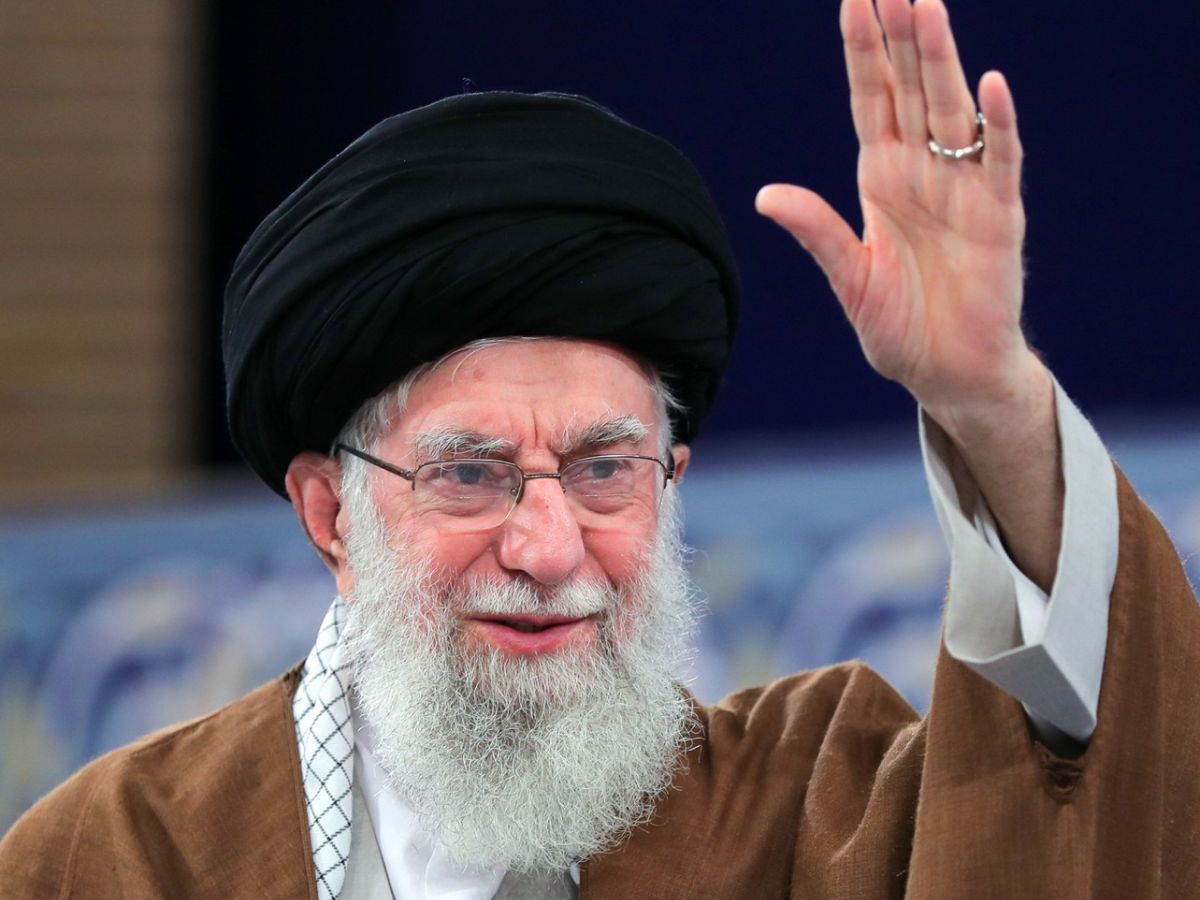
Iran warns any US strike, even limited, would be an act of aggression. (Photo: X/@khamenei_ir)
Tensions between the United States and Iran escalated sharply on Monday after Iran warned that any US military strike, even a limited one, would be treated as an act of aggression and met with a ferocious response. The warning comes as US President Donald Trump is reportedly weighing possible military options against Tehran.
Iran’s Foreign Ministry made it clear that it does not recognise the concept of a “limited strike.” Speaking at a press briefing in Tehran, ministry spokesperson Esmaeil Baqaei said any form of attack would amount to outright aggression.
“An act of aggression would be regarded as an act of aggression. Period,” Baqaei said, adding that Iran would exercise its “inherent right of self-defence” and respond “ferociously” to any military action.
The statement was issued amid reports that Washington is considering targeted strikes aimed at pressuring Iran to curb its nuclear programme.
According to reports, Trump is evaluating the possibility of limited military strikes if negotiations fail to produce a breakthrough. The US has significantly increased its military presence in the Middle East in recent weeks, deploying additional warships, aircraft, and forces to the region.
Analysts suggest that the scale of deployment signals preparation for a broader operation if diplomacy collapses. Such a build-up has not been seen in the region since the 1991 Gulf War or the 2003 US-led invasion of Iraq.
In a recent interview with Fox News, US envoy Steve Witkoff said Trump was questioning why Iran had not “capitulated” despite the American military build-up.
Despite rising rhetoric, diplomatic efforts are ongoing. US and Iranian officials are scheduled to hold another round of indirect talks in Oman on Thursday, mediated by Muscat.
Iran has maintained that discussions will focus solely on its nuclear programme. Tehran has repeatedly denied Western accusations that it seeks to develop nuclear weapons, insisting its programme is for peaceful purposes.
However, reports indicate Iran is unwilling to negotiate over its ballistic missile programme a key demand from Washington and its allies.
The European Union has also called for restraint. EU foreign policy chief Kaja Kallas stressed the need for diplomacy ahead of the talks.
“We don’t need another war in this region. We already have a lot,” she said, urging both sides to use the current window to find a political solution.
The heightened military posture and sharp rhetoric have fuelled fears of a broader conflict in the Middle East. Several countries, including India, Sweden, Poland, Serbia and Australia, have advised their citizens to leave Iran amid escalating tensions.
Within Iran, concerns over a potential war are rising, even as authorities continue to face domestic challenges and economic pressure.
With both sides exchanging strong warnings, the upcoming talks in Oman could prove crucial in determining whether diplomacy prevails or whether the region edges closer to confrontation.
Sofia Babu Chacko is a journalist with over five years of experience covering Indian politics, crime, human rights, gender issues, and stories about marginalized communities. She believes that every voice matters, and journalism has a vital role to play in amplifying those voices. Sofia is committed to creating impact and shedding light on stories that truly matter. Beyond her work in the newsroom, she is also a music enthusiast who enjoys singing.
Shimron Hetmyer smashed the fastest T20 World Cup fifty for West Indies during the WI…
Donald Trump lashed out at the Supreme Court after it struck down his sweeping tariffs…
A Peruvian military helicopter crashed in southern Peru, killing 15 people, including crew members and…
