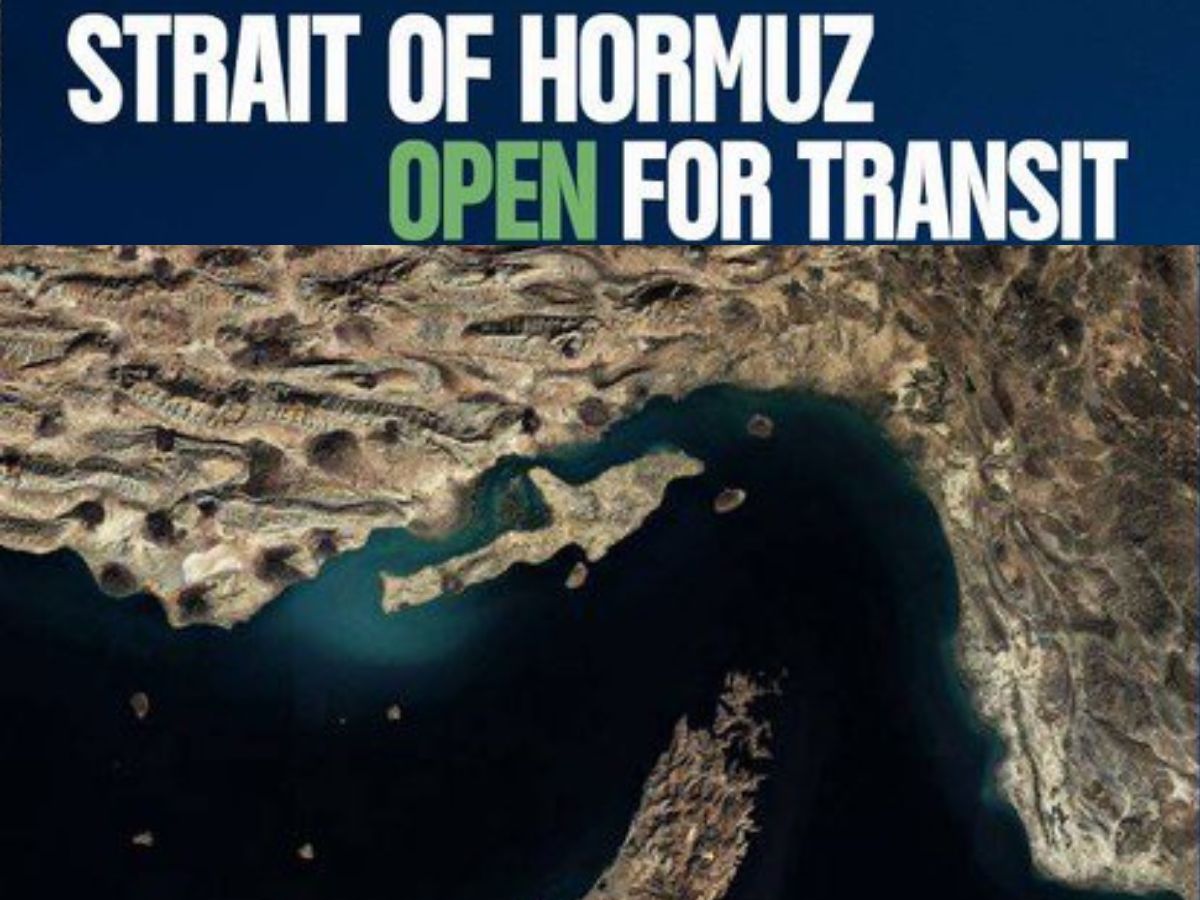
The Strait of Hormuz, one of the world’s most strategically important maritime chokepoints, remains open for commercial transit despite escalating military tensions between the United States and Iran. The development comes amid conflicting claims about control of the waterway and growing concerns over global energy supplies. Recent shipping data and official statements indicate that commercial vessels, including oil tankers and LNG carriers, continue to navigate the strait, although traffic remains significantly below normal levels due to security risks.
The Strait of Hormuz connects the Persian Gulf to the Gulf of Oman and the Arabian Sea. Roughly one-fifth of the world’s oil supply and a substantial share of global liquefied natural gas (LNG) exports pass through this narrow waterway, making it one of the most important trade routes on the planet. Any disruption in the strait can immediately impact global energy markets, shipping costs, insurance premiums, and fuel prices worldwide.
The latest statements from US Central Command indicate that commercial vessels continue operating in and out of the waterway. Iranian threats and military tensions have not completely halted maritime traffic and that commercial shipping activity continues. Several LNG tankers have successfully exited the strait recently, including vessels operated by QatarEnergy and ADNOC. Shipping data shows ongoing movement toward Asian destinations such as India, Pakistan, China, and Southeast Asia.
The status of the Strait of Hormuz has become a major point of contention between Washington and Tehran. Iran has repeatedly threatened to restrict or close the waterway following US military operations. Iranian military officials have claimed authority over transit restrictions and have warned foreign vessels against violating what they describe as security measures. Meanwhile, senior US officials have asserted that commercial navigation remains protected and that American forces are positioned to ensure freedom of navigation through the strait. US Defence Secretary Pete Hegseth recently stated that the United States maintains effective control of maritime operations in the area.
Although the strait remains operational, traffic levels are nowhere near pre-conflict volumes. Before the current crisis, approximately 125 to 140 vessels transited the Strait of Hormuz daily. Since the outbreak of hostilities, shipping activity has dropped dramatically as vessel operators assess security risks and insurance costs. Research from the Center for Strategic and International Studies (CSIS) shows that daily transits remain well below pre-war levels, with commercial traffic only partially recovering despite some successful crossings.
The continued operation of the Strait of Hormuz has helped prevent a major shock to global energy markets. Successful passage of LNG carriers and oil tankers has eased fears of a complete supply disruption. However, traders remain cautious because any military escalation could rapidly alter the situation.
Energy analysts warn that even limited disruptions in Hormuz can trigger sharp increases in crude oil prices, raise transportation costs, and create supply chain bottlenecks for energy-importing nations across Asia and Europe.
The region remains one of the world’s most volatile maritime environments. Recent incidents have included reported drone launches, missile threats, naval confrontations, and military strikes linked to the ongoing US-Iran confrontation. The United States has confirmed intercepting threats near the strait, while European authorities have imposed sanctions related to disruptions of maritime navigation.
Although commercial shipping is continuing, many vessel operators are taking additional precautions, including altered routing procedures, enhanced security protocols, and temporary AIS signal restrictions in certain cases.
(Inputs From Reuters)
ALSO READ: Trump Cancels Planned Iran Strikes After High-Level Talks, Insists Hormuz Blockade Will Continue
Harshita is a journalist and digital content writer specializing in breaking news, current affairs, travel, education, and trending stories. She is focused on delivering accurate, timely, and engaging content with a strong emphasis on clarity and audience relevance.
Mexico defeated South Africa 2–0 in a historic, card-heavy FIFA World Cup 2026 opening match…
What Does Iran Peace Deal Include? Trump Claim It Could Be Signed This Weekend
US President Donald Trump says a peace deal with Iran could be finalised within days…
‘No Final Decision Has Been Made’: Iran Denies Approving US Agreement Despite Trump’s Claims
Iran says no final decision has been made on a proposed US agreement, despite President…

