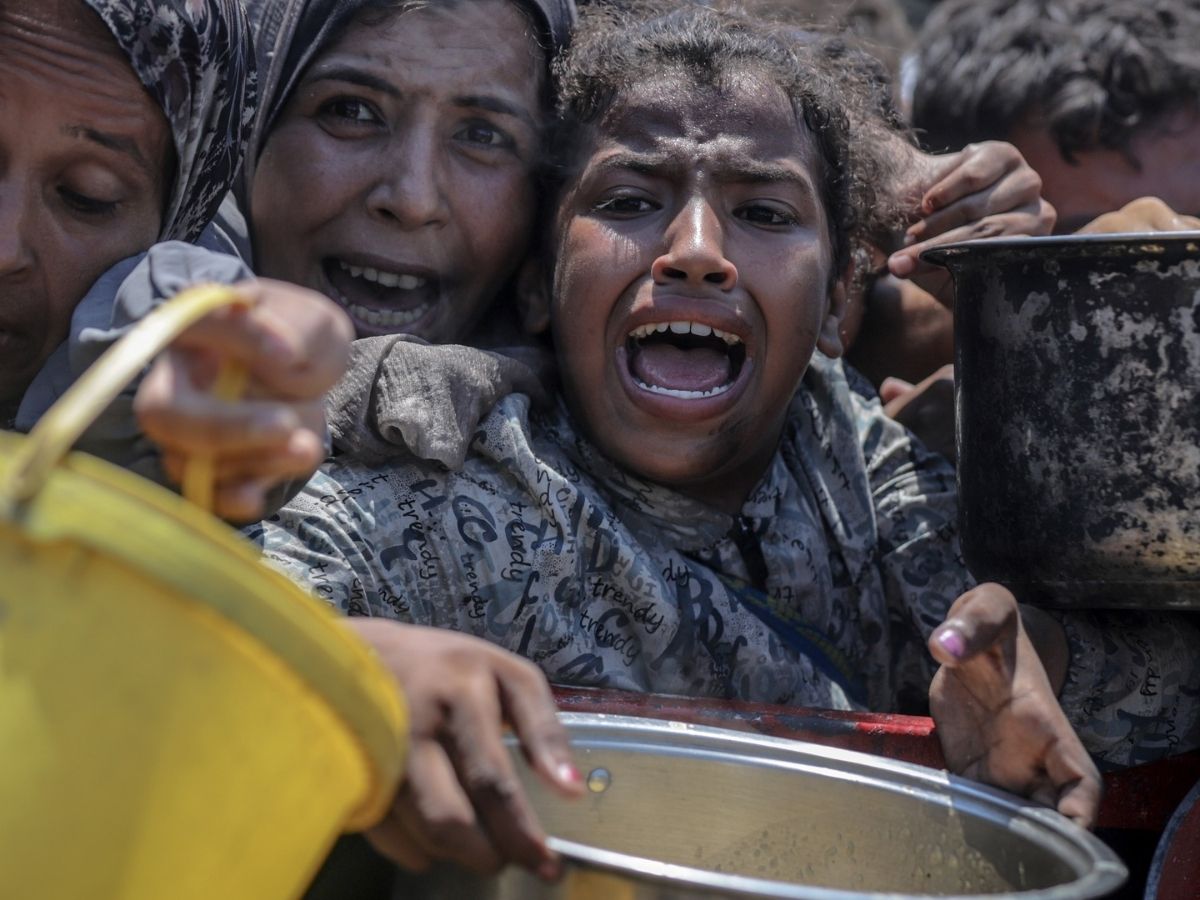
Photo: X/@MuhammadSmiry
With starvation escalating and global pressure mounting, Israel’s military has said that it will begin airdrops of aid into Gaza starting Saturday night, while also establishing humanitarian corridors for United Nations convoys, according to a report published by The Associated Press.
The development comes after weeks of reports suggesting dire ground reality and warnings from international experts about famine. The Israeli military’s statement, however, also emphasised that “combat operations have not ceased” against Hamas, even as the IDF denied reports of starvation in Gaza, as reported by the AP.
At least 53 Palestinians were killed between Friday night and Saturday, most of them while trying to access aid, the report stated, quoting Palestinian health officials and ambulance services. In one instance near the Zikim crossing, Israeli gunfire reportedly killed over a dozen people waiting for trucks to arrive. Israel claimed its troops had fired warning shots in response to “an immediate threat.”
Sherif Abu Aisha, a witness, told the Associated Press, “We went because there is no food, and nothing was distributed.”
Later Saturday, Israeli forces reportedly killed 11 more individials and injured 120 others when they fired on crowds approaching a UN convoy, the news agency quoted Dr. Mohamed Abu Selmiyah, director of Shifa Hospital, as saying.
Strikes also killed civilians in Gaza City and the Khan Younis tent camp, including four children, the report said, adding that aid seekers were also killed near the Morag corridor. Israel’s military hasn’t commented on these incidents.
ALSO READ: Gaza Crisis: Palestinian Refugees Face a New Turning Point
The airdrops – requested by Jordan and supported by the UAE and Britain – will include essentials like food and baby formula.
UNRWA chief Philippe Lazzarini, however, has warned against the proposition, reportedly saying, “Airdrops are expensive, inefficient and can even kill starving civilians.”
The UN, for its part, has said the real solution lies in daily, unhindered aid deliveries, something aid agencies say is still impossible due to Israeli restrictions, frequent cross-border attacks and the collapse of local administrative forces.
Meanwhile, ceasefire negotiations are on hold after Israel and the US recalled their teams. Prime Minister Benjamin Netanyahu on Friday said that “alternative options” were being considered, even as Palestinian militant group Hamas indicated that talks may resume next week.
“Our loved ones do not have time for another round of negotiations,” nephew of a hostage held in Gaza, told the US-based publication.
Gaza’s children, with no pre-existing conditions, are now starving, aid groups say. Israel claims it’s not capping aid, but only 250 trucks entered Gaza last week, far short of what experts say, is needed to prevent famine.
ALSO READ: What’s Stopping Gaza Aid? A Look at Israel’s Blockade and Border Restrictions
North Korean leader Kim Jong Un was seen alongside his teenage daughter Ju Ae as…
UP Scholarship 2026 Status: Direct Link, Steps to Check at Official Website
Students who applied for the UP Scholarship 2026 can check their application and payment status…
Nora Fatehi ‘Sarke Chunar Teri Sarke’ Song: The controversy surrounding the song ‘Sarke Chunar Teri…
