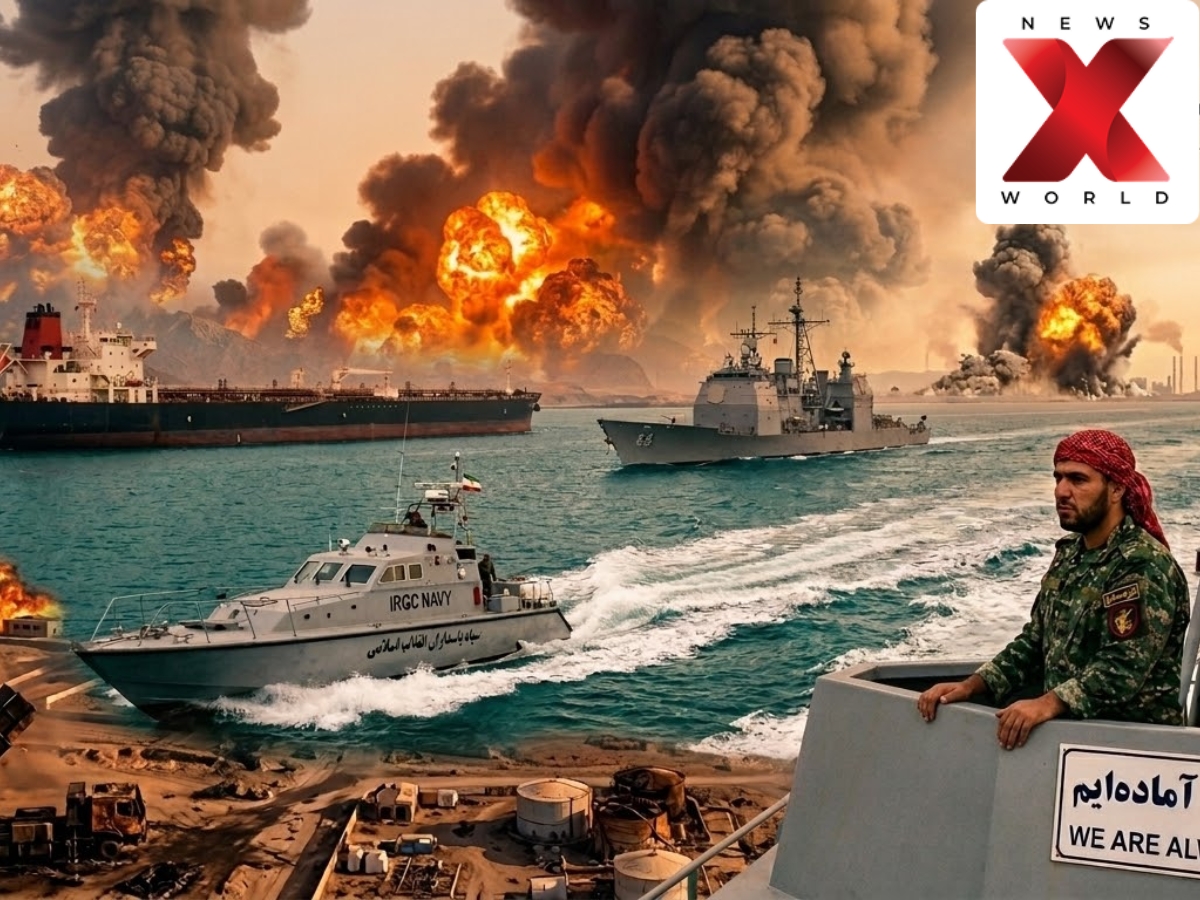
US plans largest bombing of Iran as war escalates. Photo: Gemini.
The United States is preparing for what could be the most intense round of military strikes against Iran since the conflict began, according to Treasury Secretary Scott Bessent. Bessent warned that Iran is currently facing pressure on both the military and economic fronts as the war deepens.
During the interview with Fox News, Bessent said the United States was preparing for its largest bombing operation yet.
“Tonight will be our biggest bombing campaign, and we’ll do the most damage to the Iranian missile launchers, the factories that build the missiles, and we are substantially degrading them,” Bessent said.
He described the US strike campaign as “overwhelming,” suggesting that Iran has struggled to achieve success on the battlefield. According to Bessent, Tehran is now attempting to shift the conflict into the economic domain.
“Having not been able to succeed there [militarily], they’re trying to create economic chaos, and I don’t think they’re going to be able to do it,” he added.
The remarks come as the administration of Donald Trump moves to support maritime trade through the strategically critical Strait of Hormuz, a waterway largely controlled by Iran.
Roughly 20% of the world’s crude oil and natural gas shipments pass through the narrow passage, making it one of the most vital energy transit routes globally. Any disruption in the strait could severely impact global energy markets.
Bessent explained that insurers had withdrawn coverage for vessels moving through the area once the conflict escalated.
“When the conflict began, [insurers] dropped all the insurance for any vessels going in and out of the Strait of Hormuz or generally around the Gulf,” he said.
To address the situation and restore confidence among shipping companies, the International Development Finance Corporation announced on Wednesday that it would provide up to $20 billion in insurance coverage for vessels traveling through the strait.
“What this program will do is give shippers insurance, whether they are hauling oil, products, fertilizer,” Bessent said.
Bessent said Iran maintains that the strait remains open, but it has imposed restrictions on vessels connected to Israeli or US interests.
According to him, Tehran has stated it will not allow ships linked to Israel or the United States to pass through the critical waterway.
The Treasury secretary also discussed whether American vessels would require protection while transiting the Iranian-controlled route.
“There is the willingness to go through the strait if we also provide a naval escort if needed,” he said.
Bessent added that vessels from Iran and China have already been observed successfully passing through the waterway during the conflict.
“We will await to hear from CENTCOM in terms of when they think safe passage is possible,” he said, referring to the United States Central Command. “I don’t know whether it’s a week or two weeks, but we are on track to get this solved.”
As fighting continues with no clear end in sight, the Trump administration has approved a $151 million arms sale to Israel. The move comes after Trump declared he would refuse negotiations with Iran unless it agreed to an “unconditional surrender.”
In a social media post on Friday, Trump wrote, “There will be no deal with Iran except UNCONDITIONAL SURRENDER!”
He further stated that once Iran surrendered and a “GREAT & ACCEPTABLE Leader(s)” was chosen, the United States and its allies would help rebuild the country.
According to Trump, the effort would make Iran “economically bigger, better, and stronger than ever before.”
Meanwhile, explosions rocked the Iranian capital Tehran early Saturday, sending thick clouds of dark smoke into the sky.
Iran responded by launching missiles toward Israel, while U.S. officials warned that the next round of bombing would be the most intense since the weeklong conflict began.
Loud explosions were also heard in Jerusalem as incoming Iranian missiles triggered alarms and sent civilians rushing to bomb shelters across Israel.
The United States and Israel have carried out extensive strikes across Iran, focusing on military infrastructure, senior leadership, and the country’s nuclear programme.
However, the strategic objectives of the war have appeared to shift at times. U.S. officials have alternated between suggesting the goal is to degrade Iran’s military capacity and hinting at the possibility of replacing the Iranian government with alternative leadership from within the country.
The war has already caused significant casualties across multiple countries.
Officials report that at least 1,230 people have been killed in Iran, while more than 200 deaths have been recorded in Lebanon and around a dozen in Israel.
The fighting has also claimed the lives of six US troops.
Zubair Amin is a Senior Journalist at NewsX with over seven years of experience in reporting and editorial work. He has written for leading national and international publications, including Foreign Policy Magazine, Al Jazeera, The Economic Times, The Indian Express, The Wire, Article 14, Mongabay, News9, among others. His primary focus is on international affairs, with a strong interest in US politics and policy. He also writes on West Asia, Indian polity, and constitutional issues. Zubair tweets at zubaiyr.amin
New Zealand skipper Mitchell Santner wants to hush Indian fans in the final of ICC…
‘Night of Hell’: Israel Carries Out Rare Airborne Raid in Lebanon; 16 Killed in Deadly Strikes
Israel's military carried out an airborne operation that dropped troops into a town in eastern…
West Bengal Yuva Sathi scheme offers ₹1500 monthly aid to unemployed youth. Here’s how to…
