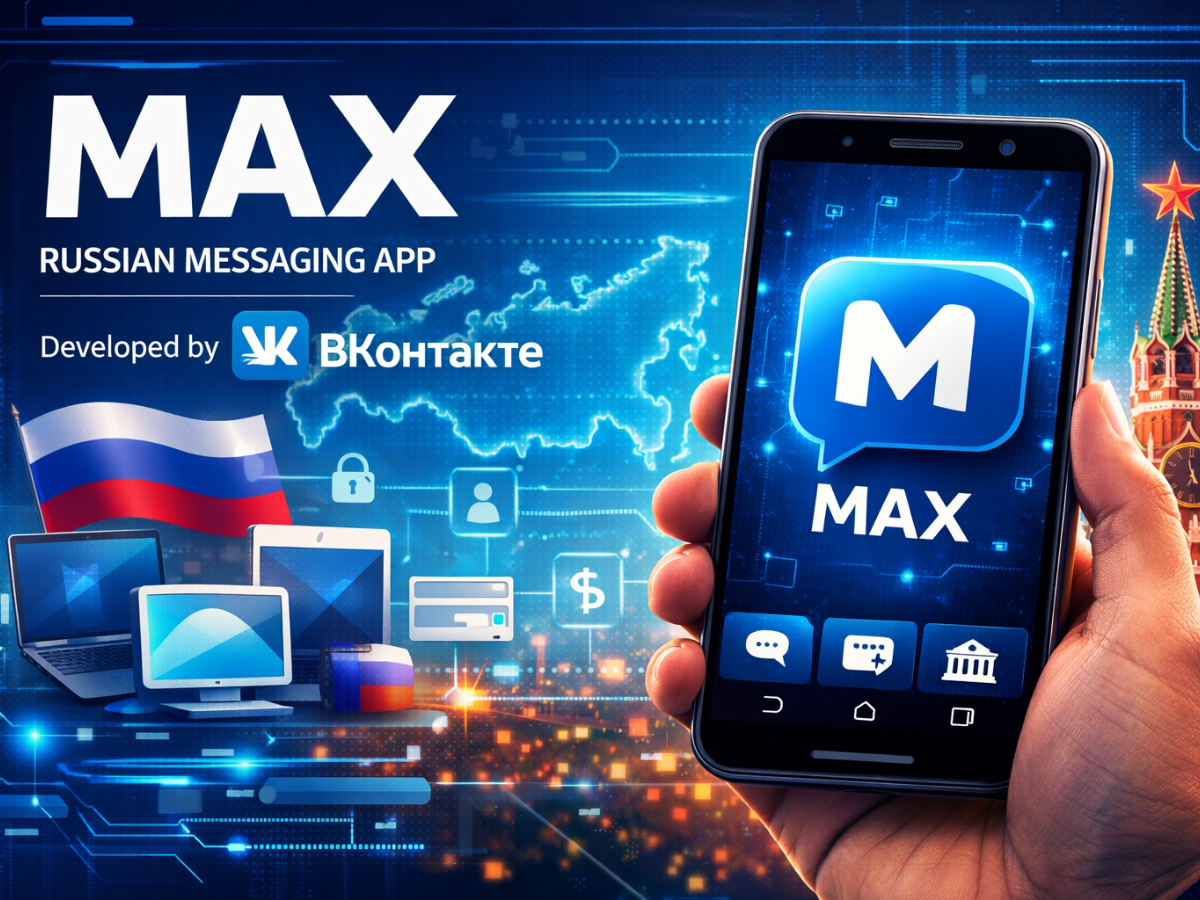
Russia Blocks WhatsApp, Introduces Max (Image: AI-generated)
Russia has blocked access to WhatsApp, and the government is now pushing people to use a new local app called MAX. The move comes with strong backing from President Vladimir Putin and top Kremlin officials.
Authorities say the ban is linked to national laws and data rules that Meta, the parent company of WhatsApp, allegedly failed to follow.
According to reports, Kremlin spokesperson Dmitry Peskov said the decision was taken because Meta did not comply with Russian regulations. He described MAX as an “accessible alternative” and encouraged citizens to move to the new platform. Soon after the announcement, Russia’s internet regulator restricted WhatsApp’s access across the country, making it difficult to use without a VPN.
MAX has been developed with support from VK, the company behind Russia’s biggest social network, VKontakte. The government wants MAX to be more than just a messaging app. It is designed to combine chats with payments, public services and other digital tools in one place. In that way, it is closer to China’s WeChat model. It is a state-backed messaging app that was launched in March 2025.
There is one big difference between WhatsApp and MAX. WhatsApp uses end-to-end encryption. This means only the sender and receiver can read the messages. Even WhatsApp itself cannot see the content. MAX, however, is expected to follow Russian data laws more closely. Reports suggest user data can be shared with authorities if requested. This has raised privacy concerns among digital rights groups.
As per reports, WhatsApp reacted strongly to the move. In a public statement, the company said blocking secure communication is “a backwards step” and could make people less safe. The company added that it would continue trying to keep users connected.
This is not the first time Russia has limited foreign platforms. Facebook and Instagram were restricted earlier, and YouTube has faced pressure too. Over the past few years, Russia has been tightening control over digital spaces, saying it wants stronger “digital sovereignty.” Critics argue that these steps reduce online freedom.
For millions of Russians, WhatsApp has been part of daily life. It is used for family chats, work groups and business communication. Now many users will have to decide whether to switch to MAX or find other ways to stay connected.
Russia’s decision shows how serious that effort can become when politics and technology mix.
Friday The 13th: The first Friday the 13th of 2026 is approaching, a date long…
India secured a convincing win over Namibia in Delhi during the T20 World Cup 2026,…
Happy Kiss Day 2026: Valentine’s Week is nearing its grand finale. After Rose Day, Promise…
