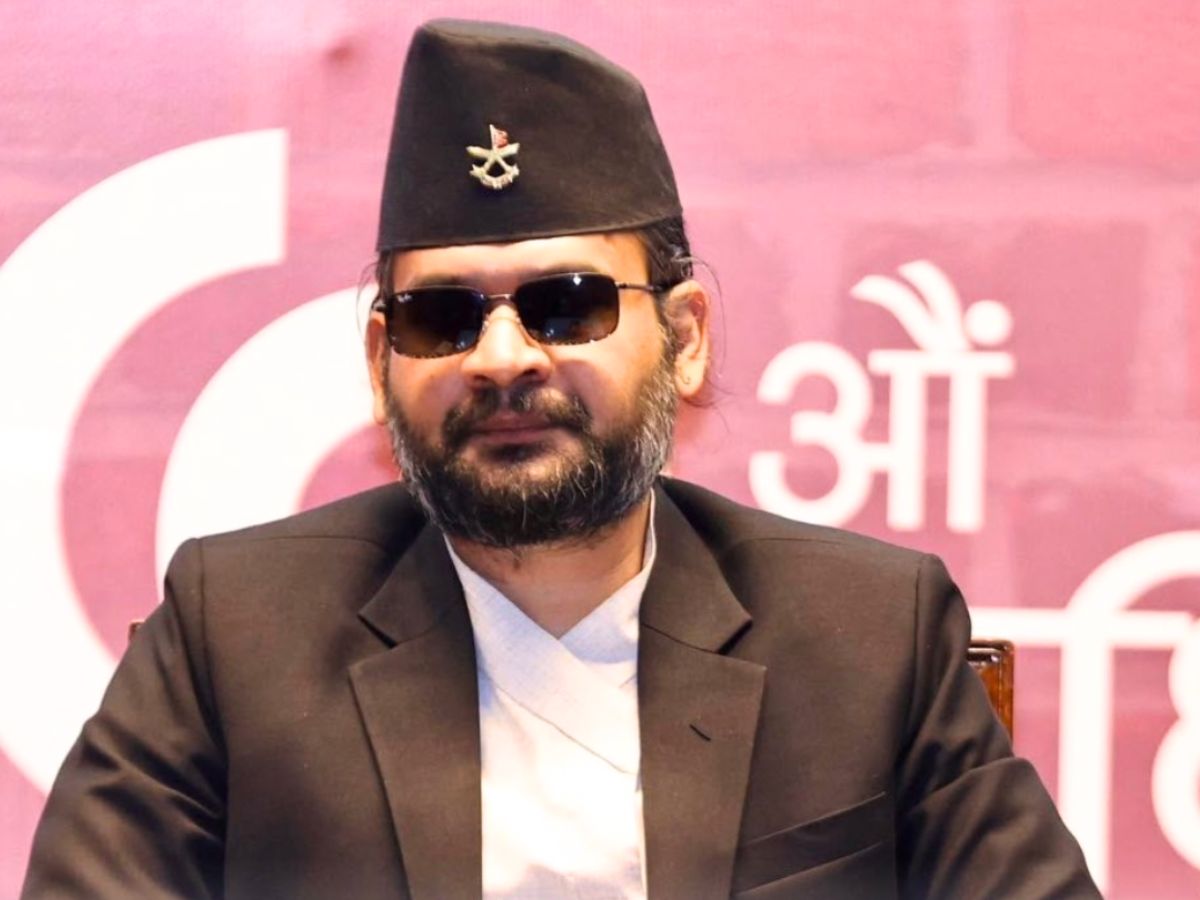
Rapper-turned-politician Balendra Shah, a Gen Z favourite. (Photo: X)
As Nepal votes in a crucial general election, one candidate is drawing extraordinary attention Balendra Shah, the rapper-turned-politician popularly known as Balen.
The 35-year-old Kathmandu mayor has emerged as the face of a youth-driven political wave following the protests that toppled the government last year.
From performing rap songs criticising politicians to now seeking the country’s top political office, Shah represents a dramatic shift in Nepal’s political landscape.
With millions of young voters backing him, the key question dominating the election is whether he can defeat Nepal’s established political heavyweights.
Before entering politics, Balendra Shah gained popularity as a rapper whose songs sharply criticised corruption, governance failures and the political establishment. His outspoken lyrics and social commentary resonated strongly with young Nepalis frustrated with the country’s traditional political parties.
Shah first shocked Nepal’s political class in 2022 when he won the Kathmandu mayoral election as an independent candidate, defeating contenders from major parties. His victory was widely seen as a sign of growing public frustration with Nepal’s long-dominant political elites.
Since then, Shah has positioned himself as a reformist leader promising transparency, anti-corruption measures and better governance.
Shah’s popularity surged during the 2025 youth-led protests that forced the resignation of the government. The demonstrations, sparked initially by a social media ban, quickly expanded into nationwide protests against corruption, economic inequality and political instability.
Many young Nepalis view Shah as the leader who represents their aspirations.
With nearly half of Nepal’s population under the age of 24, the youth vote could play a decisive role in the election. Shah’s campaign has capitalised on this demographic shift, projecting him as a modern leader who understands the concerns of younger generations.
The main political contest pits Shah against veteran leaders from Nepal’s traditional parties, including former prime minister KP Sharma Oli, who heads the Communist Party of Nepal (Unified Marxist–Leninist).
Oli, a four-time prime minister, was forced to resign after last year’s protests but has returned to contest the election once again. His supporters argue that experienced leadership is needed to maintain political stability.
Another key figure in the race is Gagan Thapa of the Nepali Congress, who has campaigned on promises of tackling corruption and improving government accountability.
The contest is widely seen as a battle between Nepal’s political establishment and a new generation of reform-minded leaders.
Despite his growing popularity, Shah has also faced criticism. Some critics question whether his relatively limited political experience is enough to lead the country.
During his tenure as Kathmandu mayor, he drew controversy for ordering the demolition of illegal structures and homes, which critics said affected poorer communities.
Shah has also attracted attention for outspoken social media posts, including one that criticised global powers and Nepal’s political parties. The post was later deleted but sparked debate about his readiness for national leadership.
Political observers say Shah’s popularity reflects a broader frustration with Nepal’s political system, which has seen frequent leadership changes and fragile coalition governments. In the past 35 years, the country has had more than 30 prime ministers.
Analysts believe Shah’s candidacy represents a major political test whether the energy of youth protests can translate into lasting electoral change.
If Shah succeeds, it could signal a generational shift in Nepal’s politics. But even if his party performs strongly, experts say the fragmented electoral system could still produce another coalition government.
For now, as Nepal heads to the polls, the rise of Balendra Shah has already reshaped the political conversation turning a former rapper into one of the most talked-about contenders for the country’s highest office.
Sofia Babu Chacko is a journalist with over five years of experience covering Indian politics, crime, human rights, gender issues, and stories about marginalized communities. She believes that every voice matters, and journalism has a vital role to play in amplifying those voices. Sofia is committed to creating impact and shedding light on stories that truly matter. Beyond her work in the newsroom, she is also a music enthusiast who enjoys singing.
Galgotias University faced backlash at the AI Impact Summit after confusion over the origin of…
WhatsApp is reportedly developing a WhatsApp Plus subscription offering extra customization, expanded chat pinning, and…
CNN reporter’s live comment on Israeli media restrictions goes viral amid US-Iran missile strikes, sparking…
