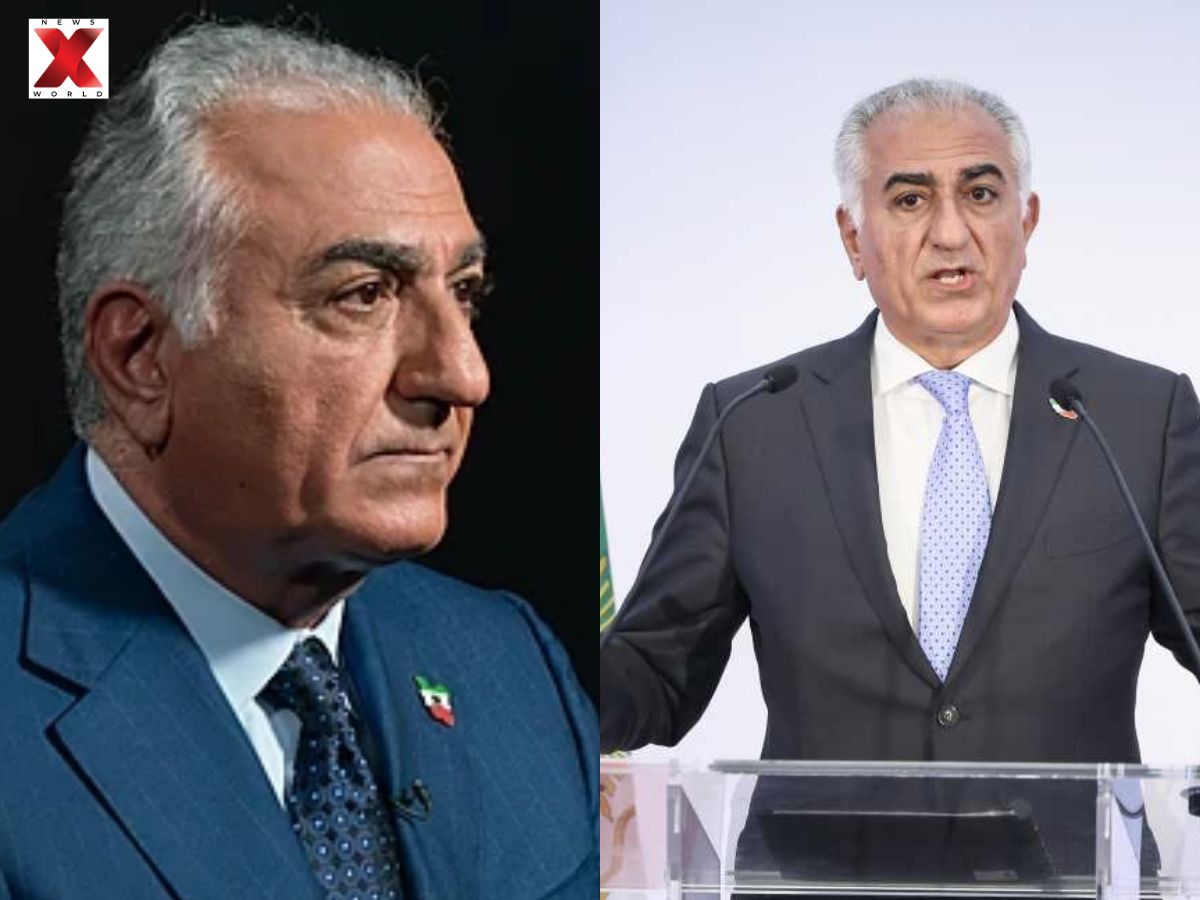
Who Is Reza Pahlavi?
Who Is Reza Pahlavi? The Exiled Crown Prince Advocating for a Democratic Iran
Reza Pahlavi stands as the primary opposition figure from Iran who currently exists in exile. Pahlavi has confirmed his intention to lead Iran through a secular, democratic system which grants citizens the authority to determine their country’s future.
He received the title of Crown Prince after his birth in Tehran in 1960, a historic title that now lacks present-day significance. Since 1979, he has lived in the United States as an exile who maintains a connection to his native country.
The big question remains: can someone in exile, who has spent most of his life outside Iran for nearly fifty years, effectively connect with Iranian citizens to bring about social transformation? Pahlavi’s life journey creates a situation that combines elements of political debate and public hope, with a touch of contentious material that both political experts and Iran observers will find compelling.
Reza Pahlavi has consistently worked to achieve a peaceful democratic transition for Iran through his support of nonviolent civil disobedience and national referendums that allow citizens to choose their preferred system of government. He uses these methods to establish dialogue with citizens, enabling them to implement incremental changes through peaceful means while maintaining stability during times of political unrest.
Pahlavi introduced the “Iran Prosperity Project,” which contains a detailed plan for transitional governance and economic recovery following the death of Iranian Supreme Leader Ali Khamenei in March 2026. He has built international relationships with Western countries to gain support for his vision of a democratic Iran, extending beyond his domestic political activities. His trip to Israel in 2023 was significant, demonstrating his intention to establish diplomatic relations, including a meeting with Prime Minister Benjamin Netanyahu. Through his domestic reform work and international diplomacy, he aims to create a modern, democratic, and stable Iran.
Donald Trump has offered his two cents on the question of Reza Pahlavi stepping into Iran’s leadership spotlight. “Some people like him, and we haven’t been thinking too much about that. It would seem to me that somebody from within, maybe, would be more appropriate,” Trump said, leaving readers wondering if he’s playing political chess or just tossing out a casual observation.
Trump softened the critique with a compliment: “He looks like a very nice person,” he said, while emphasizing that “somebody that’s there, that’s popular, if there’s such a person” would be a better choice to take the helm of the country.
The eldest son of Iran’s last Shah, Reza Pahlavi has positioned himself as a post-Khamenei alternative, especially following the US-Israeli strikes that shook Tehran. But Trump remains skeptical. He prefers “internal leadership” and questions whether a man nearly five decades in exile can truly mobilize domestic support: “I don’t know how he’d play within his own country.”
Despite pressure from Republican circles, Trump has steered clear of an official endorsement or meeting, signaling his focus on stability over spectacle. For him, the biggest risk isn’t charisma- it’s avoiding a “worst-case scenario” where Iran simply swaps one oppressive regime for another.
Preference for Internal Leadership: Trump believes Iran’s next leader should come “from within” the country rather than from the diaspora, with a local figure being “more appropriate.”
Doubts on Popular Support: Trump questioned whether Pahlavi can mobilize support inside Iran after nearly 50 years in exile: “I don’t know how he’d play within his own country.”
Avoidance of Endorsement: Despite pressure from some Republican circles, Trump has declined to meet with Pahlavi or officially back his leadership bid.
Focus on Stability: Trump’s primary concern is avoiding a “worst-case scenario” where a new leader emerges as oppressive as the previous regime.
President Trump sent Special Envoy Steve Witkoff to meet with Reza Pahlavi despite his public caution. The secret contact demonstrates a behind‑the‑scenes effort to explore Iran’s future leadership, even as Trump maintains a public distance from Pahlavi.
(With Inputs…)
Aishwarya is a journalism graduate with over three years of experience thriving in the buzzing corporate media world. She’s got a knack for decoding business news, tracking the twists and turns of the stock market, covering the masala of the entertainment world, and sometimes her stories come with just the right sprinkle of political commentary. She has worked with several organizations, interned at ZEE and gained professional skills at TV9 and News24, And now is learning and writing at NewsX, she’s no stranger to the newsroom hustle. Her storytelling style is fast-paced, creative, and perfectly tailored to connect with both the platform and its audience. Moto: Approaching every story from the reader’s point of view, backing up her insights with solid facts.
Always bold with her opinions, she also never misses the chance to weave in expert voices, keeping things balanced and insightful. In short, Aishwarya brings a fresh, sharp, and fact-driven voice to every story she touches.
Nepal votes in Election 2026 after Gen Z protests ousted KP Oli; key contenders face…
Trump rated the US‑Israel campaign against Iran “15/10,” claiming success as military capabilities are weakened,…
Iraqi forces foiled a rocket attack in Basra, while US-Israel airstrikes intensify in Iran. Trump…
