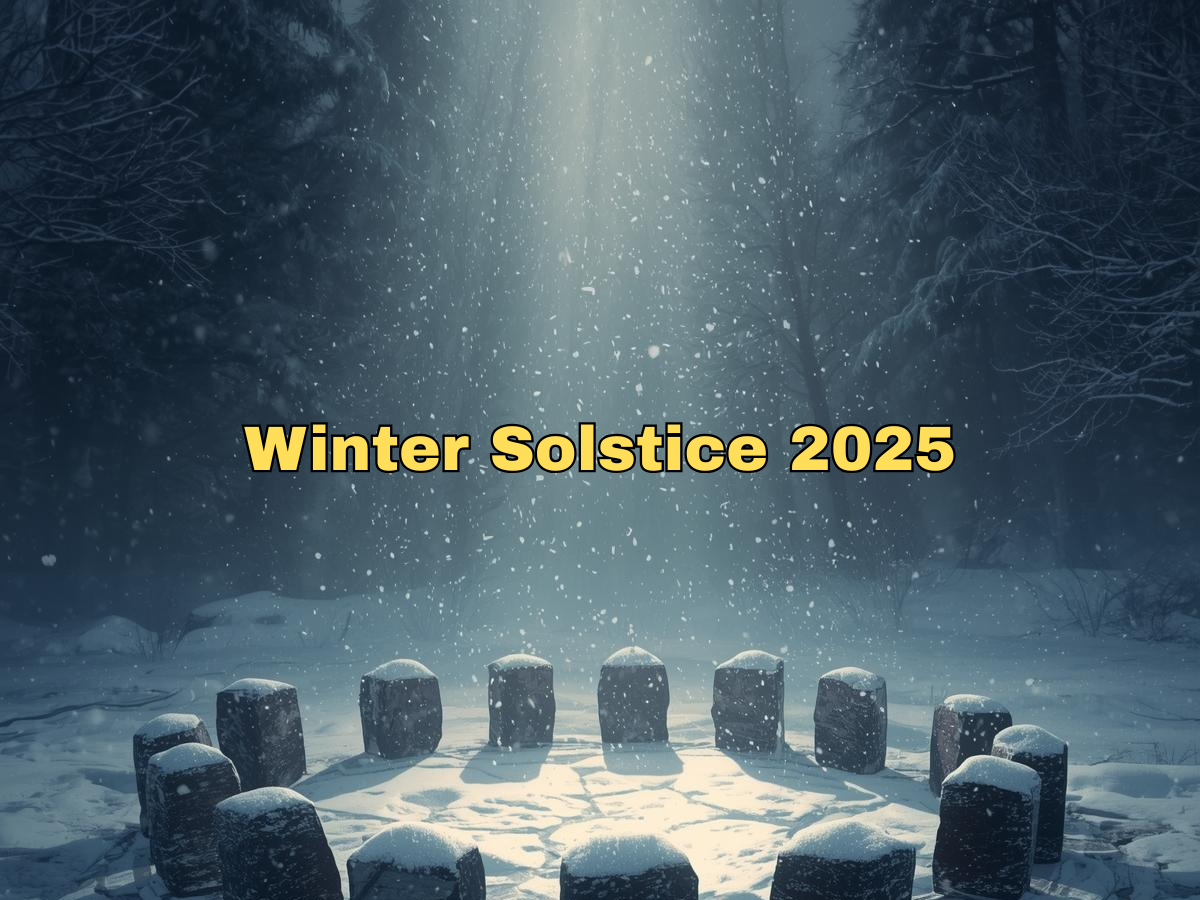
credits- canva modified
The winter solstice, also known as “the longest night,” falls on December 21, 2025. It is the time of year when the Northern Hemisphere is experiencing its longest night and shortest day at the same time. It also marks the beginning of the astronomical winter (Meteorological winter began on December 1) and is a time of celebrating the winter solstice.
During the winter solstice, the North Pole of the Earth is tilted away from the Sun by approximately 23.5 degrees. As a result, the Sun is directly above the Tropic of Capricorn at its maximum altitude. Due to this extreme tilt, the Sun does not rise high, and thus the daylight is shorter; consequently, the areas north of the equator are experiencing the minimum daylight of the calendar year.
In 2025, the solstice will take place on Sunday, December 21, at 10:03 a.m. Eastern Standard Time, which is equal to 3:03 p.m. UTC and nearly 8:33 p.m. Indian Standard Time. Even though people informally refer to it as “solstice day,” from an astronomical point of view, it is one single moment when the Sun’s apparent southward motion halts (“solstice” in Latin means “sun stands still”) before it begins to move northward again. Daylight in the Northern Hemisphere will gradually increase from tomorrow onwards.
The solstice does not result in the coldest day as such; temperatures tend to be lower due to the delay of land and oceans in losing heat. However, the event is celebrated by many cultures as being the darkest night, which heralds the arrival of light, and they have festivals of renewal and hope. For astronomers, the Sun’s low position at midday creates very long shadows, and in high-latitude areas, there are communities that have only a few hours of very dim sunlight or even polar darkness, when the Sun never goes above the horizon.
Shubhi is a seasoned content writer with 6 years of experience in digital media. Specializing in news, lifestyle, health, sports, space, optical illusions, and trending topics, she crafts engaging, SEO-friendly content that informs and captivates readers. Passionate about storytelling, Shubhi blends accuracy with creativity to deliver impactful articles across diverse domains.
Narendra Modi held a phone conversation with Masoud Pezeshkian on Thursday to discuss the worsening…
A male suspect was killed after a dramatic security confrontation at Temple Israel Synagogue in…
A controversy has surfaced around the Union Public Service Commission Civil Services Examination results after…
