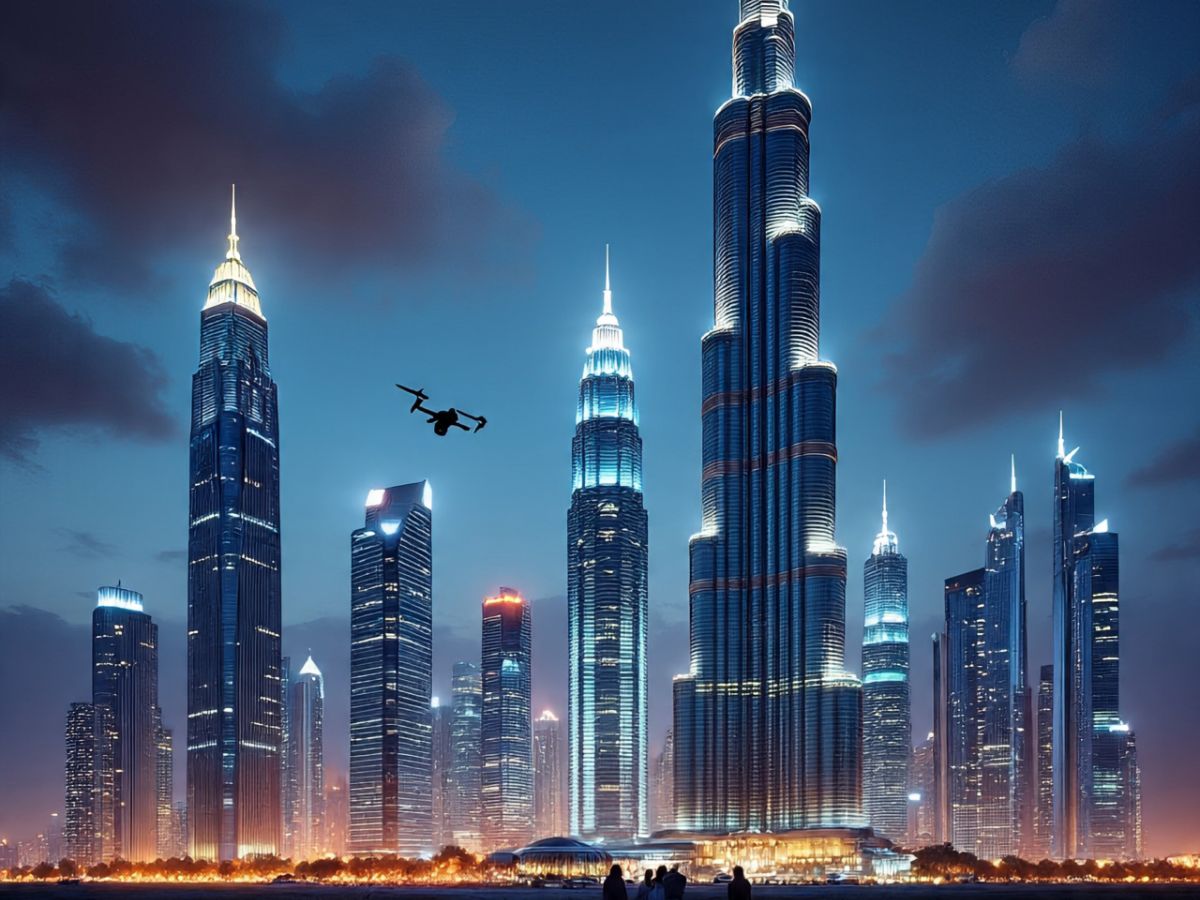
As of 2025, Dubai’s Burj Khalifa is still the tallest building in the world at 828 meters. Merdeka 118 in Kuala Lumpur, Malaysia is second at 679 meters, Shanghai Tower in China is third at 632 meters, and Makkah Royal Clock Tower in Saudi Arabia is fourth at 601 meters tall. These towers do not just change a city’s skyline but are also indicative of the technological and economic strength of that city.
Skyscrapers provide an essential function for urban spaces in modern cities. As cities become more crowded, skyscrapers allow a city to build upwards and use vertical build-out to minimize sprawl associated with urban growth. First, skyscrapers provide much needed availability of land, which is very limited, especially in city centers. Second, skyscrapers create vertical density that minimizes the urban footprint, maximizing greatly expanded use on the same ground footprint. Third, many skyscrapers utilize innovative sustainable systems and technology demonstrating energy efficiency and sustainable design, again setting the design pace for this architectural form.
Skyscrapers are not only useful buildings, they also serve as landmarks that give a city its cultural identity and denote its history. Buildings such as Burj Khalifa and Shanghai Tower serve as ‘beacons’ that bring tourists and investors to that destination and stimulate tourism and local economic activity. The job creation in the construction phase generates a surge of economic activity and enhances growth in the business community when you consider most of the businesses are operating in the same building. Far from being bricked up monoliths, skyscrapers typically offer digital connectivity, social interaction, and use common amenities, which can help bring the community together.
Currently advanced forms of contemporary architecture and engineering may produce ever taller and “smarter” skyscrapers in the future with the continued advancement of the latest technologies, materials, and sustainable construction methods. Since these enormous structures will be positioned within dense urban areas in relation too mobility, they will become a fundamental feature of urban life now and into future urban landscapes providing an experience of wonder for people around the world.
To summarize, skyscrapers in 2025 are not merely tall buildings but a new and remarkable intersection of new landscape experiences, a new urban culture in the future of vibrant urban spaces that are sustainable.
This article is for informational purposes. Rankings of skyscrapers may change with new developments. Readers are encouraged to verify updated data from official sources before citing specific measurements or locations.
Vani Verma is a content writer with over 2 years of experience in lifestyle, entertainment, health and digital media. She has a knack for creating engaging and research-driven content that resonates with readers, blending creativity with clarity. Passionate about media trends, culture, and storytelling, she strives to craft content that informs, inspires, and connects.
Meta Platforms has cut about 700 jobs across several teams, mainly in Reality Labs, as…
The IPL 2026 season is set to begin with a blockbuster clash between Royal Challengers…
Ashok Kharat Viral MMS: Ashok Kharat remains in police custody as shocking claims emerge, including…
