Rising rejection rates in FDA 510(k) and EU MDR/IVDR approvals highlight urgent need for early regulatory strategy
India’s medical device industry is entering a decisive phase. As manufacturers accelerate growth under the Make in India initiative, access to global markets particularly the United States and the European Union is becoming significantly more complex. Increasing regulatory scrutiny, longer review timelines, and high rejection rates are emerging as major barriers for companies aiming to expand internationally.
In this evolving environment, highly experienced medical device consultants are no longer optional they are becoming a critical requirement for regulatory success and global market entry.
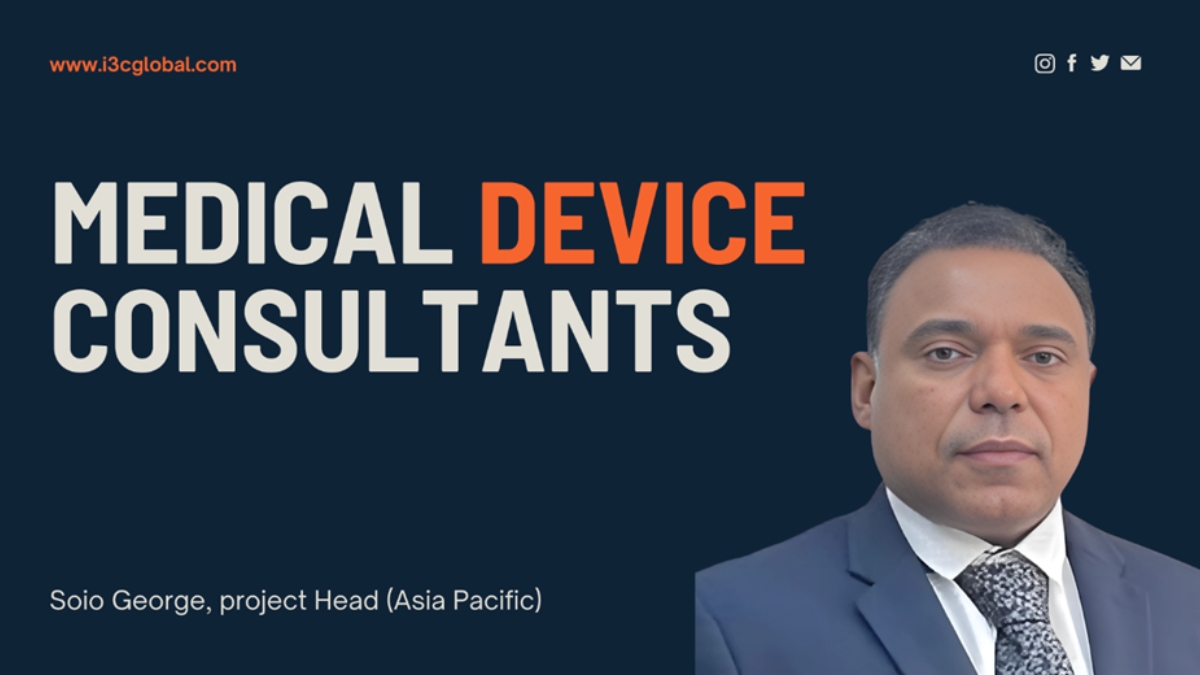
Mr. Soio George, Project Head (Asia Pacific) at I3CGLOBAL Group, points to a growing trend: regulatory delays caused by late-stage compliance planning.
“Many manufacturers still treat compliance as a documentation exercise at the end of development,” he explains. “However, global regulators now expect compliance to be built into the product from the design stage. Without that, the risk of rejection increases significantly.”
Rising Rejection Rates Signal Industry Risk
Recent data highlights the scale of the challenge. In the United States, approximately 85% of 510(k) submissions that reach substantive review receive clearance, meaning around 15% fail to achieve a Substantially Equivalent (SE) decision. More concerning, over 30% of submissions are rejected at the initial administrative stage under the Refuse to Accept (RTA) process. In 2025, this figure has ranged between 32% and 35%, indicating that a significant portion of applications fail before technical review even begins.
In Europe, the situation is equally demanding. Under EU MDR and IVDR, incomplete applications remain the most common cause of delays and fee revisions. Industry surveys indicate that nearly 50% of IVDR submissions to Notified Bodies are incomplete, directly delaying conformity assessment. For MDR, approximately 75% of refusals are linked to incomplete documentation, incorrect device classification, or scope mismatches with the Notified Body.
From Documentation to Strategy: A Necessary Shift
According to Mr. George, the role of medical device consultants has evolved significantly in response to these challenges.
At I3CGLOBAL, we engage from the concept stage itself, he says. We help manufacturers define the correct regulatory pathway whether it is FDA 510(k), CE marking under MDR, or IVDR compliance. This decision directly impacts design, testing, clinical evaluation, and timelines. Early regulatory planning enables companies to avoid costly redesigns, reduce rejection risks, and accelerate approvals.
Facility Design and QMS: Hidden Compliance Gaps
Beyond documentation, physical infrastructure remains a critical but often overlooked factor in regulatory success. If your facility does not meet regulatory expectations, documentation cannot compensate for that gap,” Mr. George notes.
I3CGLOBAL works closely with manufacturers during facility planning to ensure compliance with cleanroom standards, environmental controls, and production workflows. In parallel, implementing a robust Quality Management System aligned with ISO 13485, QMSR, and MDSAP is essential. This includes process validation and equipment qualification (IQ/OQ/PQ) to ensure consistent product quality.
SaMD: Expanding the Regulatory Landscape
The growth of Software as a Medical Device (SaMD) is adding another layer of complexity. Compliance with standards such as IEC 62304, along with cybersecurity and performance validation requirements, is becoming mandatory. While SaMD reduces infrastructure challenges, it significantly increases expectations around documentation and lifecycle management.
Enabling Global Market Access
To support manufacturers entering international markets, I3CGLOBAL provides integrated services including EU Authorized Representative, UK Responsible Person, and US Agent support. This enables seamless compliance with global regulatory systems and reduces operational barriers.
A Competitive Advantage in a High-Risk Environment
With regulatory delays directly impacting revenue and market positioning, engaging experienced medical device consultants is increasingly seen as a strategic investment.
“Regulatory success today depends on experience and execution,” Mr. George concludes. “Companies that adopt a compliance first approach will move faster, reduce risk, and succeed globally.”
As India’s MedTech sector continues to expand, industry experts believe that early regulatory strategy supported by experienced medical device consultants will define the next generation of globally successful manufacturers.
Chennai Power Cut 13 June: Check Out Full List Of Affected Areas
Several areas of Chennai will experience a scheduled power cut on June 12 from 9:00…
Trump Says US Strike Killed 'Tren de Aragua' Leader
President Donald Trump claimed a US military strike killed Niño Guerrero, the notorious leader of…
SpaceX Overtakes Broadcom, Saudi Aramco; Becomes Sixth-Most Valuable Firm
SpaceX IPO: SpaceX’s IPO debut boosts valuation to $2.1 trillion, overtaking Tesla and Saudi Aramco,…
