(Image Credits: ANI/Sansad TV)
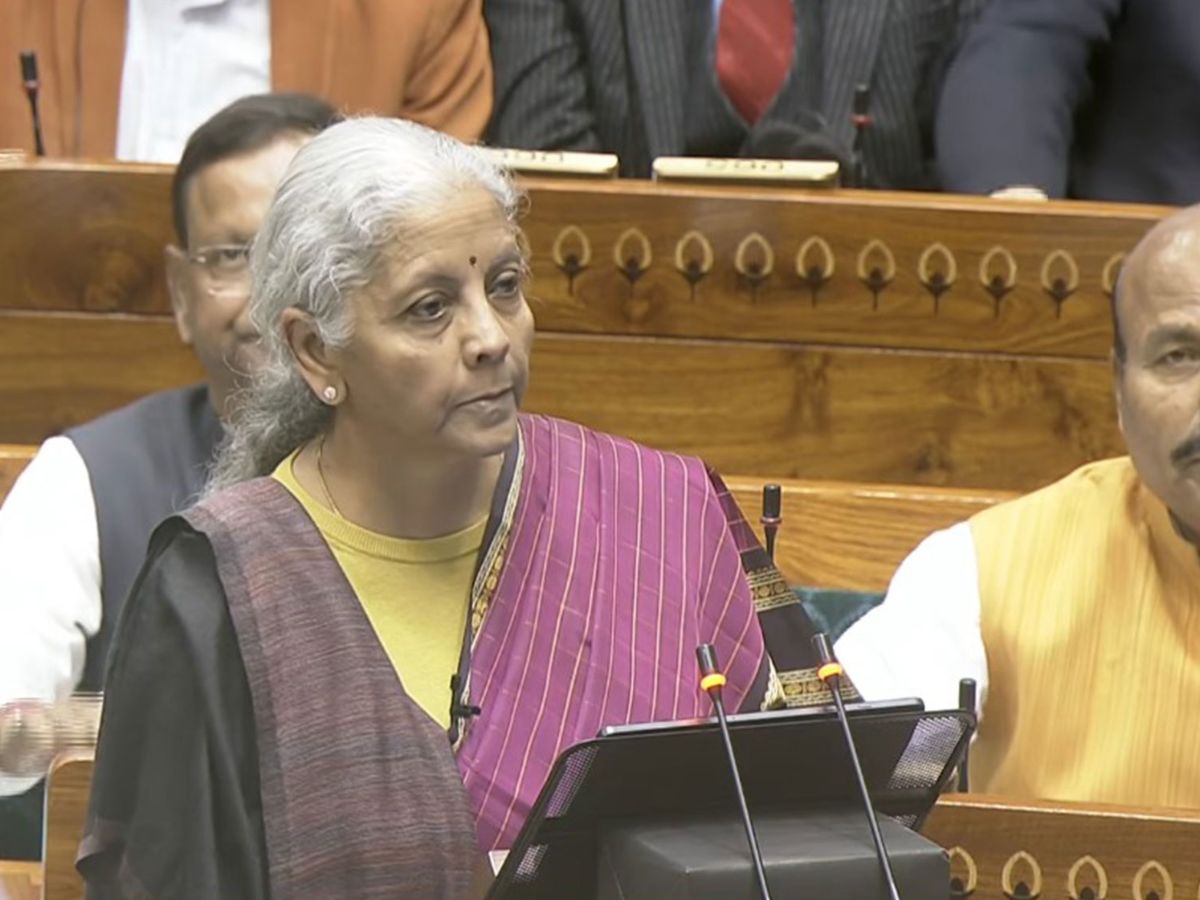
Presenting her ninth consecutive Union Budget, Union Finance Minister Nirmala Sitharaman underscored that healthcare is no longer just a social sector priority but a key engine of economic growth.
In the Union Budget 2026–27, the Centre unveiled a wide-ranging push for the health and biopharma ecosystem, focusing on infrastructure, domestic manufacturing, advanced technology, and long-term capacity building.
A major announcement in the Budget is the proposal to support states in setting up five regional medical hubs aimed at strengthening medical value tourism in India. The Centre will extend assistance to states to develop these hubs as integrated healthcare destinations that attract both domestic and international patients.
The move is expected to improve high-end healthcare access, generate employment, and position India as a global leader in affordable and quality treatment.
At the core of the healthcare push is the Bio Pharma Shakti initiative, backed by an outlay of ₹10,000 crore over five years.
The programme aims to build a robust ecosystem for domestic production of biologics and biosimilars advanced medicines used in the treatment of cancer, autoimmune disorders, and rare diseases, which are often expensive and heavily imported.
The initiative is designed to reduce import dependence, boost self-reliance in critical drugs, and make advanced therapies more affordable for Indian patients while enhancing India’s global standing in biopharmaceutical manufacturing.
Sitharaman also announced the setting up of three new All India Institutes of Ayurveda and the expansion of the National Institute of Pharmaceutical Education and Research (NIPERs).
These institutions are expected to strengthen research, education, and innovation in traditional medicine and pharmaceutical sciences.
The step signals a balanced push towards both modern biopharma capabilities and India’s traditional systems of medicine.
The Finance Minister outlined targeted interventions across six key sectors, including manufacturing, healthcare, strategic and frontier sectors, and advanced technology. The aim is to create strong interlinkages between innovation, production, and employment.
In healthcare, this translates into a combined focus on research, technology, and manufacturing to deliver both economic and social outcomes.
Sitharaman highlighted three guiding kartavyas for the Budget growth, fulfilling people’s aspirations, and Sabka Saath, Sabka Vikas as the framework for these announcements.
With these measures, the Union Budget 2026–27 places healthcare and biopharma at the centre of India’s long-term development strategy, combining infrastructure expansion, research promotion, and global competitiveness.
Sofia Babu Chacko is a journalist with over five years of experience covering Indian politics, crime, human rights, gender issues, and stories about marginalized communities. She believes that every voice matters, and journalism has a vital role to play in amplifying those voices. Sofia is committed to creating impact and shedding light on stories that truly matter. Beyond her work in the newsroom, she is also a music enthusiast who enjoys singing.
As Carlos Alcaraz plays Novak Djokovic in the Australian Open 2026 final, India cricketers Ishan…
Union Budget 2026-27: Capex rises 9% to ₹12.2L cr, Rs 10K cr SME fund, MSME…
Union Budget 2026: EV’s To Go Cheap As Govt Exempts Import Tax On Batteries To Boost EV Industry
FM Announces Import Exemptions on Battery Manufacturing to Boost EV Industry during the Union Budget…
