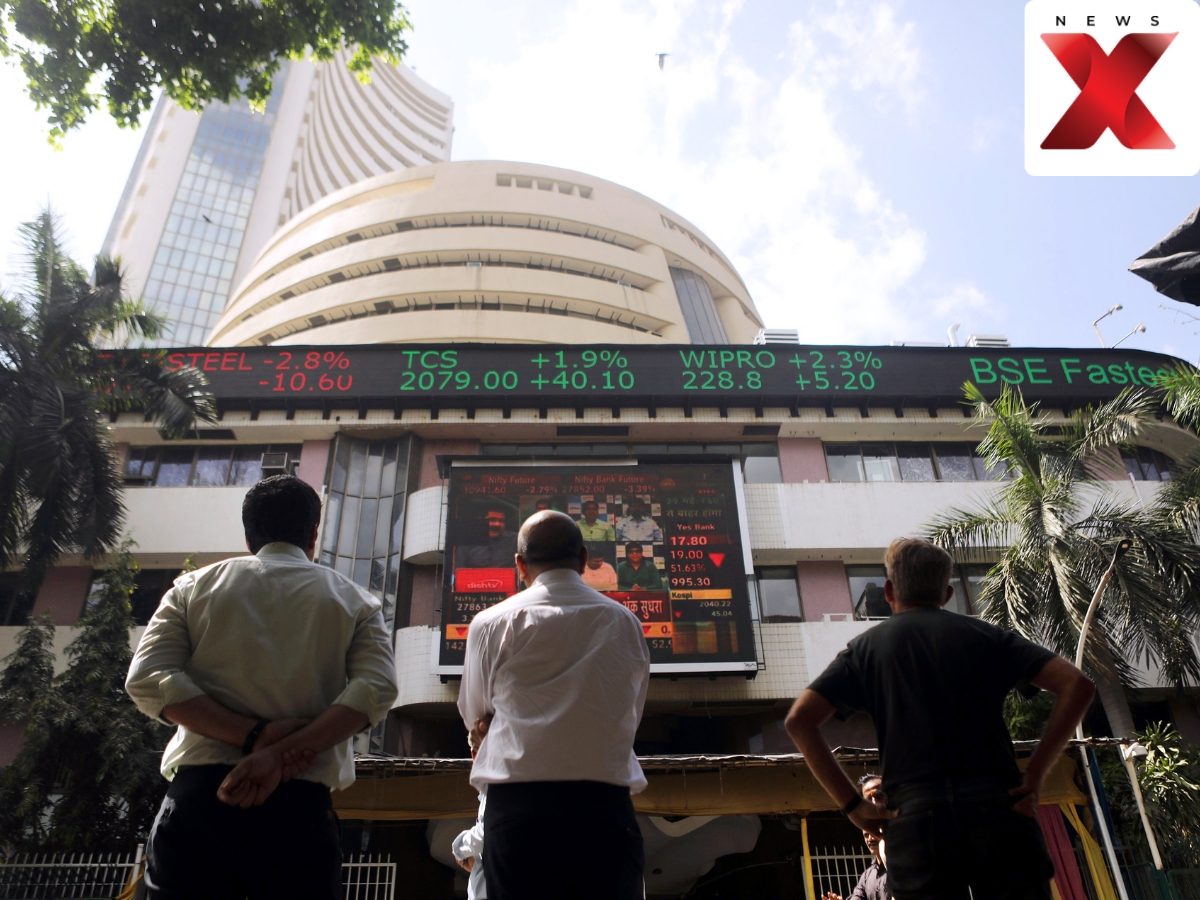
Sensex crashes 2,288 points, Nifty slips below 24,000. Photo: ANI.
Indian benchmark equity indices – Sensex and Nifty 50 – opened sharply lower on Monday, triggered by a steep surge in crude oil prices and escalating tensions in the Middle East.
At 09:48 am, the BSE Sensex had plunged 2,288 points, or 2.90 percent, to 76,630, while the NSE Nifty 50 fell 681 points to 23,769, slipping below the 24,000 mark.
On the BSE, only 537 shares advanced, while 2,603 declined and 180 remained unchanged.
The market downturn wiped out nearly ₹12 lakh crore in investor wealth within minutes of opening trade. The overall market capitalisation of BSE-listed firms dropped to around ₹438 lakh crore, down from approximately ₹450 lakh crore in the previous trading session.
The sharp decline in Indian equities followed a spike in global crude oil prices. Brent crude surged above $115 per barrel, triggering fears of an oil shock across global markets.
Analysts warned that the surge could revive inflationary pressures worldwide, especially for countries heavily dependent on energy imports.
The market turmoil was not limited to India. Asian equities also witnessed sharp losses in early trade.
Japan’s Nikkei index plunged more than 6 percent, while South Korea’s Kospi declined sharply. Investors reacted nervously to the spike in oil prices and concerns about possible disruptions to global energy supplies.
Analysts said the intensifying conflict in the Middle East has become a key trigger behind the sharp sell-off.
The geopolitical situation has entered a more volatile phase in recent days, raising concerns about global stability and potential disruptions in energy supply chains.
Another major concern for markets is the sharp jump in crude oil prices.
Oil prices have risen amid fears that the ongoing conflict could disrupt supply and tighten global availability.
For India, which imports a significant portion of its crude requirements, higher oil prices could increase the country’s import bill and fuel inflation.
Persistent selling by foreign institutional investors has also intensified the pressure on Indian equities.
Global funds have been cutting exposure to Indian markets amid growing uncertainty.
The Indian rupee also came under pressure, opening 0.5 percent lower at 92.1975 per dollar on Monday, compared to the previous close of 91.74, according to Reuters.
Currency weakness has further unsettled investors as a declining rupee can accelerate foreign capital outflows, raise inflation risks, and hurt corporate earnings.
There are currently no indications that the conflict between Iran and the combined forces of the United States and Israel will end soon.
Adding to the geopolitical uncertainty, Mojtaba Khamenei, the son of the slain Ayatollah Ali Khamenei, has been appointed as Iran’s new Supreme Leader.
According to experts, the appointment is widely viewed as a signal that Tehran is not prepared to back down from the ongoing conflict.
Zubair Amin is a Senior Journalist at NewsX with over seven years of experience in reporting and editorial work. He has written for leading national and international publications, including Foreign Policy Magazine, Al Jazeera, The Economic Times, The Indian Express, The Wire, Article 14, Mongabay, News9, among others. His primary focus is on international affairs, with a strong interest in US politics and policy. He also writes on West Asia, Indian polity, and constitutional issues. Zubair tweets at zubaiyr.amin
PSTET Admit Card 2026 Released: Check Direct Link And Exam Details Here
The Punjab School Education Board (PSEB), along with the State Council of Educational Research and…
Bhartha Mahasayulaku Vignyapthi, starring Ravi Teja and directed by Kishore Tirumala, hit theatres on January…
The Central Board of Secondary Education (CBSE) has shared a tentative outline for the CBSE…
