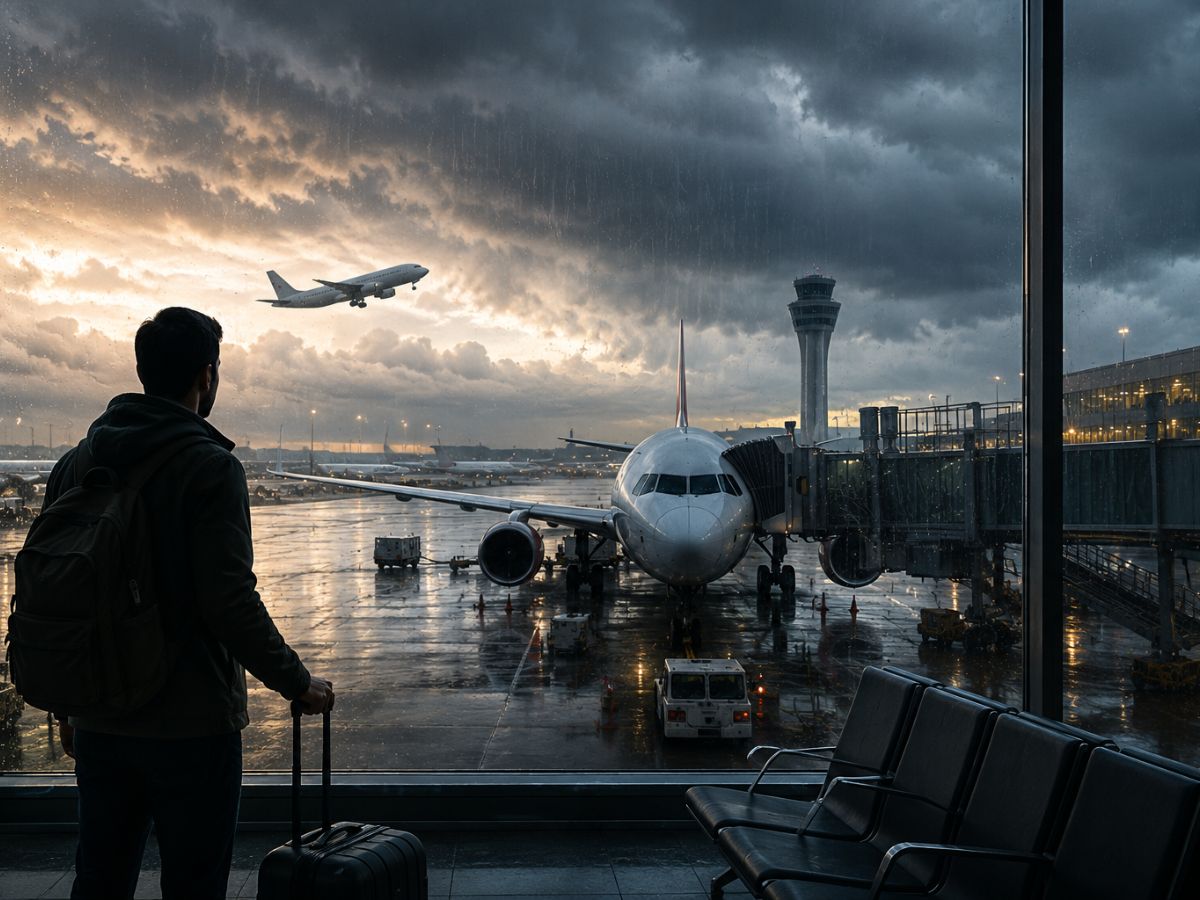
Will Airfares Rise Again? Jet Fuel Prices Jump 121% As US-Israel-Iran War Disrupts Global Aviation
If you haven’t already booked your summer vacation, do it now. Globally, airlines are coming under intense cost pressure from yet another jump in jet fuel prices – attributable to the developing US-Israel-Iran situation and air-route disruptions across the Middle East. And that, in turn, could lead to higher airfares in the coming months. Jet fuel was up 121.1% year on year in April, compared to 77.7% in crude oil prices, according to the IATA. Since fuel costs are one of an airline’s major expenses, an increase this high leaves little flexibility without the increase in prices or cut in capacity.
A difficult combination of spiralling fuel prices, fragmented flight routes and uncertain passenger demand is posing a number of challenges to airlines worldwide. The situation is especially difficult for those relying on airspace in the Middle East, requiring schedule changes and diversions along with inflated operational costs.
Demand for carriers in the Middle East was down 46.6% because of war in the region, a drop so severe that overall demand was down -3.4%. The situation in air transport remains very volatile. Airfares are going up as jet fuel prices more than doubled in April.
But Willie Walsh, IATA’s Director General, said, “The 46.6% fall in demand for carriers in the Middle East due to war in the region was so acute that it dragged overall demand down -3.4%. The situation for air transport remains highly volatile. The cost of jet fuel more than doubled in April, which is pushing airfares up. Forward schedule data is showing a reduced offering in the coming months, indicating that airlines are balancing high fuel costs and weaker demand.”
This comment summarises the predicament which the airlines find themselves in currently: the rising cost of operation is becoming excessive, while the travel market is uncertain in some parts of the world.
Now the effects of the conflict are visible in passenger traffic figures.
Total passenger demand, measured in revenue passenger kilometres (RPK), fell 3.4% in April compared with a year ago, according to IATA. But outside the Middle East, the picture is starkly different. In reality, worldwide demand grew by 1.2%, and it is thus the conflict-bound region which accounts for the deficit.
International passenger demand decreased by 5.3%, and domestic demand grew modestly over the previous year.
Airlines have become more hesitant to add capacity due to the increasing price of fuel.
A global airline capacity decrease of -2.9% in April, with international capacity down -5.1%, means that there are more available seats on certain routes, especially those with connections to main hub airports in the Persian Gulf region.
When this happens, it can lead to higher ticket prices for consumers, especially during holidays when airfares may soar due to peak international demand.
Despite the headwinds, there are still a number of resilient markets.
Asia-Pacific remains ahead
Passenger demand was 3% up in the Asia Pacific region, and load factors exceeded an impressive 87.5% for April (a record). Only traffic on Japan-China routes was affected due to political issues impacting travel demand.
Europe finds benefit in rerouted traffic
Europe saw modest growth of 0.9%; however, one feature of this demand growth was a 15.3% increase in direct travel between Europe and Asia due to passengers not routing via the Middle East.
Latin America has strongest growth
Major regions: Latin American carriers were strongest, with demand for their passengers up 8.9% year on year.
Middle Eastern airlines continues to struggle
The Middle East continues to suffer the most as airlines face a backlash from the ongoing conflict.
In the Middle East, passenger traffic decreased by 48.1% year-on-year, and capacity was down by 38.4%. Demand barely recovers even after a brief period of truce.
For the time being, the industry does not expect any fare increases across the board. For airlines, it’s getting more difficult. There’s still disruption on some flights; airlines are undergoing changes, and the price of aviation fuel is now well over double its previous cost. As a result, many holidaymakers may be expecting to pay higher prices for their summer vacation, an overseas trip or their long-haul flights than they were originally planning; this will continue to be the case until oil prices are reduced and relationships between states ease, forcing airlines to pass these higher costs onto customers.
Priyanka Roshan is a business writer and assistant editor at the NewsX website who tracks everything from stock market swings and corporate earnings to personal finance trends and policy shifts. Known for turning fast-moving business developments into sharp, reader-friendly stories, she combines speed, accuracy, and a data-driven approach to break down complex financial news for everyday audiences.
With over 9.5 years of newsroom experience, Priyanka has worked with leading media organisations, including Moneycontrol, Times Now, and Ping Digital, covering diverse beats such as business, politics, technology, auto, travel, sports, and the world. From live breaking news desks to SEO-led digital storytelling, she specialises in creating engaging content that keeps readers informed without overwhelming them.
Adhik Purnima 2026: Date, Time, Importance, Rituals, Remedies, And Religious Significance
Adhik Purnima 2026: Know the date, puja time, importance, rituals, remedies, fasting rules, religious significance,…
Ayushman Card Apply Online 2026: Step-by-Step Process to Get ₹5 Lakh Health Cover
Ayushman Card Apply Online 2026 guide. Check eligibility, documents required, PM-JAY benefits, hospital list, online…
Abhilasha Barak Wins Prestigious UN Award
Major Abhilasha Barak, India’s first woman combat helicopter pilot, has received the 2025 UN Military…
