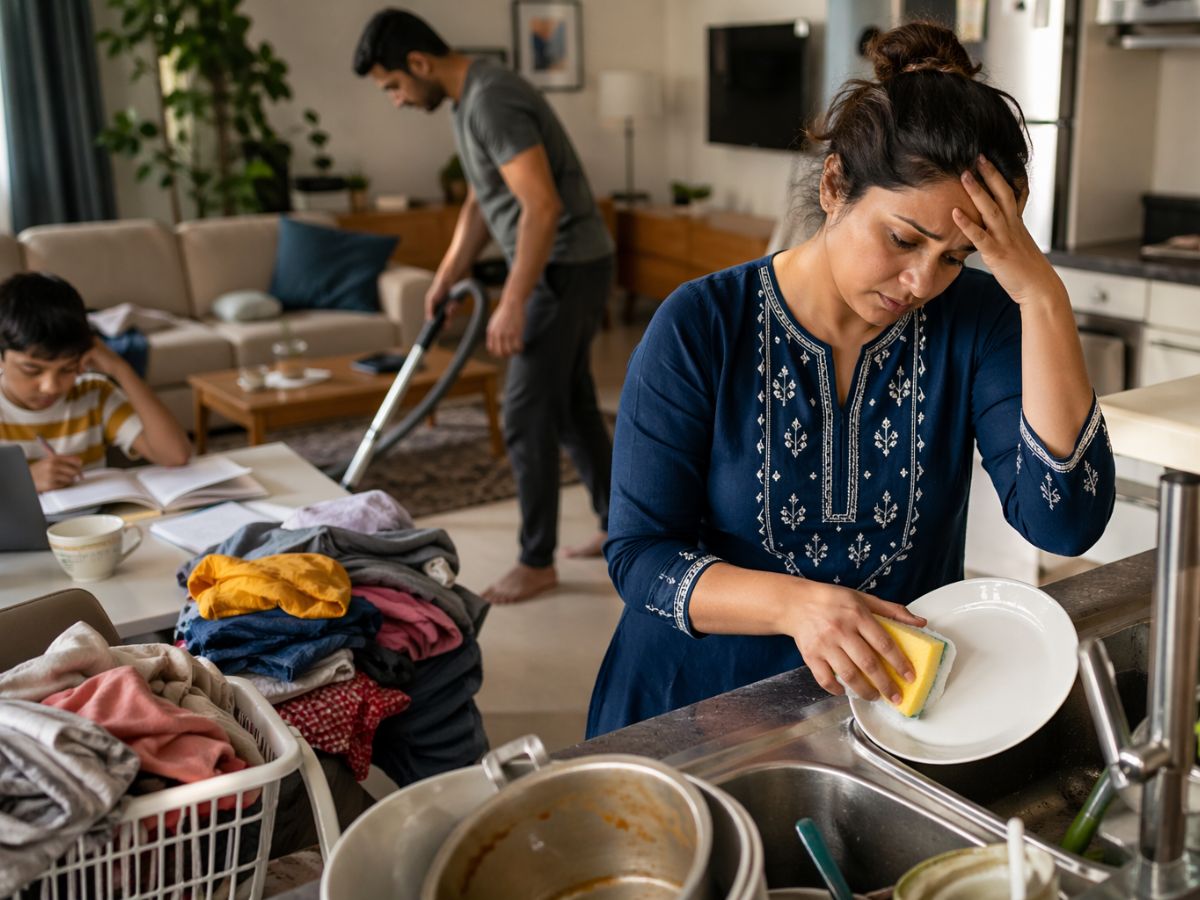
Delhi-NCR faces a maid shortage as Bengal elections trigger mass return of domestic workers. (Photo: ai)
Delhi-NCR: The city is currently experiencing a strange disruption of day-to-day life as households struggle to cope with a sudden shortage of domestic help, which traditionally included chores like cleaning, cooking, and childcare support. A wave of migrant domestic workers across the National Capital Region has returned to their hometown West Bengal ahead of assembly elections, creating a sudden gap in the workforce at dharmashalas, homes, and eateries. What was once a routine seasonal travel has now become a case of mass absence across cities like Delhi, Noida, and Gurugram. The situation has been further magnified by the fear that many of these workers have about voter list verification procedures and narratives around citizenship and documentation. Consequently, there is a huge demand for app-based services and traditional hiring networks with limited supply.
An important factor driving this sudden workforce gap is the West Bengal Assembly elections. Thousands of migrant workers especially those working in metros have returned home temporarily to vote. Very many workers have reportedly expressed the belief that not voting could negatively impact their eligibility for welfare schemes or cause complications in official records. Though these fears have not been substantiated, they have led to a mass movement that is now created a visible disarray across households in major metros across India.
The recent lack of domestic help has thrown thousands of families’ daily rhythms into disarray. Noida, Gurugram and Delhi residents are reporting delays in washing the dishes, doing laundry and tidying up. Working professionals are trying to cater to office calls and household responsibilities at the same time while parents have taken care of school routines.
Many families have worked around the lack of help through relatives and altering the schedules. The change in daily rhythm is not just due to logistics, families are also facing a mental burden as their household tasks have become heavier and not well distributed.
Why are app-based services not able to help out?With domestic help networks unavailable, many people are reaching for instant service providers such as Snabbit, Pronto and Urban Company. It is said that they are the “Uber for home services” and people are hoping to quickly accommodate the shortage. However, demand for services has sky-rocketed as compared to supply.
Users are reporting unavailability of slots for days, failed bookings and last minute cancellations. In some cases, bookings are accepted but workers don’t turn up, resulting in customer refunds rather than service delivery. The lack of workers has highlighted the limitations of tech-based solutions in times of labour shortages.
The house help crisis has led to widespread online discussions. Accounts on Reddit and Instagram have seen people describe the abrupt chaos that was unleashed when house help went missing. “Where did all the maids go?” posts have gone viral and reels and memes show couples struggling with chores. Many are simply expressing how their ordinary lives have been thrown into disarray since the house help has disappeared – even the simplest routines. There has been a broader discussion on the extent of the dependence of urban households on migrant labour.
More than a momentary inconvenience, the crisis speaks to a structural reality. Delhi-NCR and other urban centres are dependent on a migrant domestic workforce for day to day functioning. The crisis has highlighted how tightly household functioning is dependent on this workforce. It has brought up issues of labour dependence, mobility and lack of backup in times of migration. In the midst of this crisis, the fragile balance that sustains the day to day life in India’s metros is underscored.
Sofia Babu Chacko is a journalist with over five years of experience reporting on Indian politics, crime, human rights, gender issues, and stories about marginalized communities. She believes journalism plays a crucial role in amplifying unheard voices and bringing attention to issues that truly matter. Sofia has contributed articles to The New Indian Express, Youth Ki Awaaz, and Maktoob Media. She is also a recipient of the 2025 Laadli Media Awards for gender sensitivity. Beyond the newsroom, she is a music enthusiast who enjoys singing. Connect with Sofia on X: https://x.com/SBCism
US Navy Attack On Tanker Near Oman: 24 Indian Crew Rescued
A Palau-flagged tanker with 24 Indian crew caught fire off Oman after the US Navy…
OpenAI Files Confidential IPO: Here’s What It Means
OpenAI, Anthropic, and SpaceX are preparing for potential IPOs in 2026, signalling one of the…
Why Did Federal Judge Strike Down Trump’s $100,000 H-1B Visa Fee?
A US federal judge has blocked President Donald Trump’s proposed USD 100,000 H-1B visa fee…
