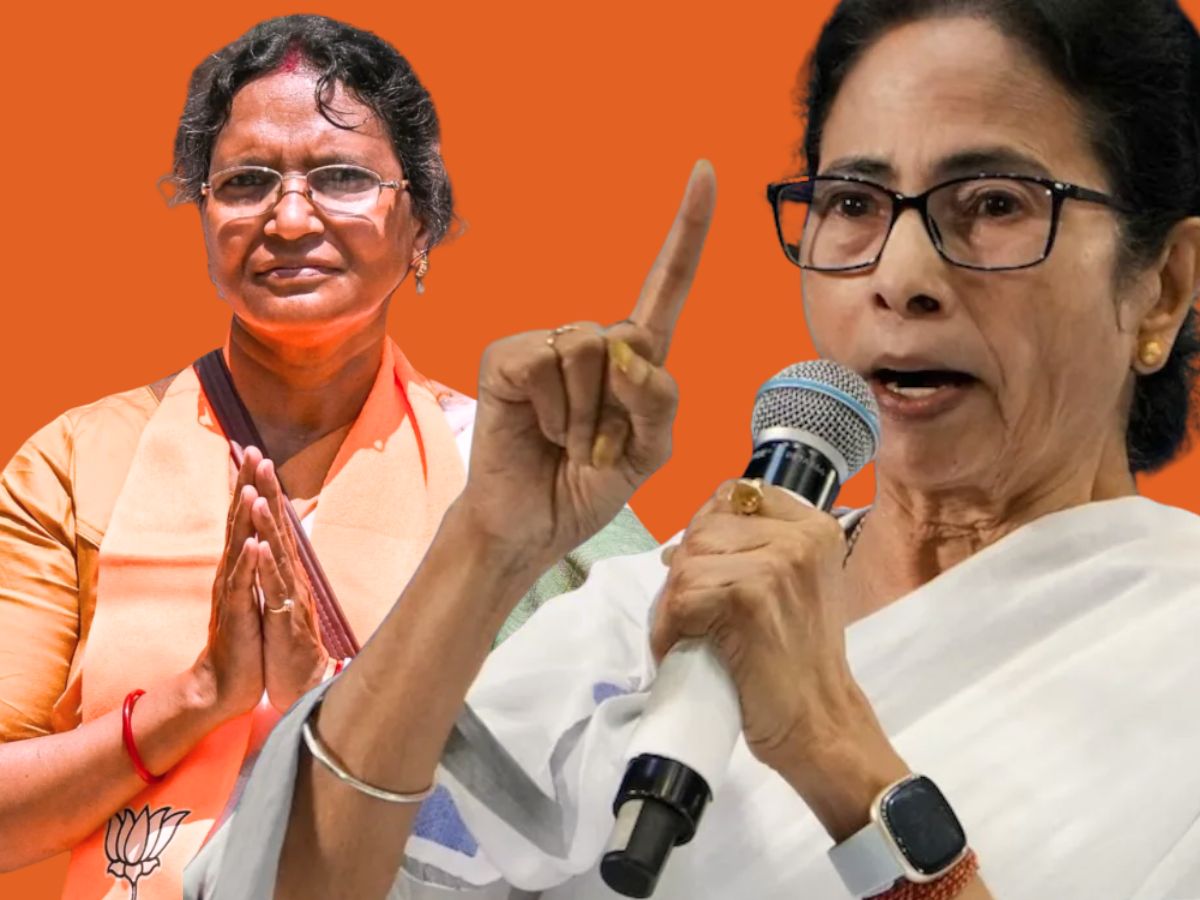
The mother of the RG Kar victim, Ratna Debnath, has entered the political arena in fight against Mamata.(Photo: NewsX)
West Bengal Elections 2026: The heinous murder of a 31-year-old doctor by a gang of men in August 2024 at the R. G. Kar Medical College and Hospital has rocked the nation. It was followed by protests, anger and a nearly exhaustive demand for justice. A simple criminal investigation turned into a political mess after the Calcutta High Court took over the case from the state government because it did not have confidence in the original investigation by the police. It has opened up long-suppressed questions about institutional responsibility and the safety of women in powerful but stressful jobs, like that of a medical doctor. This was exemplified by the 42 days long strike of junior doctors. Nearly two years later, this incident has entered politics as the main demand of the people in Bengal.
The mother of the victim, Ratna Debnath, has entered the political arena from the Panihati constituency with the support of the Bharatiya Janata Party. She has no prior experience in politics. However, she is fighting for justice in her personal life and has now entered the political arena. She wants to look into the state government’s negligence.
Debnath’s campaign has always thrived on emotional contagion and public fury. It is not a battle for power, but for safety of the next generation. A message like ‘our daughter is gone but responsibility remains’ has resonated with voters, especially women. BJP’s support to her and visible smile of Smriti Irani is a clear indication that the party wants to convert public fury to political momentum.
Women’s safety is quickly becoming the biggest election issue in Bengal today. Opposition parties have been focusing on the Trinamool Congress government’s alleged failure on the matter. They have linked its failure in handling the RG Kar case with its governance. The government in turn has denied any cover-up.
The narrative was amplified through campaign rallies, protests and public mobilisations. The slogan of Chief Minister Mamata Banerjee, who is quoted for saying that women should not step out after dark, has been used by opposition parties to accuse her of victim blaming. In the end, the RG Kar case is not an isolated incident anymore, but a vote of confidence on the state’s governance, law and order and gender justice.
Seems that the elections in Panihati have turned into a high-stakes competition between Debnath and Tirthankar Ghosh, a debutant from the ruling party. Sympathy for the victim’s family, however, cannot dictate the electoral outcomes; there is a lot more to it- the party machinery, the local dynamics, the political ties and loyalties of the voters.
But, one factor, which is rare in the political realm, has entered into the running. Debnath’s image- her quiet resilience and her visible grief- has struck a chord with a lot of voters. At least, it has for some. For them, supporting Debnath is a way to stand in solidarity and demand justice. The question is, can this emotional connection override the political equations?
Bengal’s elections, on April 23 and 29, have undoubtedly become centred around the RG Kar case. It has stirred a lot of discussions on women’s safety, institutional accountability and political responsibility. While the ruling government will have leaned on its governance record, and the local networks it has built, the opposition will have bet on public anger and an emotional connect.
Will voters go with the political loyalties they have, or with the moral urgency of justice and safety? Most importantly, will a personal tragedy change the electoral outcomes in a state like Bengal? Will the voice of a grieving mother change the political future of Bengal, or will it be just absorbed into the larger election buzz?
Sofia Babu Chacko is a journalist with over five years of experience reporting on Indian politics, crime, human rights, gender issues, and stories about marginalized communities. She believes journalism plays a crucial role in amplifying unheard voices and bringing attention to issues that truly matter. Sofia has contributed articles to The New Indian Express, Youth Ki Awaaz, and Maktoob Media. She is also a recipient of the 2025 Laadli Media Awards for gender sensitivity. Beyond the newsroom, she is a music enthusiast who enjoys singing. Connect with Sofia on X: https://x.com/SBCism
IND vs AFG: India is set to face Afghanistan in a one-off Test in Mullanpur,…
The Staff Selection Commission (SSC) has announced the results of the Combined Hindi Translator (CHT)…
Trump Hints At Finalising Trade Deal With 'Good Friend' PM Modi
US President Donald Trump expressed confidence that Washington and New Delhi will soon finalize a…
