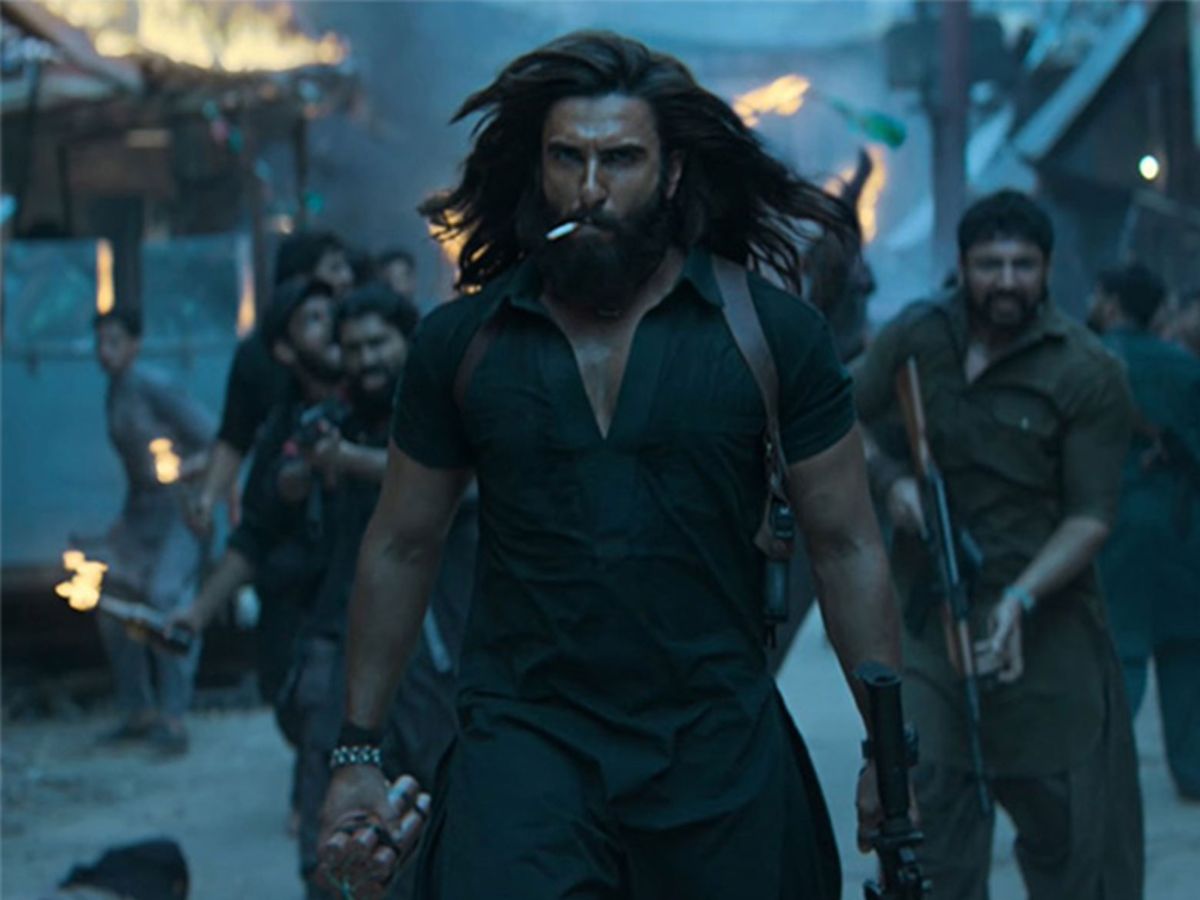
Why Hamza Aka Ranveer Singh's Most Vulnerable Scene In Dhurandhar Deserves Attention (Image credit: Ranveer Singh via Instagram)
A part of Dhurandhar’s commercial success and the very circulating discussions around the movie, one of the most disturbing and undervalued scenes has been through the near rape sequence of Hamza Ali Mazhari played by Ranveer Singh which has slowly but surely got the attention of the audience and critics alike. The movie has been directed by Aditya Dhar and has received accolades for its compact spy story and terrific action, however, this specific scene goes beyond the usual violence and genre spectacle. It is not just the stylised fight or the choreographed heroics that the moment takes, rather it exhibits a disturbing point of weakness that questions the upholding of masculinity in the mainstream Hindi cinema in a way that is sublime and compelling.
The ‘brutal crowd of gang war politics in Karachi’s Lyari district’ is the backdrop of the sequence, which at first shows Hamza, an undercover Indian agent posing as a local boy being recognized by the rival gang members. It starts with the gang members taunting him, quickly escalating and turning into primal act of attempted sexual violence meant not for desire but for dominance. One gang member overpowering Hamza, trying to rape him, for the purpose of asserting horrendous territorial control and humiliation. The police, who arrive unexpectedly, save Hamza but the psychological effect remains.
What distinguishes this scene from the others is not just its horrifying topic but also the way the film artistically used it among others for the narrative instead of mere shock which was uncritically accepted. Dhar represented Dhurandhar as a very masculine environment pervaded by violence, power battles, and suppression of feelings, where women’s fate is to be ignored and raw power is the only standard of might. The attempted rape rupture that occurs against this background not only challenges its established vocabulary but also displaces the hero through shame in front of the audience establishing a position that mainstream cinema seldom deals with: sex violence is not gender specific.
Ranveer Singh’s silenced, battered, and psychologically transformed character of Hamza in this scene is also worth mentioning. His acting does not go for melodrama or overstated trauma, but rather it is through depicting emotional hardening and control that he gives the audience a glimpse of how a life of spying and war demands one to be emotionally deadened and to keep the eye on the target. The movie reveals through this scene three very uncomfortable truths: the first one being that power treats the human body as its battleground, the second one that being vulnerable should not be confused with being weak, and the last one that the unstoppable masculinity is often a myth that overlooks the deeply hurt caused by emotional abuse.
Dhurandhar, having produced excellent box office performance, and drawing discussions around its action scenes and political setting, the near rape scene is still a subject less mentioned, perhaps because it pushes the audience to meet with the harsh intersection of violence, shame, and story risk. While doing so, the film breaks the common hero story and highlights its universal thematic aspirations. Instead of making the moment look like a mere exploitation or a sensational one, Dhar includes it in the body of his discussion on power, endurance, and the tenuousness of human dignity in the most extreme conditions.
Adani Group Shares Stage Spectacular Comeback – Investor Confidence Restored Amid US Legal Saga
Adani Group shares bounced back, Adani Enterprises got a clean chit, investor confidence restored, US…
Madras High Court is scheduled to deliver Jana Nayagan verdict on January 27, a decision…
Influencer Amulya Rattan faced massive trolling after blaming a man for “ruining” her video in…
